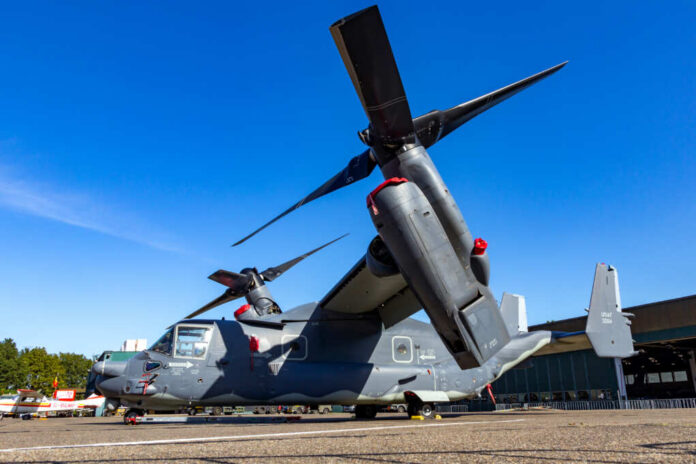
U.S. Marine Corps pilots dodge disaster again as another V-22 Osprey suffers critical gearbox failure mid-flight, exposing years of Pentagon mismanagement that has cost 20 American lives since 2022.
Story Snapshot
- February 3, 2026: MV-22B Osprey from VMM-268 squadron makes emergency landing in Hawaii due to in-flight proprotor gearbox crack; no injuries reported.
- Persistent mechanical woes force ongoing flight restrictions, delaying full operations until at least 2027 for Marines and 2033 for other services.
- Four fatal crashes since 2022 killed 20 service members, mainly from gearbox failures, amid criticism of the V-22 Joint Program Office.
- President Trump’s administration inherits a fleet of high-risk aircraft, highlighting urgent needs for accountability from defense contractors Boeing and Bell.
- Congressional scrutiny intensifies as NAVAIR rushes interim fixes, but permanent solutions lag, risking our troops’ safety.
Latest Osprey Incident Details
On February 3, 2026, a U.S. Marine Corps MV-22B Osprey assigned to VMM-268 squadron, 1st Marine Aircraft Wing, executed an emergency precautionary landing in the Tactical Flight Training Area on Oahu, Hawaii. Aircrew detected an in-flight proprotor gearbox crack or failure during restricted operations. Pilots followed protocols for a safe touchdown, preventing injuries. The aircraft now awaits repairs while investigators probe the “infant mortality” failure of its interim gearbox. This event underscores vulnerabilities in the tiltrotor design central to Marine aviation strategy.
Chronic Gearbox Failures Plague V-22 Program
The V-22 Osprey has battled proprotor gearbox issues since entering service, with hard clutch engagements triggering power surges. Gearbox failures directly caused deadly crashes, including a 2023 Air Force incident killing eight and a 2022 Marine crash claiming five lives. Since 2022, four such accidents have killed 20 service members, prompting Pentagon-wide flight restrictions like range limits. Late 2025 GAO and NAVAIR reports slammed the V-22 Joint Program Office for poor risk assessments despite these fatalities. Our brave troops deserve better than aircraft prone to these elusive mechanical woes.
Previous incidents reinforce the pattern. November 2023 saw a fatal CV-22B crash at Yokota Air Base in Japan, grounding fleets. December 2023 brought a Cannon AFB engine loss with gearbox warnings, though safely landed. Summer 2025 featured multiple precautionary landings in Japan at commercial airports. These events, combined with the Hawaii mishap, erode readiness and highlight fiscal waste on unreliable “hangar queens.”
Military Response and Congressional Oversight
Naval Air Systems Command (NAVAIR) leaders, including Vice Adm. John Dougherty and Brig. Gen. David Walsh, briefed Congress on February 10 about V-22 fixes. Rep. Joe Courtney, D-Conn., disclosed the Hawaii incident during the hearing after notifications the prior week. NAVAIR issued a February 11 statement confirming aircrew adherence to procedures and outlining timelines: Air Force and Navy upgrades by 2029, Marines by 2033. Gearbox replacements started in February 2026 using interim solutions like redesigned Input Quill Assemblies, with permanent fielding targeted for late 2027.
The Marine Corps’ 2026 aviation strategy hails the Osprey as a cornerstone for its speed, range, payload, and refueling capabilities, projecting unrestricted operations by December 2027. Yet watchdogs caution full fixes may drag into the 2030s, sustaining restrictions that hamper training and deployments. President Trump’s Pentagon now faces pressure to accelerate reforms, hold contractors accountable, and prioritize troop safety over endless delays—a common-sense demand after years of overspending and government overreach.
Impacts on Troops and National Defense
Short-term, the grounded aircraft delays repairs and limits Hawaii-based operations, while fleet restrictions curb deployments. Long-term, unresolved issues risk further incidents, declining readiness, and ballooning maintenance costs. Aircrews bear heightened dangers, as seen in 20 deaths since 2022; families of victims and bases in Hawaii and Japan feel the strain. Politically, hearings amplify calls for accountability from Boeing and Bell, slowing tiltrotor adoption and shaping aviation budgets. Under President Trump, restoring a reliable defense fleet protects American warriors and upholds commitments to limited government efficiency.
Sources:
Another Osprey Makes Emergency Landing as Military Works to Resolve Persistent Mechanical Issues
Another Osprey Makes Emergency Landing as Military Rushes to Fix Elusive Mechanical Woes
Osprey Engine Mishap Investigation at Cannon
Marine Corps Osprey Makes Emergency Landing in Amarillo
US Ospreys Make Precautionary Landings in Japan
Gearbox Crack Forced MV-22B Emergency Landing Last Week
Where Things Stand with V-22 Improvements
Hangar Queens: Congressional Hearing Reveals Osprey Readiness Rates Declining