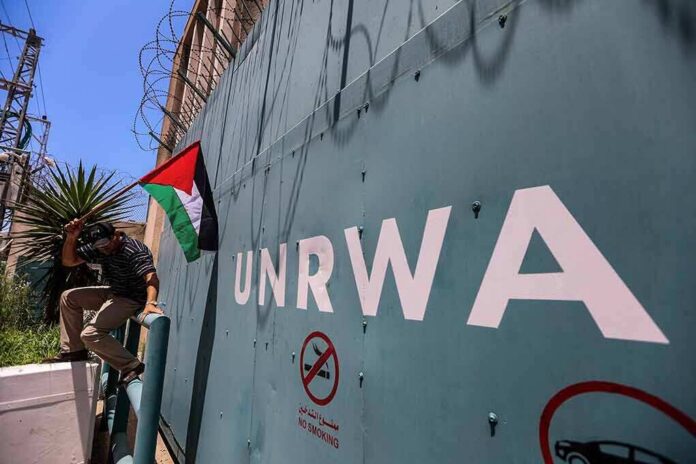
The United Nations is again facing questions about whether it can police its own system inside a war zone.
Quick Take
- The United Nations said nine United Nations Relief and Works Agency staff members would be fired after an internal review tied them to the October 7 attacks.
- The United States Agency for International Development inspector general said it found evidence linking four more current or former staff members to the attacks or Hamas ties.
- Israel’s allegations went far beyond a few bad actors and included claims of a broader network inside United Nations Relief and Works Agency.
- At the same time, the available public record does not fully prove the widest claims of agency-wide capture.
What the United Nations Found
The United Nations said its Office of Internal Oversight Services reviewed 19 named United Nations Relief and Works Agency staff members and found nine who “may have been involved” in the October 7, 2023 attacks. One case produced no evidence, and the rest did not meet the standard for termination. That left the agency with a damaging result either way: it removed staff while stopping short of saying every allegation had been proven in full.
That finding matters because United Nations Relief and Works Agency is not a small office on the edge of the conflict. It is one of the main providers of food, health care, and relief services for Palestinians in Gaza. When a body that large faces credible claims of employee misconduct, the issue reaches far beyond discipline. It goes to trust, funding, and whether aid systems can stay neutral in a war zone.
Israel’s Broader Case
Israel’s claims were much wider than the United Nations review. Reuters reported that an Israeli dossier said roughly 190 United Nations Relief and Works Agency employees were Hamas or Palestinian Islamic Jihad operatives, and some reporting said the material included claims about kidnappings and killings on October 7. NBC News also reported that Israel alleged six staffers infiltrated Israel that day, while four helped kidnap Israelis. Those accusations, if true, would point to a deeper problem than isolated misconduct.
But the public record in the materials here still leaves gaps. The most sweeping claims come through reporting summaries and advocacy groups, not through full public release of the underlying intelligence file. The United Nations has also said it received no evidence for some claims and found insufficient evidence in others. That does not erase concern. It does mean the biggest version of the case has not been fully tested in public.
Why This Story Keeps Growing
The controversy has grown because the facts touch two realities at once. First, armed groups in conflict zones often try to hide inside civil institutions. Second, aid agencies depend on access, staff, and donor trust to keep operating. That mix creates a constant fight over proof, because one side often holds intelligence that is not public, while the other controls the payroll files, hiring records, and discipline process.
That is why the story has become so politically charged. Humanitarian defenders warn that broad accusations can cripple aid delivery and punish civilians. Critics argue that governments and international agencies move too slowly when security risks appear inside institutions they fund. Both concerns are real. What is clear from the available record is that the United Nations and its aid arm have already been forced to act, but the larger dispute is still not closed.
What Still Needs to Be Shown
The main unanswered question is scale. The public evidence here supports serious misconduct by some staff members, but it does not prove the most sweeping claim of a fully captured agency. To settle that debate, the underlying United Nations investigation files, the Israeli intelligence dossier, and internal staff records would need to be reviewed side by side. Without that, both the critics and the defenders can point to real facts while still leaving the biggest claims unresolved.
For now, the United Nations has lost the easy excuse that nothing was wrong. It acknowledged enough to dismiss staff and reopen the debate over vetting, oversight, and donor confidence. What it has not yet provided is a public record strong enough to end the argument over whether the problem was limited misconduct or something far deeper. That gap is why this controversy keeps returning, and why it now shapes the future of aid in Gaza.
Sources:
zerohedge.com, unwatch.org, nbcnews.com, pbs.org, reuters.com, theconversation.com, cnn.com