The race to turn Qatar’s “gift” jumbo jet into President Trump’s new Air Force One shows how speed, politics, and prestige can collide with security and cost — leaving taxpayers and national security caught in the middle.
Story Snapshot
- Qatar’s Boeing 747-8 “palace in the sky” was rushed through a deep, complex conversion to serve as Air Force One.
- The Air Force squeezed a years-long process into about 10 months, working around the clock to meet Trump’s timeline.
- Costs are classified and disputed, with estimates ranging from “under $400 million” to near $1 billion.
- Senators and experts warn the rush may have diverted defense funds and forced security trade-offs to satisfy a political deadline.
From Luxury Gift to “Bridge” Air Force One
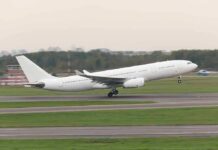
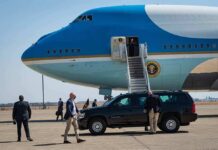
Qatar’s ruling family donated a Boeing 747-8 business jet to the United States in 2025, a plane widely described as a $400 million “palace in the sky” with luxury finishes and VIP suites. President Trump pushed for the jet to become a bridge Air Force One, filling the gap while the next-generation presidential aircraft from Boeing faced long delays and major losses. On June 19, 2026, the modified jet was unveiled at Joint Base Andrews with Trump’s favored patriotic paint scheme and branding.
The Air Force accepted the Qatari jet in May 2025 and began heavy modification work that September. Instead of the usual multi-year process, the service and contractor L3Harris compressed the schedule so the aircraft could be ready to fly as Air Force One by the summer of 2026. Officials described the work as almost a rebuild, adding self‑protection systems, secure communications, and other classified capabilities needed for a flying White House. The rushed timeline became a central point of controversy in Washington.
A Compressed Timeline and Disputed Price Tag
Experts who spoke to major outlets early on warned that converting the Qatari jet to true Air Force One standards could cost up to $1 billion and take several years. They pointed to the long, troubled history of the official VC‑25B replacement program, where Boeing’s fixed‑price contract has already produced more than $2 billion in losses and pushed delivery into the late 2020s. In other words, “cheap and fast” has almost never been the reality for presidential aircraft, no matter which party is in power.
Air Force Secretary Troy Meink told Congress a very different story, insisting the retrofit would “probably” cost less than $400 million and could be finished in under a year. He said the money would come from unspent funds in the Sentinel intercontinental ballistic missile program, arguing it would not weaken the nuclear force. Critics in both parties called that number “wildly rosy” and noted that earlier billion‑dollar estimates included training, spare parts, and other support that might still be needed even if they sit in a different budget line. With the contract classified, the true cost remains hidden from the public.
Democratic Senators Warn of Security and “Vanity” Trade‑Offs
A group of 13 Democratic senators sent a detailed letter to the Air Force and L3Harris warning that the compressed 10‑month schedule looked driven more by Trump’s wish to fly on “the world’s most luxurious plane” for July 4 than by long‑term national security planning. They cited reports that about 400 workers labored 24/7 to hit a July 4 deadline, an intense pace for a project that involves classified systems, cyber defenses, and physical security checks. The senators asked whether money and skilled labor had been pulled away from other pressing defense missions to satisfy the president’s timeline.
Lawmakers also raised a concern that resonates with many Americans across party lines: trusting a once‑foreign VIP jet as the commander‑in‑chief’s main aircraft. Because the plane spent years in Qatari service, every wire, panel, and compartment had to be checked or replaced to guard against hidden listening devices or other tampering. Experts say this kind of deep audit is slow, painstaking work, and rushing it risks gaps that only show up in a crisis. That worry fed a broader sense that the system bends over backward for elite preferences while ordinary security programs face delays and cuts.
What the Rush Reveals About Government Priorities
For many Americans frustrated with both parties, the Qatari jet saga feels familiar. A foreign government hands over a flashy, high‑status asset; the White House sees a chance for a quick win and photo‑ops; and the Pentagon is told to “make it work” on an aggressive clock. On paper, the jet is a gift. In practice, taxpayers now shoulder hundreds of millions of dollars in hidden costs so that one leader can fly in a more lavish plane for a few years.
Iranian Threat to Air Force One Prompted Plane Swap During NATO Summit
The threat led the Secret Service to urge President Trump to fly out of Turkey on a different plane, raising questions about the security of the Qatari-donated jet.
President Trump abruptly switched aircraft… pic.twitter.com/HU26Wyqgtt
— Dilraj Gill (@Dilrajlive) July 26, 2026
This pattern fits a longer history where major defense and transport projects, from Air Force One to new fighters, start as promises of savings and end as symbols of overruns and opaque deals. Critics on the right see it as proof that the “deep state” and big contractors always get paid, no matter the budget talk. Critics on the left see a government eager to fund prestige projects while everyday needs and basic fairness lag behind. Both sides can look at this rushed Air Force One and ask the same question: who is Washington really working for — the public, or the small circle that flies at the very front of the plane?
Sources:
feedpress.me, theguardian.com, cnn.com, bbc.com, youtube.com, time.com