When nearly half the screeners at major airports don’t show up, Washington’s budget games stop being political theater and start putting America’s safety and economy on the line.
Story Snapshot
- The Department of Homeland Security shutdown that began Feb. 14, 2026, has pushed TSA officer absences far above normal levels, with some airports seeing near-half staffing gaps on certain days.
- Internal TSA data reported by major outlets showed national call-out rates climbing from a typical ~2% to around 10% on multiple days, including a record 11.51% on March 21.
- TSA employees have received $0 paychecks during the shutdown, and DHS officials tied the attendance crisis directly to financial hardship for officers and their families.
- The White House announced plans to deploy ICE agents to airports for limited support roles while Congress remains deadlocked over DHS funding terms.
Record TSA Call-Outs Turn a Budget Standoff Into a Security Stress Test
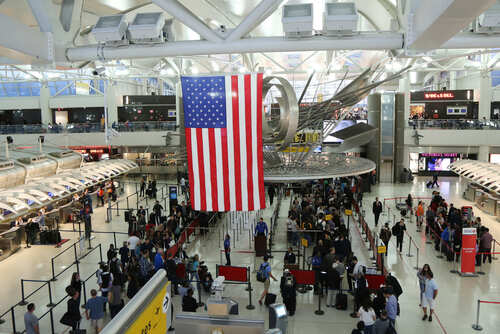
Internal TSA staffing figures reported during the ongoing DHS shutdown show an absentee spike that is now reshaping airport operations nationwide. On March 18, outlets reported nearly 10% of TSA officers called out sick across the country, while individual hubs saw far worse disruptions. Houston’s Hobby Airport recorded call-out rates that approached half of scheduled staff on specific days in early March, forcing airports to consolidate checkpoints and reduce open lanes.
TSA’s job is basic but critical: keep the checkpoint moving while preventing dangerous items from reaching aircraft. When staffing drops suddenly, lines lengthen, stress climbs, and screening becomes harder to manage. Former TSA Administrator John Pistole warned that adversaries could try to exploit the “perceived vulnerability” created by fewer officers showing up and longer lines building in public areas. The sources do not report a specific attack plot, but they do describe a growing operational strain.
$0 Paychecks and Attrition: The Practical Consequences of “Shutdown Politics”
The core driver described in the reporting is not ideology inside the workforce, but economics. After the shutdown began Feb. 14, TSA employees eventually received $0 paychecks, and DHS officials publicly said officers were struggling to pay rent, buy food, or afford gas to commute. Between Feb. 14 and March 9, TSA recorded 305 separations, and replacing those officers is not quick because training takes months.
That training delay matters because the TSA workforce is already a specialized pipeline. CBS reported TSA employs about 50,000 transportation security officers nationwide, and the same reporting noted normal call-out rates hover around 2%. Even a small sustained increase strains schedules; a three- to five-fold increase forces managers into constant triage—closing lanes, shifting supervisors onto the floor, and accepting longer waits. For families trying to travel, the immediate cost is time. For the country, the risk is reduced resilience.
Spring Break Surge Collides With Reduced Staffing
The timing amplifies the disruption. Reporting tied the worst call-out waves to peak spring break travel, when airports cannot easily “spread out” demand. When passenger volume rises and staffing falls at the same time, the system loses its buffer. The research describes hours-long lines in some locations, plus operational “hotspots” where staffing shortages threatened checkpoint operations. Sources also described temporary disruptions to trusted-traveler programs, then partial restoration on an airport-by-airport basis.
Airlines and airport operators are not the decision-makers in a DHS funding fight, but they are the ones managing the fallout. Long lines ripple outward: missed flights, rebooked itineraries, delayed crews, and more pressure on customer-service staffing. None of the provided sources quantify the total economic hit, so any dollar estimate would be speculation. What is clear from the reported TSA metrics is that the checkpoint is acting like a choke point—and chokepoints expose weaknesses fast.
ICE Support at Airports Raises Operational and Constitutional Questions
President Trump announced plans to deploy ICE agents to airports starting March 24 unless Democrats agreed to a funding package, according to ABC’s reporting. White House Border Czar Tom Homan said ICE would handle non-specialized tasks like exit guarding rather than TSA screening itself, freeing TSA officers to work checkpoints. Based on the reporting, this is a logistical stopgap, not a substitute for a paid, stable TSA workforce.
Conservatives who have spent years watching Washington normalize emergency measures should pay attention to how “temporary” workarounds become precedent. The sources do not claim ICE is taking over TSA screening or that new search powers were granted, but the broader issue remains: shutdown-driven improvisation can expand federal activity in ways Congress never debated under normal order. If lawmakers want secure travel without mission creep, the clean solution is funding continuity—not political brinkmanship.
Sources:
Nearly 10% of TSA officers across the country called in sick Tuesday, data shows
TSA absences double during shutdown, more than 300 quit as airport security lines grow
Record numbers of TSA officers called out on Saturday during DHS shutdown
TSA shutdown careers and staffing pressures during DHS funding lapse