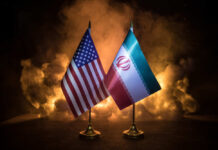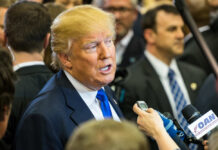
President Trump’s Iran diplomacy is back on the table—and the real question for conservatives is whether it ends Iran’s nuclear leverage or repeats the “pay-for-promises” trap Americans watched under Obama.
Quick Take
- Trump’s 2025–2026 Iran approach relies on “maximum pressure” sanctions paired with explicit deadlines and military threats.
- Reported U.S. demands go beyond the Obama-era JCPOA, seeking nuclear dismantlement plus missile and proxy constraints.
- Indirect talks have run through intermediaries like Oman and Qatar, with no confirmed direct Trump–Khamenei meeting.
- As of late February 2026, negotiations appeared stalled amid a U.S. ultimatum and rising regional war risk.
Trump’s Strategy: Pressure First, Talks Second
President Trump restarted the “maximum pressure” posture in early 2025, coupling sanctions with overt signals that diplomacy would not be open-ended. A March 2025 letter to Iran’s Supreme Leader Ali Khamenei setting sharp demands and a deadline, followed by additional outreach during a Middle East trip later that spring. By February 2026, the diplomatic track had become a countdown, not a patience game.
Trump's Rumored Diplomatic Offer to Iran Is Not Good but It Isn't the Same As Obama's Sellout https://t.co/f8iUVSuyVR
— Jim Polk 🇺🇸 (@JimPolk) March 23, 2026
Conservatives who remember the last decade’s Iran debate can see why this structure matters. A negotiation backed by credible penalties is fundamentally different from a negotiation built around early concessions. it does not disclose full proposal text, and some details remain non-public. Still, the visible pattern shows Washington signaling that sanctions relief is conditional and reversible, not an upfront reward for vague compliance.
How This Differs From Obama’s JCPOA—And Why That Distinction Matters
The Obama-era JCPOA centered on limiting enrichment levels and expanding inspections while granting phased sanctions relief, a design critics argued left Iran with a pathway to industrial-scale nuclear capability over time. In contrast, the more recent reporting describes Trump’s posture as seeking deeper, broader changes—nuclear dismantlement, constraints on missiles, and a rollback of proxy activity—conditions Iranian leaders have described as unacceptable “surrender” terms.
That contrast does not automatically make any rumored offer “good,” and it does not confirm a finalized bargain. But it does establish a meaningful difference in negotiating posture. A deal that permanently blocks a nuclear weapon and reduces terror-proxy pressure is categorically distinct from an arrangement that caps activity while leaving core capabilities intact. Without public text, the key remains verification and enforceability, not headlines.
Where Talks Stand in Early 2026: Indirect Channels, Hard Deadlines
By early 2026, negotiations were described as indirect, with Oman and Qatar serving as message carriers while both sides publicly hardened their positions. Geneva discussions were reported as focusing on enrichment limits, inspections, and phased relief, while U.S. decision-making hovered between diplomacy and military action. At the same time, reports referenced U.S. force posture in the region, reinforcing that the administration was pairing talks with leverage.
The largest limitation in assessing the moment is visibility. Multiple sources emphasize that there were no confirmed direct meetings and that critical details of any offer were not public. That matters for Americans who distrust “trust us” foreign policy. For constitutional, limited-government voters, national security still demands transparency: if sanctions are eased, the public deserves clear, enforceable benchmarks and a snapback mechanism that does not depend on foreign goodwill.
Risks Conservatives Should Watch: War, Energy Shocks, and Verification Games
The near-term stakes include the possibility of U.S. or Israeli strikes and an Iranian response through regional proxies, a scenario that could endanger U.S. forces and widen conflict quickly. Analysts also warn about oil-market vulnerability if the Strait of Hormuz is threatened, since a major share of global oil flows through that chokepoint. Even without shots fired, brinkmanship can ripple into energy prices and American household costs.
From a conservative perspective, the central standard should be simple: no paper deal that leaves Iran near a nuclear threshold, funds hostile networks, or relies on unverifiable promises. The information shows Trump’s public posture is tougher than the Obama model, but it also shows negotiations can drift toward partial measures like enrichment limits and phased relief. If that becomes the end state, the difference could narrow unless enforcement is ironclad.
Sources:
Trump Iran decision 2026: diplomacy versus military action at critical juncture
Trump side-stepped diplomacy on his way to war in Iran. Now he’s asking China and others for help
How the Trump administration’s Iran strategy backfired: a breach of diplomatic trust