
Gulf rulers and Pakistan reportedly urged Washington to pause a new strike on Iran—raising fresh questions about who is steering U.S. war-and-peace decisions and how much of the process the American public is allowed to see.
Story Snapshot
- President Trump said he called off a planned attack on Iran after appeals from Gulf partners, framing it as a pause, not a surrender [1].
- A Truth Social statement described a two-week suspension of planned bombing and attacks, suggesting a defined window for diplomacy [2][6].
- Reports highlight continued U.S. coercive pressure alongside the pause, keeping military options open [7].
- Analysts note this fits a long-running pattern of crisis signaling where decisive facts are classified and public claims are hard to verify.
What Trump Said Paused the Strike
President Donald Trump said he postponed a scheduled attack on Iran after personal appeals from Gulf leaders, including rulers in Qatar, Saudi Arabia, and the United Arab Emirates, according to video reporting of his public remarks [1]. The president presented the move as a response to regional requests rather than a reversal of course. Separate coverage of his statement indicated he agreed to suspend “bombing and attack of Iran” for two weeks, implying a short diplomatic runway rather than an open-ended stand-down [2][6].
Additional reporting described the pause as tactical, not permanent, with the administration maintaining pressure and emphasizing that further action remained on the table if conditions did not improve [7]. In related coverage, Trump linked his earlier decision-making to signals from Tehran, such as reported changes in planned executions, characterizing them as factors with “big impact” on his calculus, underscoring the transactional nature of the moment [3]. The White House posture suggested coercion paired with an opportunity for negotiations rather than a shift toward disengagement.
Deterrence, Diplomacy, and Limited Public Visibility
Specialists describe this episode as part of a recurrent U.S.–Iran crisis pattern where threats of force and brief pauses coexist, and where leaders on all sides try to shape domestic and foreign audiences through selective disclosures. This pattern complicates verification: operational details are classified, and public statements are often crafted to maximize leverage. As a result, citizens are asked to trust judgments about imminent strikes or de-escalations without access to the underlying intelligence or military timelines that would make those claims falsifiable.
That gap in visibility feeds a bipartisan worry about accountability. Conservatives who distrust global entanglements and liberals who fear impulsive war-making both question whether decisions are anchored in clear objectives and congressional oversight. The present pause, framed by outside appeals and time-limited conditions, magnifies concerns that consequential choices are made through opaque channels where foreign partners and a small circle of American officials can strongly influence outcomes, while the broader public and many lawmakers remain on the sidelines.
Regional Pressures and Domestic Crosswinds
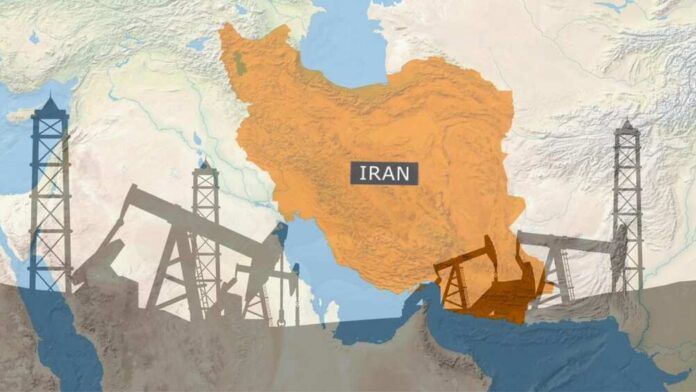
Gulf leaders’ appeals underscore how regional governments weigh the costs of escalation across energy flows, shipping, and security, and how Washington’s choices reverberate through those systems [1]. Reporting from policy and news outlets describes the United States sustaining a coercive stance even as it opens a brief window for talks, projecting readiness to resume strikes if red lines are crossed [7]. That dual track—signals of restraint, paired with the option to strike—reflects classic crisis bargaining that can deter adversaries but also risks miscalculation when messages are mixed [7].
At home, Americans who have lived through inflation shocks, high energy costs, and years of foreign deployments see strategic ambiguity as a potential recipe for price spikes and uncertainty. Skeptics on the right fear drift into another costly confrontation without a declared end state; skeptics on the left worry about a cycle that squeezes social spending while heightening regional instability. Both camps see a familiar pattern: leaders cite urgent intelligence, invoke foreign appeals, and preserve maximum flexibility, while providing few verifiable benchmarks for success or exit.
How to Read the Next Two Weeks
The two-week suspension window signaled by the president and reflected in multiple reports provides a concrete timeline for watching whether diplomacy produces measurable steps, such as maritime deconfliction or de-escalatory gestures from Tehran [2][6]. If no progress materializes, the administration’s statements and coverage of ongoing readiness suggest military options could rapidly return to the front burner [7]. This cadence aligns with prior U.S.–Iran episodes, where pauses served as leverage rather than lasting de-escalations, and where outcomes hinged on behind-the-scenes signaling.
🚨 BREAKING NEWS
U.S. President Donald Trump says he called off a planned new attack on Iran at the request of Gulf states, including Saudi Arabia, Qatar, and the UAE, to allow peace negotiations to continue.
Trump said the U.S. remains prepared for a “full, large-scale assault”… pic.twitter.com/tk7cxUSJGu— Global Updates (@GlobalUpdates_0) May 19, 2026
For citizens, three accountability questions cut across ideology. First, what are the specific, publicly stated objectives the pause is meant to advance, and how will success be measured? Second, what guardrails exist—through Congress or allied consultation—to prevent slide from signaling into open conflict? Third, what are the economic and energy-security contingencies if deterrence fails? Clear answers would reduce the space for rumor and reinforce the principle that decisions of war and peace answer to the people, not just to classified memos or foreign capitals.
Sources:
[1] YouTube – Trump halts planned Iran attack after Gulf leaders intervene amid …
[2] YouTube – Trump says US to ‘suspend bombing and attack of Iran’ for two weeks
[3] Web – Trump says Iranian cancellation of executions ‘had big impact’ on …
[6] Web – Trump Announces Two-Week Halt to Iran Strikes Amid Push for …
[7] Web – Trump warns of “critical period” in Iran war, threatening severe …