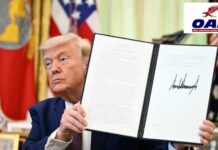
President Trump used a mining grant announcement to reopen one of his most familiar fights with Hillary Clinton, and he did it in plain public view.
Quick Take
- Trump announced a $100 million commitment for mining schools and training programs.
- He used the event to mock Clinton’s old coal remark about retraining miners.
- The line has stayed useful in coal country because it cuts straight to jobs and identity.
- The moment fit Trump’s long-running message that Washington elites do not understand miners.
Trump Uses Mining Event to Revive a Campaign Attack
At the mining announcement, Trump told the crowd that Clinton once wanted West Virginia miners to “learn how to make chips,” a jab aimed at her old coal comments. The remark landed as part of a broader pitch about rebuilding American mining schools and training the next generation of workers. Trump framed the new spending as a direct answer to years of decline in coal and mining communities.
Trump also tied the new money to a larger argument about strength, work, and national security. He said his administration was making an “unprecedented financial commitment” to mining schools and that the schools had asked for far less than what he announced. Supporters in the room heard a familiar contrast: Trump promising jobs and domestic production, while Clinton’s old line still serves as a symbol of what many miners felt Democrats did not understand.
Why the Clinton Line Still Hits Hard
Clinton’s coal comment became a lasting political weapon because it was easy to repeat and hard to forget. Reporting from 2016 shows she said the line during a discussion of energy transition, then later said it was taken out of context and was meant to describe a shrinking industry, not to cheer job loss. Even so, the remark stuck in coal country and became one of the sharpest lines in Trump’s playbook.
That is why Trump keeps returning to it. The attack works because it turns a policy debate into a simple image: miners in hard hats versus distant politicians in Washington. Conservative voters who have watched factories close, wages stall, and energy costs rise can see the political value in that contrast. Trump’s message at the event was not subtle. He was telling miners that his side funds their future while his opponent’s side talks them into leaving their trade.
The Larger Political Pattern Behind the Moment
The episode fits a wider pattern in campaign politics. A complicated statement about economic transition gets compressed into a blunt line, then repeated until it defines the whole debate. In this case, Clinton’s original remarks were tied to a broader plan for coal communities, including help for workers and retraining support. But Trump’s version is the one that still travels best because it is short, personal, and easy to remember on a rally stage.
Trump’s use of the jab also showed how little the old 2016 battle has faded. The mining event was about money, schools, and workforce needs, but he chose to turn part of it into a political reminder of Clinton’s weakest moment in coal country. For readers who want a White House that backs American industry instead of lecturing it, the message was clear: Trump is still using the issue to draw a sharp line between his agenda and the political class he says ignored miners for too long.
Sources:
youtube.com, news.meaww.com, theguardian.com, abcnews.com, politico.eu, oregonlive.com, presidency.ucsb.edu, npr.org, theatlantic.com, motherjones.com