
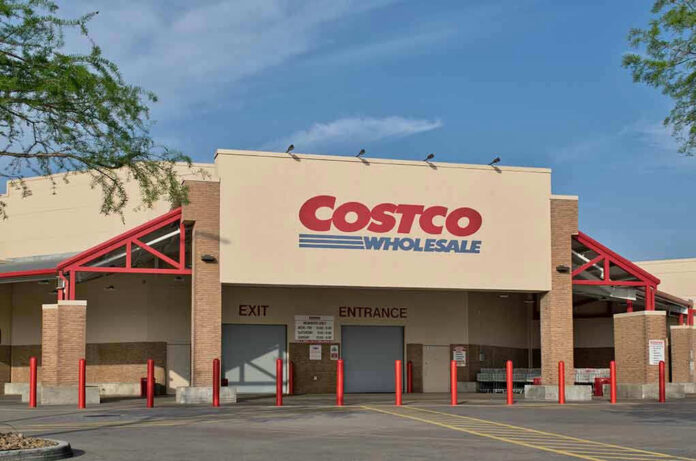
Americans rushed to stock up at Costco after tech outages and viral “doomsday” chatter, driving a late-month sales surge tied to emergency supplies.
Story Highlights
- Mizuho said 21 of 26 high-ticket generators on Costco’s site were sold out.
- Costco reported increased buying of water, rice, canned goods, paper, batteries, and generators.
- Mizuho estimated U.S. comparable sales jumped to about 11%–12% in late October.
- Analysts linked the spike to an Outlook outage, a nationwide flight grounding, and social-media anxiety.
What Sparked The Buying Wave
Mizuho Securities tied the demand jump to three stress points in quick order: a Microsoft Outlook outage, a nationwide flight grounding, and social-media posts warning of wider system failures. The firm said these events pushed shoppers to load up on backup power, water, shelf-stable food, and paper goods at Costco. A MarketWatch summary cited the analyst’s note and said “apocalyptic concerns” helped fuel the rush, especially for generators and home basics.
Mizuho reported that 21 of 26 higher-end generators listed on Costco’s website were sold out on November 15. That is a strong sign of demand for backup power. It also signals how outages and rumors can move shoppers fast. Stockouts alone do not prove total sales or profit, but they show real pressure on supply for key items during the scare window the analyst described.
What Costco Confirmed About Buying Trends
Costco Chief Financial Officer Gary Millerchip said the company saw increased buying in rice, canned food, water, paper products, generators, batteries, and similar goods. He said this seemed tied to a mix of concerns spreading on social media. His note matched what analysts and shoppers were seeing on the ground. It also showed that the lift spread across several aisles, not just power gear. The statement did not include exact amounts or a dollar impact.
CNBC reported Mizuho’s estimate that U.S. comparable sales, excluding gasoline, rose to about 11%–12% year over year in the final week of October. That compared with about 6%–7% in the first three weeks. The firm linked the late-month jump to emergency-prep buying after the outages and online warnings. The timing suggests a fast pivot by families who wanted backup power and basics if bigger systems failed.
Why This Moment Feels Bigger Than One Store Trip
Shoppers are reacting to fragile systems they rely on daily. A broken email network can slow work. A grounded flight can strain family plans and business. Add viral posts about blackouts or hacks, and people choose to prepare. Studies after the pandemic found that many buyers stock up to manage risk, not because they panic without reason. Fear, perceived scarcity, and social media can push that choice faster and wider across a community.
Consumers are panic-buying at Costco, snapping up generators and other emergency-preparedness items in response to a recent string of technology outages, according to investment firm Mizuho Securities.
“Consumer anxiety following the Microsoft Outlook outage, the ground stoppage… pic.twitter.com/tC3O1DCIDW
— CBS News (@CBSNews) November 18, 2026
This surge also taps a shared, cross-partisan worry: institutions feel brittle, and families feel on their own. People on the right blame global systems and elite mismanagement. People on the left fear rising inequality and uneven protection in a crisis. Both sides see the same store shelves and take the same lesson. When trust in infrastructure dips, households build their own buffer—water, food, paper, batteries, and a way to keep the lights on if the grid goes dark.
Sources:
marketwatch.com, cbsnews.com, economictimes.com, cnbc.com