

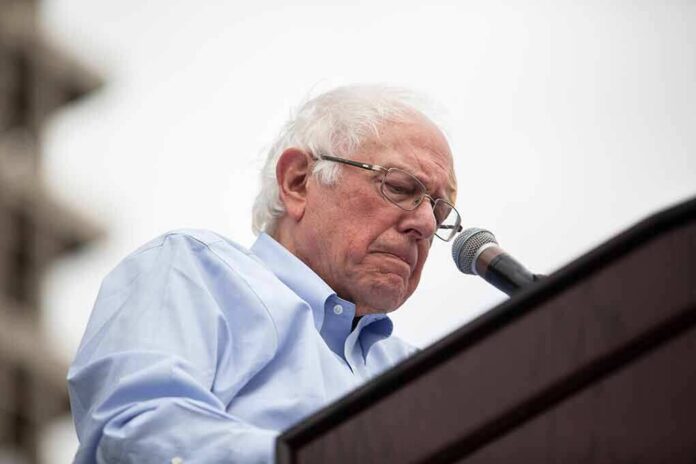
Sen. Bernie Sanders publicly said he will not support Sen. Chuck Schumer for Democratic Senate leader, pushing his party toward an open leadership fight.
Story Snapshot
- Sanders said “the time is now for change” and refused to back Schumer.
- Sanders urged a real contest and said Schumer will not run unopposed.
- Sen. Elissa Slotkin also declined to support Schumer, adding to pressure.
- Reports named Sen. Chris Van Hollen as a possible challenger, still undecided.
Sanders’ On-Camera Break With Schumer
On November 10, 2026, Sen. Bernie Sanders told reporters he would not support Sen. Chuck Schumer for Democratic leader. Sanders praised Schumer’s work ethic, then said the party needs new leadership and “the time is now for change.” He made the remarks at a joint appearance with Sen. Elissa Slotkin. The statement marked a rare public break with an incumbent leader and set off immediate questions about the coming caucus election.
When asked about an uncontested race, Sanders said he did not think Schumer would run unopposed. He called for “vigorous debate” and an open process for picking the next leader. That stance suggested more than a symbolic protest. It signaled a push for a true contest inside the Democratic caucus, rather than a quick, closed-door decision. The remarks placed transparency and competition at the center of his case for change.
Early Allies And Possible Alternatives
Sen. Elissa Slotkin joined Sanders in saying she would not back Schumer for the top job. Several incoming Democratic senators also held off on endorsing Schumer, according to published reports. The hesitation showed that Sanders was not alone and that some new members wanted a different approach. While dissent did not confirm a majority, it made clear that Schumer faced public resistance from parts of his party’s next class.
Reports identified Sen. Chris Van Hollen as a possible challenger. One Democratic senator-elect praised him as a strong option, while Van Hollen said he was still “in listening mode.” That kept the field fluid and left the party without a declared opponent to Schumer. The lack of a formal challenger limited clarity on policy direction, but it kept pressure on leadership to address calls for debate and openness.
How Senate Parties Choose Leaders
Senate party leaders are elected by their party conferences, not by the public. Votes usually happen in closed-door, secret-ballot meetings. A candidate needs only a simple majority of the conference to win. Because ballots are private, public endorsements can mislead. Lawmakers can keep their final choice to themselves. That secrecy often protects members from retaliation, but it also leaves voters guessing about who stands where and why.
Political research shows leadership challenges are uncommon and usually fail, yet they reveal deeper rifts. Such contests can flag shifts in priorities, strategy, or ideology that later shape policy. Even if the incumbent survives, the revolt can force changes in agenda or process. Sanders’s move fits that pattern, raising questions about how Senate Democrats want to confront a Republican-run Congress and a second-term President Trump.
Why This Intraparty Fight Matters Now
Democrats face decisions about message, spending, border policy, energy, and the cost of living. Voters across the spectrum say Washington serves insiders more than families. A leadership race can spotlight whether Democrats plan to change tactics after recent cycles. Sanders framed his stand around process and renewal rather than personal attack. That framing pressures leaders to show how they will fight for wages, prices, and basic fairness in a split nation.
🚨 Bernie Sanders Refuses to Back Chuck Schumer for Senate Majority Leader, Setting Up Democratic Leadership Showdown
🔴 Sanders Breaks With Schumer: Sen. Bernie Sanders announced Tuesday that he will not support Sen. Chuck Schumer's bid to become Senate majority leader when…
— Washington Report (@Washington_Rep) November 11, 2026
Schumer and his allies have pointed to past recruiting and fundraising success to defend his record, according to prior coverage. Supporters argue steady leadership helps the party compete in tough states. Detractors want an open test of ideas and methods before the next Congress begins. The caucus election will occur behind closed doors, so the final strength of either side may not be clear to the public even after the vote.
Sources:
youtube.com, bloomberg.com, newrepublic.com, themirror.com, apnews.com, laits.utexas.edu, academic.oup.com