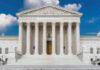

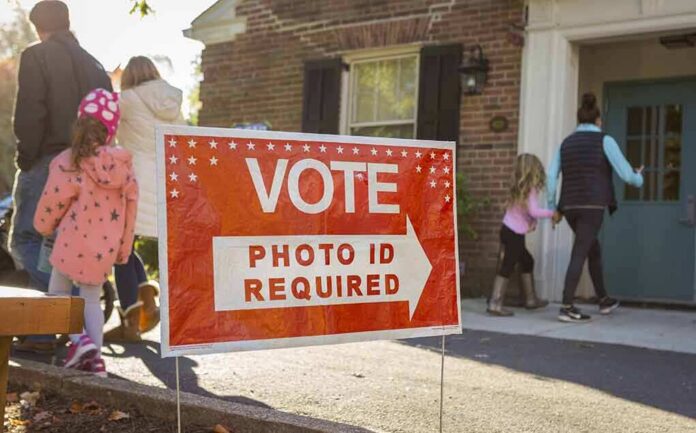
The Supreme Court froze a lower-court order and kept New Hampshire’s student ID voting ban in place for this election.
Story Snapshot
- The Supreme Court reinstated New Hampshire’s bar on student IDs for this election, citing timing rules.
- Justices relied on the Purcell principle to avoid late changes to voting procedures.
- The order is temporary and does not decide if the ban is lawful long term.
- Student IDs had been accepted in New Hampshire from 2012 until mid-2026 standards changed.
What The Supreme Court Actually Did
The Supreme Court issued an unsigned emergency order that paused a federal judge’s directive allowing student IDs as backup proof of identity. The case, Scanlan v. Coalition for Open Democracy, came from a dispute over guidance by New Hampshire’s secretary of state. The Republican National Committee supported the state’s request. Justice Ketanji Brown Jackson publicly dissented from the stay. The Court pointed to the rule against changing election procedures close to an election, keeping current rules in place for now.
The order leaned on the Purcell principle. That doctrine says courts should avoid changing voting rules near an election because it can cause confusion for voters and poll workers. The Court’s action did not judge whether student IDs are secure or insecure. It focused on timing and stability. The litigation may continue after voting ends, when courts can build a full record and weigh the law’s merits in a normal process.
How New Hampshire’s Rules Shifted In 2026
New Hampshire accepted student IDs for voter identification from 2012 until June 2026, under standards requiring a name, a photo, and issuance or expiration within five years. A new law, House Bill 323, changed that policy. The secretary of state then told local officials that student IDs could not be used to register, to get an absentee ballot, or to check in at polling places. The dispute centered on whether student IDs could still count as supporting evidence when voters lacked other ID.
A federal district judge said local officials could consider student IDs as part of the “other evidence” safety valve when a voter had no approved ID. State officials appealed that decision, arguing it would sow confusion so close to voting. The Supreme Court’s stay backed the state’s position on timing but did not rule on whether excluding student IDs is required by law or necessary for election security. That question remains open for later court review.
Security Claims, Access Concerns, And What We Do Not Know
State officials and allies framed the restriction as guarding clear, stable rules. News accounts did not identify New Hampshire cases of voter fraud tied to student IDs, and some advocates said there were none. Because the Supreme Court focused on timing, not evidence, the order did not weigh whether student IDs are riskier than other documents. That leaves a key gap: no public, side-by-side proof shows student IDs are less reliable than other accepted IDs in New Hampshire.
falsely claims the Supreme Court has mandated voter ID requirements in all 50 states, accompanied by a graphic depicting a red US map and a yes/no poll on the topic.The X post by@ppkty_112
In reality, the recent Supreme Court order from October 22, 2026, only allowed New…— KBK (@KBK104574) October 28, 2026
Voting-rights groups argued the rule targets younger voters and adds burden. They pointed to the long span when student IDs were accepted under set standards and to the statute’s safety valve for “any other evidence” that shows identity. Their claim is that students who lack driver’s licenses may now face extra steps or delays. Local officials also reported that students rarely arrive with only a student ID, which could limit the real-world effect either way this cycle.
Why This Matters Beyond New Hampshire
This fight reflects a nationwide trend. Courts and parties now race into emergency hearings near elections. The Purcell doctrine has become the frequent tie-breaker. That can help stop last-minute whiplash for voters. It can also freeze contested rules in place without a full record. Many Americans across the political spectrum worry that process games and power plays overshadow facts. Clear evidence on ID security and fair access would help rebuild trust—something both sides say they want.
Sources:
youtube.com, wjla.com, news.bloomberglaw.com, usatoday.com, thehill.com, indepthnh.org, wmur.com, thedartmouth.com