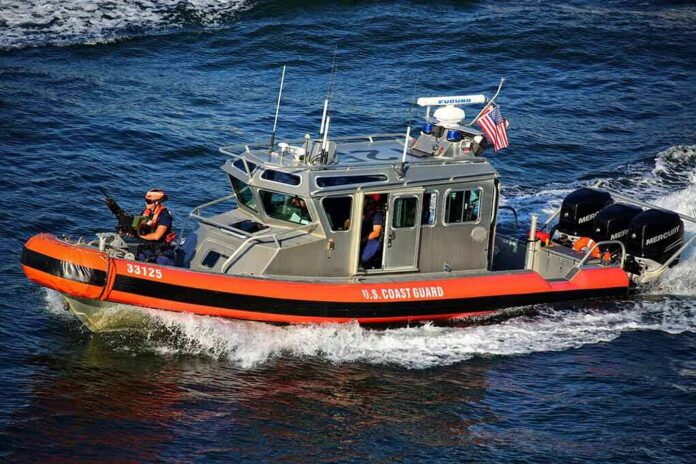
Gunfire from the Mexican side of the Rio Grande hit a U.S. Coast Guard patrol near Garceno, Texas, prompting the crew to return fire, officials said.
Story Snapshot
- Coast Guard reported an exchange of gunfire near Garceno, Texas, during a joint interdiction mission.
- No injuries or damage to Coast Guard assets were reported.
- The incident remains under investigation, with few operational details released.
- Multiple outlets echoed the same official account within days.
What Officials Confirmed About The Border Shootout
U.S. Coast Guard personnel said they took fire from the Mexican side of the Rio Grande near Garceno, Texas, on September 26. The crew was working a joint interdiction mission with federal partners when they returned fire in response. The service reported no injuries to its members and no damage to its boats. Officials said the case remains under investigation, and they did not release names, unit numbers, or mission identifiers tied to the engagement.
Stars and Stripes reported that the initial gunshots came from the Mexican side before the Coast Guard responded. Several outlets repeated the same core statement from the service in the days that followed, noting the absence of injuries and the active status of the probe. Some coverage referenced suspected cartel involvement, but the Coast Guard’s quoted statement did not name a specific group or suspect linked to the gunfire.
Where And Why It Matters For Border Enforcement
The exchange took place along a busy stretch of the Rio Grande in Starr County. Joint interdiction operations often bring together Coast Guard crews, Border Patrol agents, and other federal teams. These missions aim to stop illegal crossings and disrupt smuggling along the river. The Coast Guard has long supported border interdiction roles under national counter-narcotics and border enforcement policy, especially when missions cross from maritime to riverine zones.
Gunfire across the river raises clear safety concerns for agents and nearby residents. It also feeds a long-running debate over how to police the border without pushing communities into a constant state of fear. Federal and state leaders often point to such incidents to argue for more resources and tougher posture. Civil liberties groups counter that aggressive tactics can put migrants and bystanders at risk. These tensions rise fastest when incidents unfold with little public detail early on.
Why Early Narratives Form Fast And Stick
In border incidents, the first public account usually comes from an agency statement, which then spreads across news sites. That pattern creates quick consensus on basic facts but leaves many specifics unanswered for weeks or months. Joint operations, by design, are less visible to the public, which means radio logs, video, and after-action reviews are not seen right away. Stars and Stripes and others followed that pattern here, relying on the Coast Guard account.
This information gap is not new. Researchers have documented how border enforcement events often move into larger debates about migration, drugs, and security before the forensic record is complete. That does not make the official account untrue. It does mean the public conversation can harden around a few lines of text, rather than a full set of records. The cycle makes it harder to separate a single defensive response from a claim of wider escalation.
Shared Concerns: Safety, Transparency, And Mission Clarity
People across the political spectrum share core concerns that this incident touches. Families want agents protected and communities safe. Taxpayers want to know missions are lawful, targeted, and effective. Residents want less fear on both sides of the river. Clear records can help. A formal incident report, radio traffic, and any use-of-force review would answer key questions about who fired first, from where, and why the crew judged return fire necessary. That clarity builds trust in the mission.
Report: 500 Troops Deploy to Rio Grande Valley in Texas After Drug Cartel Members Shoot at USCG Vessel: Roughly 500 troops are reportedly deploying to the Texas Rio Grande Valley after a U.S. Coast Guard (USCG) vessel was fired upon by drug cartel […]
Source dlvr.it/TVlbj1 pic.twitter.com/efuSzgAItF
— American Greatness (@theamgreatness) October 2, 2026
Leaders also face a balance. Faster disclosure can calm rumors, yet active probes limit what can be shared. When details are thin, headlines tend to frame events as proof for broader claims. In this case, several reports tied the gunfire to wider border-security steps, including troop movements, even as investigators continued their work. Accuracy and restraint matter most in moments like this. The facts that are confirmed should lead, while officials work to fill in the rest.
Sources:
pjmedia.com, fox7austin.com, yahoo.com, stripes.com, academic.oup.com