
Ecuador says a joint operation with 50 U.S. troops and federal drug agents led to more than 30 arrests tied to Mexico’s Jalisco New Generation Cartel, signaling a tougher cross-border fight against cocaine pipelines to the United States.
Story Highlights
- Ecuador arrested 30-plus suspects in raids linked to the Jalisco New Generation Cartel.
- Ecuador’s Interior Minister credited a joint effort with U.S. troops and the Drug Enforcement Administration (DEA).
- The DEA said recent operations target traffickers moving cocaine toward the United States.
- The action fits a broader U.S.-Ecuador push against cartel logistics across the region.
Officials Describe a Joint U.S.-Ecuador Operation
Ecuador’s Interior Minister John Reimberg said an early-morning, multi-city operation detained more than 30 Ecuadorians tied to a structure linked “directly” to the Jalisco New Generation Cartel, also known as CJNG. Multiple outlets reported that about 50 U.S. troops supported the action, alongside the Drug Enforcement Administration and Ecuador’s National Police. Officials framed the raids as part of an eight-month probe aimed at a network moving cocaine through Ecuador for overseas markets, including the United States.
The Drug Enforcement Administration said its personnel worked with Ecuadorian police and prosecutors in recent investigations that target traffickers responsible for moving large quantities of cocaine toward the United States. A separate August action in Ecuador produced more than 20 arrests and sizable seizures of weapons, cash, vehicles, and drugs, showing ongoing coordination between the Drug Enforcement Administration and Ecuadorian authorities. Together, the efforts point to deeper joint work as Ecuador confronts violent crime tied to drug routes.
Where the Raids Fit in Ecuador’s Security Picture
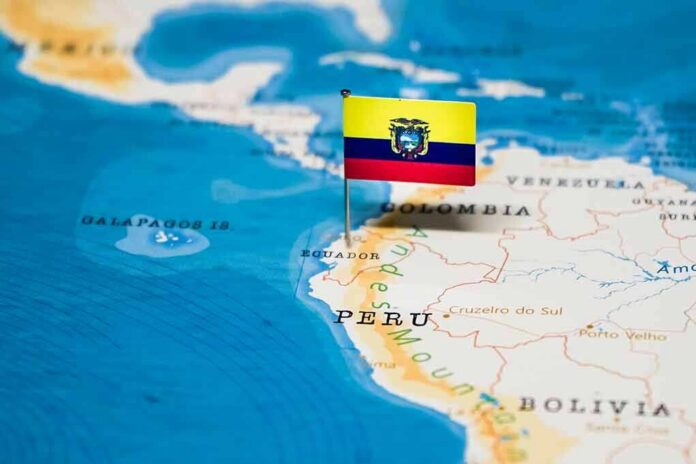
The arrests come as Ecuador struggles with gang violence and a role as a transit hub linking coca-producing regions in Colombia and Peru to Pacific shipping routes. Reporting describes the latest action as spanning several cities, including Guayaquil and Machala, which sit near key maritime corridors. Regional coverage shows that when Ecuador ramps up operations, it often does so with U.S. support on intelligence, logistics, and training, sometimes including U.S. military elements in partner roles.
Officials and analysts say cartels exploit weak points in ports, roads, and small airstrips to stage shipments bound for North America and Europe. The Jalisco New Generation Cartel has sought partners among local Ecuadorian groups to secure routes and protection. That is why recent actions also named local gangs like Los Lobos and Los Choneros as targets in related cases. Raids have focused on seizing weapons, phones, vehicles, and cash that support those logistics chains.
What Was Seized and What Comes Next
Authorities highlighted arrests as the key result, while recent operations tied to the same campaign also listed seizures of rifles, handguns, ballistic vests, a small aircraft, vehicles, and stacks of cash. Prosecutors will now sort roles within the alleged network, drawing on device data, messages, and financial records gathered during the raids. The Drug Enforcement Administration said the investigations are part of a broader push to disrupt the groups that feed cocaine flows north.
The cross-border angle matters at home. When a cartel cell loses safe houses, phones, or boats abroad, it can slow the supply chain that fuels addiction and crime in U.S. communities. Supporters of tougher action will see the U.S. role as defending neighborhoods stateside. Civil libertarians will watch due process in Ecuador’s courts. For both sides, the point is practical: choke off the pipeline, and you cut the profits that let cartels corrupt institutions and threaten everyday life.
Sources:
military.com, dea.gov, democrata.es, aa.com.tr, cnnespanol.cnn.com, dialogo-americas.com