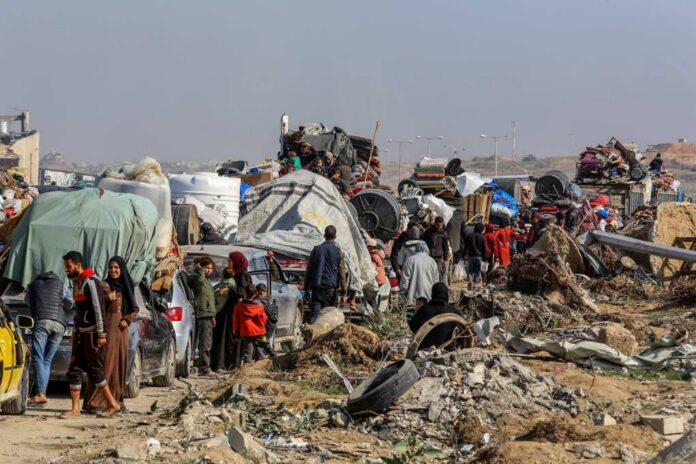
While Washington and Brussels argue over climate rules and border policy, a half‑million people in Sudan’s El Obeid are staring down a possible massacre that almost no one in power seems willing to stop.
Story Snapshot
- The United Nations warns a major militia offensive on El Obeid could trigger mass killings and a “human rights disaster.”
- About 500,000 civilians, including over 100,000 already displaced people, are trapped under siege, drones, and shelling.[1]
- Global powers issue statements but avoid hard choices on pressure, sanctions, and arms flows that fuel the war.[4]
- The crisis echoes past failures in Darfur and raises hard questions about whether “the international community” still protects the vulnerable.[8]
What Is Happening In El Obeid Right Now?
United Nations officials say Sudan’s paramilitary Rapid Support Forces have built up large numbers of fighters and weapons around El Obeid, a key city in the Kordofan region.[6] Reports describe stepped‑up drone strikes and artillery fire hitting fuel stations, trucks, and other civilian sites. For residents, daily life already feels like a siege, with basic services failing and escape routes dangerous or blocked. The United Nations warns that a ground assault on top of these attacks could turn a bad situation into a full‑blown atrocity.[4]
A coalition of countries told the United Nations Human Rights Council that ten straight days of drone strikes have killed at least 50 civilians in El Obeid and North Kordofan and badly damaged key infrastructure.[1] Their joint statement estimates about 500,000 civilians are in the city’s path, including more than 100,000 people who already fled from other battles.[1] The same statement cites credible reports of ethnic and sexual violence in the wider conflict, adding to fears that another city could see mass killings and war crimes if no one steps in.[1]
Why The United Nations Is Ringing A Loud Alarm
Volker Türk, the United Nations High Commissioner for Human Rights, says the pattern around El Obeid looks disturbingly familiar.[6] He points back to the city of El Fasher and the Zamzam displacement camp in Darfur, where United Nations investigators later found massacres, mass rape, and looting that “bore the hallmarks of genocide.”[4] Türk warns that the same “playbook” is now unfolding in Kordofan, and he has urged countries with real leverage over the fighters to “stop this madness” before it reaches the same deadly outcome.[4]
The United Nations Security Council has echoed those fears, warning of an “imminent risk of mass atrocities” if the Rapid Support Forces push into the city.[2] Council members demanded the militia halt its assault and called on all sides, including the regular Sudanese army, to protect civilians and obey international law.[2] They also pressed every United Nations member state to stop feeding the war with weapons or outside interference, and to support humanitarian access so aid workers can safely reach those who are trapped.[2]
How We Got Here: A War The World Keeps Ignoring
Sudan has been locked in a brutal power struggle since fighting broke out in 2023 between the national army and the Rapid Support Forces.[11] The war has displaced tens of millions, created famine conditions in parts of Darfur, and turned several cities into battlefields.[13] The Rapid Support Forces grew out of older Janjaweed militias tied to atrocities in Darfur in the 2000s, and rights groups have again accused them of genocide in parts of West Darfur during this latest conflict.[7] Many Sudanese now face hunger, disease, and nonstop violence with almost no safe place to go.[13]
A detailed United Nations human rights report on Sudan’s 2025 abuses found widespread killings, torture, and sexual violence by both the Rapid Support Forces and government‑aligned forces, often along ethnic lines.[8] It documented how fighters used starvation, siege tactics, and attacks on health care to break communities. In that context, El Obeid is not some isolated flare‑up but the next front in a war where civilians have become the main targets. The warning now is not based on speculation but on three years of grim evidence.[8]
Why This Matters To Americans Who Feel The System Is Rigged
Many Americans across the political spectrum already feel their own leaders talk a big game about “human rights” while ignoring suffering unless it fits the agenda of the day. El Obeid fits that pattern. The same Western governments that say they are “gravely alarmed” also sell weapons, cut deals with Gulf states tied to different Sudanese factions, and move slowly on real pressure like sanctions or arms embargoes.[12] To ordinary citizens, it can look like more proof that global elites protect interests first and people last.
The UN Security Council warned of an imminent risk of mass atrocities in Sudan as RSF forces concentrated around the strategic city of El Obeid.
International officials fear a major offensive could worsen one of the world's largest humanitarian crises. #Sudan #UN… pic.twitter.com/mkN53XF4vO
— Edward McGrath (@EdwardMcGrath01) June 21, 2026
For conservatives wary of endless foreign entanglements and liberals angry about hypocrisy on human rights, Sudan raises a hard question: if the world cannot stop an obvious, slow‑motion disaster we can see coming, what is the point of all the United Nations meetings and “rules‑based order” speeches?[4] The United Nations is issuing clear warnings. Dozens of countries have joined them.[7] Yet without real action from powerful states, those words risk becoming just another press release read by people far from the blast radius.
What Could Be Done – And Why It Is Not Happening
Diplomats and rights groups point to several steps that could still save lives in El Obeid. Countries that arm or fund either side could suspend support until civilians are protected and aid agencies are allowed in.[1] The United Nations Security Council could tighten sanctions on commanders tied to drone attacks and ethnic killings, or refer new crimes to the International Criminal Court, as it did in Darfur years ago.[9] Neighboring states could close their airspace to flights moving weapons into the war zone.[12]
Instead, the response so far has leaned heavily on statements and lightly on real leverage. Great powers are distracted by other wars, elections, and their own economic problems. Many leaders fear short‑term costs, like higher energy prices or strained ties with regional allies, more than the long‑term cost of letting another mass killing unfold.[12] For citizens in America and Europe who already think the system mainly serves the well‑connected, El Obeid is one more tragic case study: when it is time to choose between people and power, the people of a distant city lose.
Sources:
[1] YouTube – Impending human-rights disaster: UN fears for Sudan’s al-Obeid
[2] Web – UN calls on RSF to cease imminent offensive on Sudan’s el-Obeid
[4] Web – The UN’s top human rights official has issued an urgent warning that …
[6] YouTube – UN Issues Urgent Warning Over Al-Obeid Offensive | APT
[8] Web – At least 29 countries raise alarm about atrocities in Sudan’s el-Obeid
[9] Web – Sudan: Imminent offensive on El Obeid must be halted – ohchr
[12] Web – ‘Stop this madness’: Rights chief warns of impending atrocities as …
[13] Web – Sudan’s War: The Narrow Path to Peace – Institut FMES