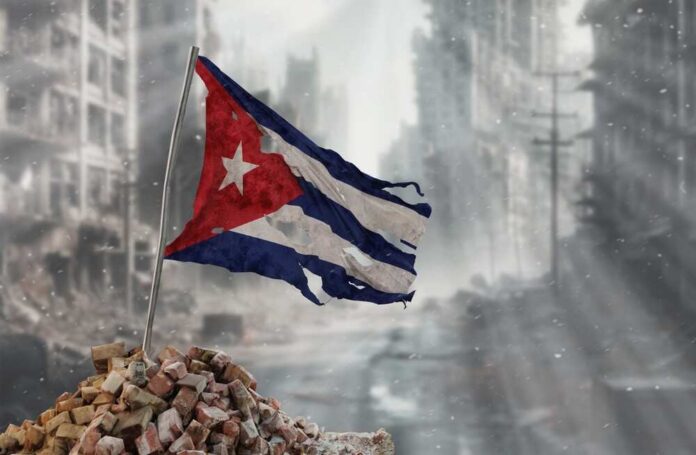
Cuba’s communist government just approved its biggest economic overhaul since the 1959 revolution — and it may be the clearest sign yet that decades of socialist rule are cracking under pressure.
Story Highlights
- Cuba’s National Assembly approved sweeping reforms on June 18, 2026, opening the door to private real estate, private banks, and the partial privatization of state-owned companies.
- The reforms come as Cuba faces a severe fuel and energy crisis, triggered in part by the loss of Venezuelan oil after U.S. forces removed President Nicolás Maduro from power.
- Cuba has already released more than 2,000 prisoners and opened diplomatic talks with the U.S. — moves analysts see as signs of a government under serious strain.
- Experts warn that even with these reforms, Cuba remains a one-party state with no free press, no political opposition, and a history of reversing economic openings when the pressure eases.
Cuba Opens the Door — But Who Controls the Key?
On June 18, 2026, Cuba’s National Assembly voted to approve a major package of economic reforms. The changes would allow private real estate development, let private banks enter the financial sector, and open parts of the state-run economy to private investment. Cuban President Miguel Díaz-Canel framed the move as a crisis response, saying the government would “redefine the list of prohibited activities so that permitted activities can have the broadest possible scope.”
Today, about 10,000 private businesses operate in Cuba. Since February 2026, those businesses have been allowed to import fuel — something that had always been a government monopoly. The new reforms would go further, letting private companies invest in the broader economy, a right previously reserved only for foreign investors. Many of those foreign investors had already left Cuba, spooked by the threat of U.S. sanctions.
A Country Running on Empty
The timing of these reforms is no accident. Cuba is in the middle of a severe fuel and energy crisis. After U.S. forces ousted Venezuelan President Nicolás Maduro in 2026, Venezuela stopped sending oil to Cuba. On May 14, 2026, Cuba’s Ministry of Energy and Mines warned the country had run out of oil and diesel entirely. Power outages became widespread. The government had little choice but to act.
Cuba has been trying to ease tensions with Washington. Díaz-Canel confirmed in March 2026 that Cuba was in diplomatic talks with the United States. As a goodwill gesture, Cuba released more than 2,000 prisoners by April 3, 2026. The U.S. responded by issuing a limited license allowing companies to resell Venezuelan oil to Cuba’s private sector — though the Treasury Department made clear the oil must “support the Cuban people, including the private sector,” not the regime.
Reform or Survival Tactic? Cuba’s Pattern of Half-Steps
Cuba has been down this road before. In 2021, the government legalized small and medium-sized private businesses. By mid-2024, more than 11,000 private companies were registered. But then the government reversed course. It imposed price caps, banned private wholesale businesses, and made clear its top priority was “control” of the private sector — not its growth. Analysts at the BTI Transformation Index found that by the end of 2024, restrictive measures had badly damaged trust in the government’s commitment to real reform.
🇨🇺 Cuba begins its largest economic reform since the 1959 revolution
The country's parliament unanimously approved radical reforms that provide for the privatization of a significant part of the economy.
The plan provides for private real estate development, the creation of… pic.twitter.com/m2eEd1F2Bs
— Visegrád 24 (@visegrad24) June 19, 2026
History shows this pattern is common in one-party states. A study of China’s economic reforms found that gradual market opening was used mainly to protect Communist Party power, not to abandon socialist control. Cuba appears to be following a similar playbook — opening just enough to relieve economic pain while keeping the government firmly in charge. Freedom House’s 2026 report on Cuba confirms the country still bans political opposition, silences independent media, and punishes dissent. Real democratic reform remains nowhere in sight. Some political analysts put the odds of Díaz-Canel being forced from power before the end of 2026 at 65%, but note that even regime change would not quickly produce democracy, since Cuba lacks the political infrastructure to support a fast transition.
What This Means for Americans Watching
For Americans who believe governments — including their own — too often protect the powerful at the expense of ordinary people, Cuba’s story offers a familiar lesson. A ruling class clings to power, makes just enough concessions to quiet the pressure, and calls it reform. The Cuban people have endured fuel shortages, blackouts, and mass emigration — more than one million Cubans left the island since 2022. Whether this latest round of changes brings real relief or just buys the regime more time is a question that remains wide open.
Sources:
[1] YouTube – Cuban lawmakers approve sweeping reforms to socialist model
[2] YouTube – Cuba: Díaz-Canel announces economic reforms to attract investment
[3] Web – Cuba Country Report 2026 – BTI Transformation Index
[5] Web – Will there be regime change in Cuba in 2026? – by Boz
[6] Web – Cuba’s alternative development despite US regime change
[7] Web – Cuba rolls out reforms to further open local economy to private sector
[8] Web – Cuba: Freedom in the World 2026 Country Report
[9] Web – What Should Be Prioritized in a First Phase of Economic Reforms in …
[10] Web – Cuba Proposes Sweeping Reforms to Socialist Model Amid US …