

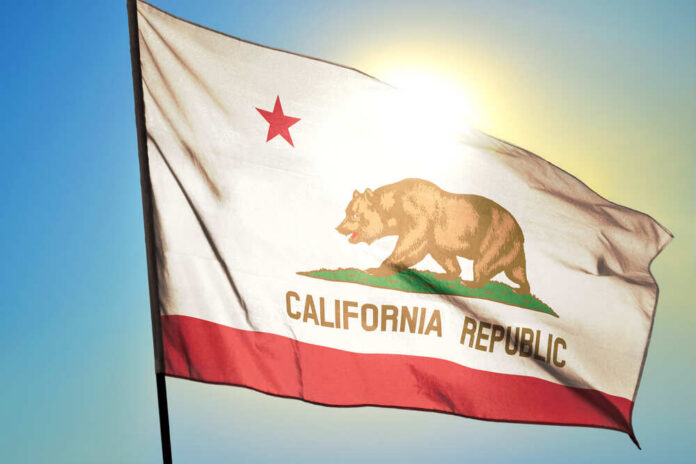
California lawmakers just advanced a bill to make Islamic holy days official state holidays—fueling a fresh fight over whether government is drifting from neutrality into cultural favoritism.
Quick Take
- Assembly Bill 2017 (AB2017) would recognize Eid al-Fitr and Eid al-Adha as official California state holidays.
- Two California Assembly committees approved the measure unanimously (19–0 and 7–0), and it still needs full Assembly and Senate votes plus Gov. Gavin Newsom’s decision.
- Conservative commentary has framed the bill as “Islamization,” but the available facts show a symbolic holiday-recognition debate—not evidence of theocratic governance.
- The real constitutional and fiscal questions are whether state-sponsored closures amount to religious endorsement and what paid-time-off costs taxpayers.
What AB2017 Does—and Where It Stands Right Now
Assemblyman Matt Haney (D–San Francisco) introduced AB2017 to recognize Eid al-Fitr and Eid al-Adha as official state holidays, a push linked in reporting to advocacy by CAIR. The bill cleared the Assembly Committee on Public Employment and Retirement by a 19–0 vote on April 8, 2026, and then passed the Assembly Committee on Appropriations 7–0 on April 22, 2026. As of early May, it had not yet become law.
That posture matters because some viral commentary treats committee votes as a finished outcome. In reality, the proposal still faces the full Assembly, the state Senate, and ultimately Gov. Gavin Newsom, who can sign or veto it. With California’s legislature dominated by Democrats, the unanimous committee votes suggest low organized resistance inside Sacramento—at least so far—though broader public pushback could still shape final floor debates.
Why This Triggers a First Amendment Argument
Critics argue that declaring explicitly religious days as official state holidays crosses the Establishment Clause line by giving a government benefit to a particular faith. Supporters typically frame these measures as equal recognition in a diverse state and as an accommodation for a sizeable minority community. Based on the research provided, no comparable statewide holidays currently exist for other faith-specific observances such as Rosh Hashanah or Good Friday, which amplifies the perception of selective recognition.
The constitutional question is not settled by outrage or reassurance; it turns on details that are not fully documented including how the bill is written and justified, and how courts would weigh state-sponsored closure against neutrality principles. The research also notes precedent protecting minority religious practices in other contexts, but a holiday designation is a different mechanism than permitting private religious exercise. With limited primary-text detail here, firm legal conclusions would be premature.
The Political Reality: Symbolism, Not a Theocracy
HotAir’s headline language calling California an “Islamic Republic” is clearly rhetorical, and the available evidence in the research does not support the idea of an actual shift to religious rule. The concrete development described is a narrow legislative proposal about paid closures for two holidays. Separate background material highlights that earlier “Islamic California” narratives have circulated before and have been disputed as fantasy, reinforcing that dramatic framing often outruns verifiable facts.
That doesn’t mean conservatives are wrong to scrutinize the move. For voters already frustrated by “woke” politics and the feeling that government picks winners and losers, official recognition of one religion’s holy days can look like the state taking sides—especially when other faith communities lack similar recognition. The stronger, fact-based critique is about consistency and neutrality: if California starts formalizing religious holidays, it may face demands to broaden the list or defend why it won’t.
What It Could Cost Taxpayers—and What Comes Next
The immediate practical impact, if AB2017 becomes law, would be public-sector closures for one to two days each year tied to Eid observances. The research estimates productivity costs in the tens of millions of dollars, though it presents that as a rough range rather than a documented fiscal note. Even small costs become politically potent in a high-tax state where residents already question whether government services justify the price tag.
'The Golden State Has Fallen: Welcome to the Islamic Republic of California'
'At the behest of CAIR, the bill seeks to officially recognise the Islamic holidays of Eid al-Fitr and Eid al-Adha as California state holidays'
'There are no holidays from other religions that are…
— Sam 🇦🇺🇺🇦 (@samstrades) May 3, 2026
Next steps are straightforward: lawmakers must vote in both chambers, and Newsom must decide whether the bill aligns with his administration’s inclusivity priorities. If it passes, litigation or policy challenges could follow, driven less by “Islamic Republic” rhetoric and more by narrow questions of government neutrality and equal treatment across religions. With only limited post-April reporting in the research, the most reliable takeaway is procedural: the bill is advancing, but it is not yet California law.
Sources:
The Golden State Has Fallen: Welcome to the Islamic Republic of California