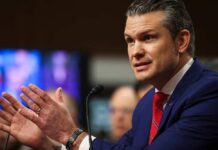

After 40 days of a DHS shutdown and airport staffing chaos, Washington just handed Markwayne Mullin the keys to an agency that has too often treated constitutional limits as optional.
Story Snapshot
- The Senate confirmed Sen. Markwayne Mullin as DHS Secretary in a 54-45 vote after President Trump fired Kristi Noem.
- DHS has been in a partial shutdown since Feb. 14, straining TSA and FEMA operations while hundreds of thousands of employees go without pay.
- TSA staffing problems hit a reported record 11.76% call-out rate, disrupting spring travel as DHS leaned on ICE to support airport operations.
- Mullin signaled a notable policy change: requiring DHS agents to get judicial warrants before entering homes and businesses.
- The confirmation relied on bipartisan votes, with two Democrats supporting Mullin and Sen. Rand Paul as the lone Republican “no.”
Senate Confirmation Lands in the Middle of a DHS Breakdown
Senators confirmed Oklahoma Republican Markwayne Mullin as Department of Homeland Security secretary on March 24, 2026, by a 54-45 vote, closing out a fast nomination following President Trump’s decision to remove Kristi Noem. The leadership change comes as DHS remains partially shuttered from a funding standoff that began Feb. 14. Mullin inherits an agency under pressure to keep airports running, respond to disasters, and manage immigration enforcement despite the budget paralysis.
Operational strain has been most visible at the Transportation Security Administration, where a reported 11.76% call-out rate among officers set a record and disrupted travel during a busy spring season. The administration has already sent ICE personnel to airports to help stabilize operations, a sign that DHS is mixing missions to keep basic functions moving. The shutdown has also weighed on FEMA and other components, with workforce stress compounded by the uncertainty of delayed pay.
Noem’s Exit Followed a Crisis That Reignited Oversight Questions
Kristi Noem’s ouster followed months of scrutiny that intensified after a January immigration enforcement operation in Minneapolis ended with two fatal shootings by federal agents. Reporting indicates the incident prompted bipartisan criticism and led Border Czar Tom Homan to take operational control in Minnesota, effectively sidelining Noem. Separately, Noem drew sharp attention over advertising spending during a congressional hearing shortly before her firing, adding to doubts about management judgment at a department already facing credibility problems.
Senate Democrats used the Minneapolis episode as leverage in the funding fight, withholding support for DHS appropriations while demanding reforms to immigration enforcement agencies. That tactic helped extend the shutdown, but it also made clear what Mullin will face immediately: lawmakers tying dollars to accountability requirements and operational guardrails. For conservative voters who want secure borders without a federal police culture, the central question is whether reforms actually narrow abuse risks while still allowing lawful, effective enforcement.
Mullin’s Warrant Pledge Signals a Constitutional Pressure Valve
Mullin told senators DHS agents should be required to obtain judicial warrants before entering homes and businesses, a meaningful shift from past practices that critics argued pushed too hard against Fourth Amendment boundaries. If implemented cleanly, the change could reduce confrontations that turn routine enforcement into national scandals and strengthen courtroom defensibility for legitimate operations. The practical test will be whether DHS can keep tempo on targeting serious threats while respecting clear limits on searches and entries.
Bipartisan Votes, One GOP “No,” and an Unusual Independence Narrative
Mullin’s confirmation relied on Democratic support, including votes from Sens. John Fetterman and Martin Heinrich, while Sen. Rand Paul stood as the lone Republican opposing him. Paul’s objection centered on concerns about agency restraint and past rhetoric, framing DHS as an institution that has struggled to accept limits on force. Heinrich, by contrast, argued Mullin showed independence from White House pressure, a claim that may reassure skeptics worried that crisis-driven politics can make agencies act first and justify later.
What Happens Next: Funding Talks, TSA Stability, and a Vacant Senate Seat
Immediate priorities include reopening DHS fully, restoring stable staffing, and negotiating a funding deal that doesn’t trade operational capacity for vague promises. Mullin also leaves behind an open Senate seat, and Oklahoma Gov. Kevin Stitt is expected to appoint an interim replacement. For the public, the near-term measure of success will be whether airport screening performance improves and whether DHS can operate without generating daily headline controversies—while still enforcing immigration law in a way that holds up in court and respects constitutional boundaries.
Markwayne Mullin Is Confirmed As Department of Homeland Security Secretaryhttps://t.co/xp3UQ9R9Fp
— RedState (@RedState) March 24, 2026
While national attention in 2026 is pulled toward overseas conflict and rising costs at home, DHS is where everyday Americans feel federal power most directly: at airports, during disasters, and in immigration enforcement actions. Mullin’s early statements point toward a calmer posture and clearer legal process, but the shutdown, the TSA strain, and the political bargaining around enforcement reforms are immediate stress tests. The country will quickly learn whether this leadership change restores basic competence without expanding federal overreach.
Sources:
Senate Confirms Markwayne Mullin as Department of Homeland Security Secretary
Senate set to vote confirming Sen. Markwayne Mullin as DHS secretary
DHS: Senate vote to advance Markwayne Mullin after Kristi Noem
Senate advances Mullin’s DHS nomination
DHS nominee clears key Senate hurdle, setting up final confirmation vote