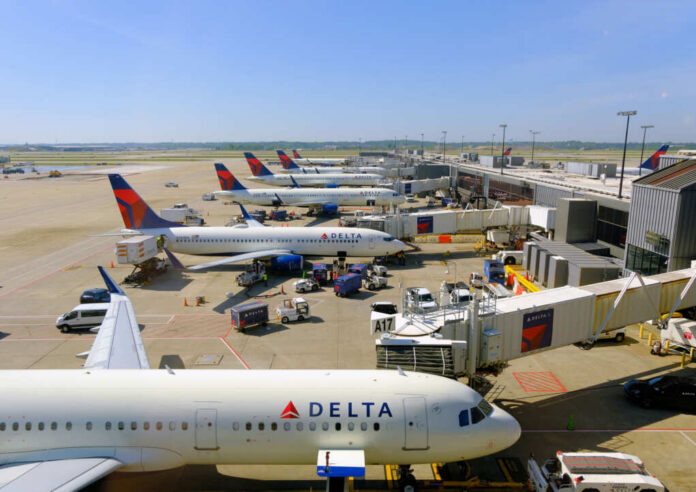
America’s airports are being pushed toward shutdown not by weather or war, but by a Washington funding lapse that’s now spilling into security lines, staffing shortages, and flight cuts.
Story Snapshot
- TSA leadership warned that smaller airports could “quite literally” be forced to shut down as staffing relief runs out during the ongoing shutdown.
- Mass “call-outs” and absentee spikes have contributed to security lines stretching beyond three hours at some airports.
- The FAA has precedent for imposing 10% flight reductions at 40 major airports when staffing levels threaten system safety.
- DHS described “severe operational strain,” while airline CEOs urged Congress to protect aviation workers from shutdown impacts.
Shutdown pressure is hitting the front door of air travel
Department of Homeland Security funding lapsed on February 14, 2026, and the strain is now showing up where Americans feel it fastest: TSA checkpoints and flight schedules. TSA Acting Deputy Administrator Adam Stahl publicly warned that closures are on the table, especially for smaller airports, because the agency is running out of options to keep operations stable. TSA call-outs have translated into longer lines, missed flights, and a growing sense of disorder for travelers.
DHS has pointed to severe operational stress, and TSA has cited significant absenteeism at major hubs. Reports have highlighted about 21% call-outs at airports including Atlanta, JFK, and Houston Hobby, a level that can quickly overwhelm checkpoint staffing even when terminals remain open. TSA’s internal surge support is also reportedly depleted, meaning fewer reinforcements are available when a local airport’s workforce thins out on short notice.
FAA flight cuts show how quickly “safety mode” can become normal
Federal aviation officials have a playbook for how shutdown-driven staffing gaps can force the system into “safety mode.” In prior shutdown conditions, the FAA implemented staged reductions that reached 10% fewer flights at 40 high-traffic airports to manage air traffic control capacity and reduce delays cascading through the network. This matters because aviation is interconnected: when big hubs slow down, smaller airports lose connections, crews time out, and passengers get stranded far from home.
The list of airports that have faced 10% reduction planning includes many of the country’s most important travel and commerce nodes—Atlanta, LAX, Chicago O’Hare, JFK, Newark, Miami, Seattle, and others. Even if the immediate risk today centers on smaller-airport closures, the systemwide effect can still boomerang back to the major hubs through reroutes, missed connections, and delayed aircraft rotations. That’s why “localized” staffing problems rarely stay localized for long in aviation.
What the call-outs and three-hour lines signal for families and commerce
The practical result of a prolonged shutdown isn’t abstract politics; it’s families stuck in terminals, business travel disrupted, and freight schedules thrown off. Reports tied shutdown-related constraints to weekend-wide delays affecting thousands of flights, alongside security lines exceeding three hours at some locations. Package carriers and time-sensitive shipping can also feel the pinch when passenger flights are reduced, because cargo often rides in the belly of commercial aircraft that suddenly have fewer slots.
Airlines and DHS are pointing to morale and staffing stability
Airline CEOs, including leaders of major carriers and freight operators, have urged Congress to shield aviation workers from shutdown turbulence, warning about stability, morale, and security. DHS has likewise called for restoring funding, framing the situation as an operational strain problem that worsens over time. The core issue is simple: when employees are unpaid or partially paid during a shutdown, the system becomes more vulnerable to absences—whether due to financial stress, burnout, or inability to cover basic expenses.
No full list of which smaller airports might close has been publicly confirmed in the available reporting, and TSA has not identified specific targets ahead of time. What has been stated clearly is the constraint: when relief staffing is depleted and call-outs spike, leaders may have to reduce operations or temporarily close facilities to maintain security standards. For travelers, that means checking airport status early, building extra time into plans, and expecting last-minute schedule changes until funding is resolved.
Sources:
https://airportindustry-news.com/full-list-40-high-traffic-us-airports-facing-10-flight-reductions/