President Trump’s blunt warning that Iran’s new supreme leader “won’t last long” without U.S. approval signals a high-stakes power struggle that could decide whether the regime doubles down—or finally breaks.
Story Snapshot
- Iran’s state media reported Mojtaba Khamenei, son of the late Ali Khamenei, was selected as the new Supreme Leader as the U.S.-Iran war entered its second week.
- President Trump said he is “not happy” with Mojtaba’s appointment and argued the United States must have a role in approving Iran’s next leader.
- U.S. and Israeli strikes reportedly hit Iranian nuclear and energy infrastructure; reporting also indicates Ali Khamenei was killed in late-February strikes.
- U.S. officials continue pressing for “unconditional surrender,” while Iranian leaders publicly pledge continued resistance.
Trump’s Message: No U.S. Approval, No Stability
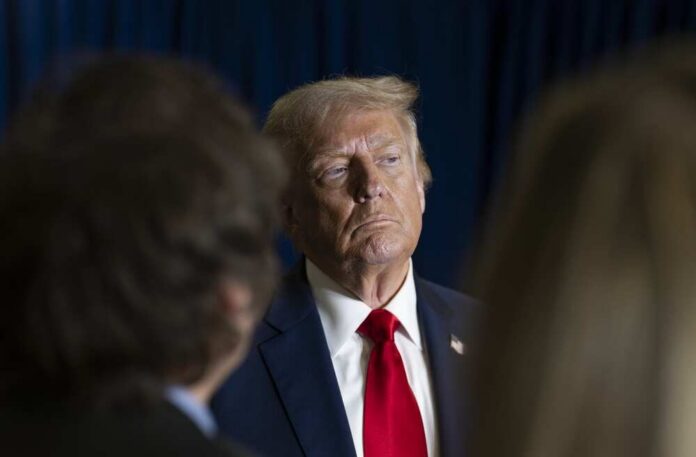
President Donald Trump responded to reports that Iran elevated Mojtaba Khamenei as Supreme Leader by saying he was “not happy” and warning the new leader “won’t last long” without American approval. Multiple outlets reported Trump described Mojtaba as “unacceptable” and a “lightweight,” framing Tehran’s succession choice as something Washington cannot ignore during an active conflict. The underlying message is simple: the U.S. intends to shape outcomes, not just react to them.
That posture matters because it goes beyond sanctions or diplomacy and centers on regime decision-making itself. Trump’s remarks were reported alongside broader U.S. demands for an “unconditional surrender,” a line echoed by senior national security voices in administration coverage. The administration’s public stance suggests leadership succession is being treated as part of the war’s end-state, not an internal Iranian matter separate from nuclear and regional threats.
What We Know About Mojtaba Khamenei’s Rise
Iran’s Supreme Leader is the regime’s ultimate authority over the military, judiciary, and major policy, a structure built after the 1979 revolution. Mojtaba Khamenei, 56, as a behind-the-scenes power broker for years—linked to security influence and election maneuvering—rather than a widely public public figure. His selection is portrayed as continuity after the death of Ali Khamenei, who had ruled since 1989 and oversaw crackdowns and nuclear advancement.
Several reports indicated Ali Khamenei was killed during U.S.-Israeli strikes that began in late February, with operations described using different names across coverage. Those strikes were also reported to have targeted nuclear facilities including Natanz, Isfahan, and Fordow. In parallel, Israeli strikes were reported to have hit Iranian oil-related sites, adding economic pressure and raising the risk of broader regional shockwaves tied to energy supply and pricing.
A War Timeline That’s Accelerating—With U.S. Casualties
Coverage places the current conflict at roughly day 10 as of March 9, with continued strikes and mounting stakes. CBS reporting indicated a seventh U.S. service member death, underscoring that this is not a cost-free confrontation. While public details remain limited, the reported casualty count alone shows the U.S. is operating in an environment where escalation has direct consequences for American families and military readiness.
Ongoing debate and signaling about next steps, including the possibility of special operations tied to securing enriched uranium—presented as a “everything on the table” posture in referenced coverage. The theme across outlets is consistent: Washington is signaling sustained pressure until Tehran changes course.
Iran’s Defiance—and Why Succession Became a Flashpoint
Iranian officials publicly rejected the idea of U.S. input on succession and pledged to fight on, with rhetoric emphasizing loyalty and resistance “until the last drop of blood.” That response fits a regime narrative built on opposing American influence, especially when pressured. At the same time, outside analysis described Mojtaba’s appointment as a direct rebuff to Trump, implying Tehran selected the very figure most likely to preserve the hardline line rather than compromise.
President Trump says he's "not happy" about Iran's new supreme leader, Mojtaba Khamenei. https://t.co/Lp35pn00Fo
— CBS News (@CBSNews) March 9, 2026
For Americans who watched years of mixed signals and inconsistent enforcement under prior leadership, the current approach reads as the opposite: leverage first, concessions last. Whether one agrees with shaping another country’s succession, the constitutional and security stakes are tangible—nuclear escalation, U.S. casualties, and the risk of open-ended commitments abroad. The battle is now as much about who rules Iran as it is about what Iran can build.
Sources:
Here’s What Trump Has Said About Iran’s New Supreme Leader Mojtaba Khamenei
Iran’s supreme leader won’t last long without approval: Trump
U.S.-Iran war live updates: Israel strikes regime targets
Trump warns Iran’s new leader won’t last long without his approval