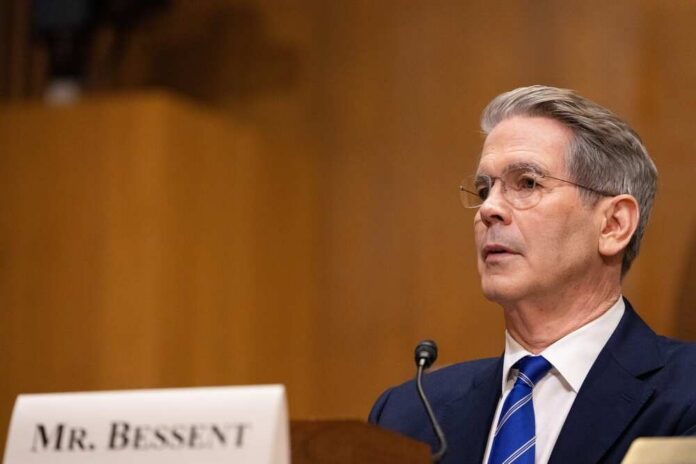
Treasury Secretary Scott Bessent signals a tactical lift on sanctions for 140 million barrels of stranded Iranian oil, turning Iran’s own resources against its war machine amid skyrocketing prices over $119 per barrel.
Story Highlights
- Trump administration considers unsanctioning Iranian oil at sea to flood markets, curb prices, and deny Tehran revenue during US-Israel conflict.
- Move targets only 140 million barrels—10-14 days of supply—preventing China monopoly while aiding US allies like Japan and India.
- Framed as “break the glass” response to Gulf war disruptions, including Strait of Hormuz closure and attacks on Saudi, Kuwaiti facilities.
- Builds on Trump-era maximum pressure sanctions, now pivoted for American consumers facing Biden-era inflation scars.
- No full relief; Treasury eyes US-controlled payments to block Iran funding its aggression.
Bessent’s Announcement on Fox Business
Treasury Secretary Scott Bessent appeared on Fox Business and revealed the Trump administration eyes temporarily lifting sanctions on 140 million barrels of Iranian oil stranded on tankers. Oil prices had surged past $119 per barrel that morning due to the US-Israel war against Iran. Iranian retaliatory strikes closed the Strait of Hormuz, hit Iraqi Kurdistan production, and targeted Kuwaiti and Saudi facilities. Bessent stressed this tactical step uses Iranian barrels against Iran itself, boosting global supply without broad relief.
Timeline of Gulf Conflict and Supply Shock
US and Israel launched strikes on Iran in late February 2026, prompting Iranian missile and drone attacks on regional energy infrastructure. By March 3, Iraq declared force majeure on oil contracts. March 16 saw Bessent note Iranian shipments through Hormuz benefit global supply. The past week brought G7’s largest Strategic Petroleum Reserve release of 400 million barrels and a US waiver for stranded Russian oil. Trump criticized NATO allies for failing to help reopen Hormuz, echoing frustrations with past globalist inaction that hiked American pump prices.
Strategic Move Against Iran and China
This limited waiver mirrors a recent 30-day allowance for 130 million barrels of Russian oil but draws extra scrutiny amid active hostilities. Unlike Biden’s weak sanctions that let Iran fund terror, Trump’s first term crushed exports funding 40% of Tehran’s revenue. Now, the administration aims to supply good actors like Japan, India, and Malaysia while sidelining China, Iran’s main buyer. Vice President JD Vance met oil executives, ruling out US export curbs to prioritize domestic relief from lingering inflation pains.
Treasury plans US-controlled accounts to ensure Iran gains nothing, as Tehran likely rejects terms. President Trump directed the strategy, downplaying prices as “not so bad” while bolstering allies. Israeli Prime Minister Netanyahu paused strikes on Iranian energy sites at Trump’s request, coordinating the pressure.
🚨 BREAKING: 🇺🇸🇮🇷 Trump administration temporarily lifts sanctions on Iranian oil at sea amid soaring prices
— Arbead Strategic Monitor (@ArbeadMonitor) March 21, 2026
Impacts on Americans and Global Markets
Short-term, 140 million barrels add 10-14 days of supply, cooling prices and averting shortages for US families still recovering from Biden-era fiscal mismanagement. Long-term, it sets a wartime precedent but maintains leverage without eroding core sanctions. US consumers see relief; allies gain affordable oil; Iran loses war chest control; China faces competition. Oil futures dipped on the news, easing tanker backups. Iraq production fell to 1.5-1.6 million barrels per day from attacks, underscoring the crisis depth.
Sources:
Treasury Eyes Lifting Sanctions on Iranian Oil
Treasury Secretary says US considering lifting sanctions on Iranian oil currently at sea
US may lift sanctions on floating Iranian oil