
An Austin nightlife shooting is now being examined for a possible terrorism connection—raising urgent questions about motive, vetting, and public safety in America’s entertainment districts.
Quick Take
- Three people were killed and 14 were wounded outside Buford’s Backyard Beer Garden on West Sixth Street in downtown Austin just before 2 a.m. on March 1, 2026.
- Austin police said the attacker fired first from an SUV with a pistol, then exited with a rifle and continued shooting at pedestrians.
- Officers already nearby ended the attack within roughly a minute, fatally shooting the suspect at an intersection.
- The FBI said early “indicators” suggest a potential nexus to terrorism, but officials stressed it is too soon to confirm motive.
What happened on West Sixth Street—and how police stopped it fast
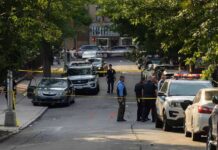
Austin police described a fast-moving attack in the city’s crowded West Sixth Street entertainment district near bar closing time. Authorities said the gunman drove around the block multiple times before opening fire from his SUV at people on a patio outside Buford’s Backyard Beer Garden. Police said he then drove a short distance, parked, stepped out with a rifle, and kept shooting at pedestrians. Officers in the area confronted him and killed him within about 55–56 seconds of the initial response window described by officials.
Austin-Travis County EMS reported 14 people were taken to the hospital and said three were in critical condition at the time of early briefings. Austin’s mayor credited first responders with saving lives, and police leadership emphasized the advantage of heavy weekend staffing in a district that often draws large crowds. A victim services hotline was activated as investigators began notifying families and supporting survivors. Even with the suspect deceased at the scene, law enforcement treated the location and the vehicle as an active evidence field.
Why the FBI is looking at a terrorism angle—without declaring one
The FBI’s San Antonio office said certain “indicators” pointed to a potential terrorism nexus and confirmed the Joint Terrorism Task Force was involved. The indicators cited in early reporting centered on the suspect’s clothing—described as referencing “Allah” and including an Iranian flag—along with items recovered from the vehicle. Officials publicly cautioned that motive was not yet confirmed, and they did not provide a final determination about whether the case involved domestic or international direction or inspiration.
That distinction matters for Americans trying to make sense of the headlines. A “potential nexus” is not the same thing as a proven terrorism case, and the FBI’s language reflected that early uncertainty. At the same time, the federal decision to deploy counterterrorism resources signals investigators saw enough to treat ideology as a credible line of inquiry. For a public worn down by years of messaging games, the practical takeaway is simple: the facts are being processed, and the labels should follow evidence, not social-media certainty.
Suspect identity claims are circulating, but officials haven’t confirmed a name
Authorities described the suspect as a 53-year-old naturalized U.S. citizen born in Senegal who lived in Pflugerville, Texas. Officials had not released the suspect’s name in the initial wave of updates. Online, some commentators circulated a specific identity, but reporting also noted that at least one prominent influencer’s claim was unverified and complicated by a history of contested or debunked assertions. With a dead suspect and a live terrorism inquiry, investigators typically prioritize documentary proof, digital forensics, and chain-of-custody evidence before confirming identity details publicly.
What this means for public safety, immigration debates, and constitutional boundaries
Austin’s West Sixth Street has faced repeated violence concerns, and local business owners have criticized what they describe as weekend “chaos” around certain venues. This incident will intensify scrutiny of nightlife security, staffing, and crowd-control measures—especially when a shooter appears to have planned his approach by circling the block before firing. For many conservatives, the key is to focus on measures that stop violence without punishing law-abiding citizens or turning lawful self-defense into a political scapegoat.
BREAKING: Austin Mass Shooter Identified as 53 Year Old Immigrant from Senegal Wearing 'Property of Allah' and Iranian Flag Clothing – Quran found in car as FBI Investigates 'Nexus to Terrorism” https://t.co/uEoNoOamEJ #gatewaypundit via @gatewaypundit
— Fearless45 (@Fearless45Trump) March 1, 2026
Federal officials have not tied the case to broader networks or policy failures, and the motive remains under investigation. Still, the known facts place renewed attention on vetting, monitoring, and enforcement tools used when a suspect is a naturalized citizen and terrorism indicators are raised. Any response should stay anchored to constitutional limits: investigate credible threats, prosecute crimes, and protect public spaces—without allowing panic to become an excuse for sweeping government overreach. The clearest lesson from Austin is that competent, nearby policing saved lives when seconds mattered.
Sources:
Deadly Austin shooting that killed 3 may be ‘act of terrorism,’ FBI says
Who is Ndiaga Diagne? Laura Loomer reveals alleged identity of Austin Buford’s bar shooting suspect
Mass shooting at Austin, Texas bar leaves at least 3 dead, multiple people wounded