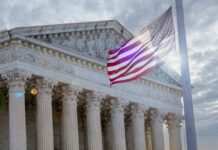


The Supreme Court’s move against Colorado’s conversion-therapy ban is reigniting a hard constitutional fight over whether states can police counseling sessions as “conduct” without trampling the First Amendment.
Quick Take
- The high court has weighed Colorado’s 2019 ban on licensed counselors providing conversion therapy to minors, a case centered on free-speech protections for talk therapy.
- The challenge was brought by Kaley Chiles, a Christian counselor who argues the law blocks counseling requested by clients and aligned with their religious values.
- Oral arguments showed skepticism from the Court’s conservative majority toward Colorado’s claim that the law regulates conduct with only “incidental” effects on speech.
- The outcome could ripple across more than 20 states with similar bans, especially after recent court and political actions weakening bans in other states.
What the Colorado law banned—and why the lawsuit landed at the Supreme Court
Colorado’s 2019 “Minor Conversion Therapy Law” bars licensed mental health professionals from providing conversion therapy to minors. The state justified the law as a youth-protection measure, pointing to evidence it says links conversion therapy to increased depression, anxiety, suicidal thoughts, and suicide attempts among teenagers. Kaley Chiles sued, arguing the law restricts her ability to offer talk therapy based on what clients ask for and what their religious beliefs support.
Federal courts initially rejected Chiles’ challenge, with the Tenth Circuit treating the ban as regulation of professional conduct rather than speech. Under that framework, the court applied a low level of scrutiny, reasoning that any impact on speech was merely “incidental” to regulating treatment. The Supreme Court agreed to hear the case in 2025, putting a national spotlight on where the Constitution draws the line when a state regulates what a licensed professional can say in a counseling room.
Inside the arguments: speech rights versus state power over licensed professions
During October 2025 arguments, justices pressed both sides on whether this law targets a viewpoint or permissibly sets standards for licensed practice. Conservative justices appeared receptive to the idea that talk therapy is fundamentally speech and that banning a category of counseling because of its goals can function like viewpoint discrimination. Liberal justices focused on whether medical and mental health regulation should trigger heightened First Amendment scrutiny at all.
Justice Sonia Sotomayor raised standing questions, pointing to the state’s apparent lack of enforcement for years and asking whether the counselor faced a credible threat of prosecution. Chiles’ lawyer disputed the suggestion that the law sits dormant, saying Colorado was investigating anonymous allegations involving Chiles’ practice. Justice Elena Kagan explored whether the speech here is “incidental” to professional conduct or whether the speech itself is the core regulated activity—a distinction that could decide how broadly states can regulate counseling.
The Trump administration’s posture and the broader conservative legal trend
The Trump administration’s Deputy Solicitor General participated in the case and urged the Court to strike down Colorado’s law as a free-speech violation. That matters for conservative voters tracking whether Washington is defending constitutional guardrails consistently, especially after years of Americans watching institutions treat speech as something to be managed. The case also fits a broader pattern: a Supreme Court with a conservative majority has been more willing to scrutinize professional regulations that restrict speech-like conduct.
National stakes: more than 20 state bans, plus recent rollbacks and court blocks
Colorado is not alone. More than 20 states have enacted bans on conversion therapy for minors, so a major Supreme Court ruling could reshape the rules across nearly half the country. The legal landscape has already been shifting. A federal appeals court blocked Michigan’s ban on First Amendment grounds in late 2025, Virginia’s ban was weakened by a consent decree, and Kentucky’s ban was overturned by its legislature in 2025. Those developments increase the odds of copycat lawsuits and fast-moving policy reversals.
Supporters of the Colorado law point to research and professional association positions condemning conversion therapy as harmful and ineffective. This includes references to multiple studies finding harm, and a large survey-based study associated conversion-therapy exposure with higher distress and suicide attempts among transgender adults. Even so, the legal question before the Court is narrower than the policy debate: it centers on what standard of constitutional review applies when the regulated “treatment” is delivered through words.
What conservatives should watch next: scope, precedent, and parental authority questions
The justices could strike the law entirely, narrow it, or craft a rule that reshapes how states regulate licensed professions whenever speech is involved. Another unresolved tension is how parental rights interact with state restrictions when families seek faith-aligned counseling for minors. For voters already wary of bureaucratic overreach, the principle at stake is whether the government can classify disfavored counseling goals as forbidden speech inside a licensed relationship.
Sources:
https://www.politico.com/news/2025/10/07/supreme-court-conversion-therapy-ban-00596373
https://coloradosun.com/2025/10/07/supreme-court-conversion-therapy/