A covert plane swap that hid President Trump in a catering truck now collides with a Central Intelligence Agency judgment of “low confidence” in the Israeli tip that sparked it.
Story Highlights
- U.S. officials executed a secret aircraft switch for Trump after Israel warned of an Iranian threat.
- The Central Intelligence Agency reportedly assessed the Israeli-sourced warning with “low confidence”.
- Public U.S. assessments found no new, specific Iranian plot, despite a real threat environment.
- Iranian officials denied any plot, while Trump’s team said threats were “genuine and specific”.
What Triggered the Covert Plane Swap
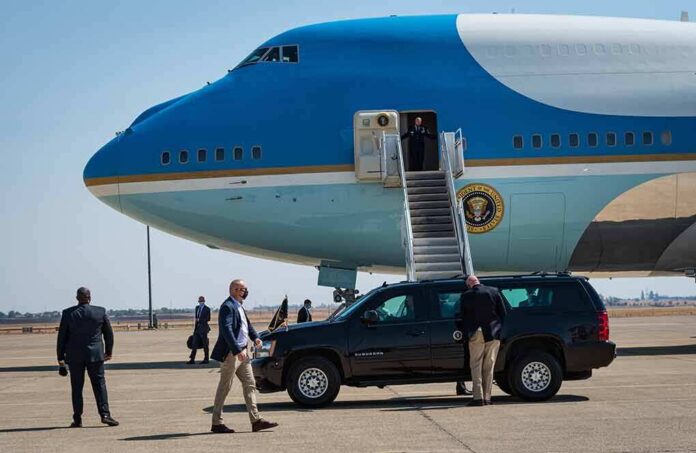
Multiple outlets reported that Israeli officials warned Washington of a fresh Iranian plan or threat aimed at President Trump. During a Turkey-to-United Kingdom leg, U.S. teams moved Trump off the official aircraft and onto a smaller military plane using a catering truck to avoid detection. The unusual maneuver signaled that security leaders treated the warning as serious in real time. Journalists and aides left on the larger jet learned of the switch only after the fact.
Trump’s campaign later said he had been briefed on “genuine and specific threats” from Iran seeking to sow chaos in the United States. Those claims fit a longer backdrop of Iranian hostility toward Trump and several former officials since the 2020 strike that killed Qassem Soleimani, which U.S. agencies have cited in past threat assessments. That history explains why protective teams might act first, then validate details later, when warnings arrive amid tense regional events.
Why the Intelligence Confidence Became the Flashpoint
The Washington Post reported that the Central Intelligence Agency assessed the Israeli warning with “low confidence,” even as security teams executed extraordinary steps. CNN reporting added that recent U.S. intelligence showed no indication of a new, specific plot, describing the Israeli material as reflecting desire among hardliners rather than an operational plan. That distinction—intent versus a ready plan—often drives internal debate over how far to escalate protection on short notice.
Iranian officials publicly rejected the claim. Iran’s foreign minister and other spokespeople described the allegation as baseless or concocted. Those denials do not settle the question, but they add to public doubt when governments withhold documents. TIME also quoted analysts urging caution on Israeli-provided intelligence during moments of geopolitical friction, which further cooled confidence for some observers.
Security Actions Versus Skeptical Analysis
Protective services often must act on partial information. Here, the Secret Service and White House teams opted for a high-cost evasive tactic, which suggests they judged the downside risk as unacceptable if the warning proved right. Yet intelligence professionals weighed the same fragmentary data and reached a low-confidence view, reflecting gaps in sourcing, corroboration, or operational detail. Both things can be true: act conservatively on safety while analysts press for stronger proof.
That tension fuels public frustration from right and left. Many conservatives see years of intelligence misfires and political spin. Many liberals see selective leaks and secrecy that block accountability. Both camps see a government that shields records while asking for trust. In this case, agencies declined to release the underlying memo, collection basis, or after-action files, so citizens must rely on unnamed sources and competing headlines rather than documents.
What We Know, What We Don’t, and Why It Matters
We know the plane switch happened and that officials linked it to an Israeli warning about Iran. We know the Central Intelligence Agency called that warning low confidence, and other U.S. assessments did not show a new, specific plot. We also know Iran denied it, while Trump’s camp said threats were genuine. What we do not have is the declassified intelligence, source notes, or decision logs that would show exactly why the switch was deemed necessary.
DEEP DIVE: The Iran–US–Israel–Gaza Back-and-Forth.
1. How the Iran war started
The war opened February 28, 2026, when the US and Israel launched coordinated surprise airstrikes on Iran… Operation Epic Fury (US) and Operation Roaring Lion (Israel)… during what were still…
— 3dot (@3dotfunds) August 10, 2026
Clear next steps could reduce doubt. Congress or inspectors general could seek a narrow declassification of the warning and the confidence language. The Secret Service and the White House Military Office could provide an unclassified timeline of the decision to swap aircraft, redacting operational details. That proof would not only explain this episode; it would also show whether leaders are making hard calls based on facts or on politics, which is what Americans across the spectrum want to know.
Sources:
mediaite.com, bbc.com, cnn.com, usnews.com, wsj.com, thedailybs.com, theguardian.com