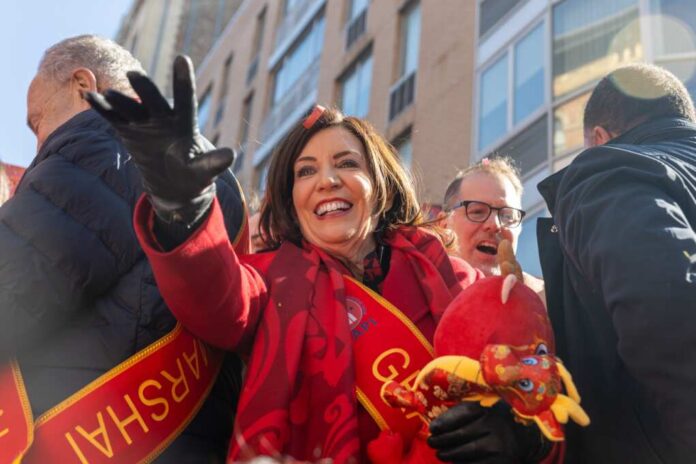
Democrats’ latest redistricting maneuver in New York exposes a calculated power grab, using accusations of racism against their own leaders as political cover to tilt the map in their favor.
Story Snapshot
- New York Democrats are accused of redrawing congressional maps under the pretense of combating racial inequity, while critics cite pure partisan motivation.
- Republicans highlight the hypocrisy of Democrats accusing their own party members of racism to justify targeting GOP-held seats.
- Lawsuits are mounting, with Staten Island voters alleging the new map dilutes minority votes.
- The controversy reflects a broader national pattern, with both parties facing redistricting battles and accusations of gerrymandering.
Democrats Leverage Racial Equity Claims to Justify Redistricting Power Grab
In a move attracting fierce criticism, New York’s Democratic supermajority in the legislature discarded the bipartisan Independent Redistricting Commission’s proposal in early 2024 and advanced their own congressional map. This map, approved by Governor Hochul, slightly shifts the balance in favor of Democrats, especially in swing districts. The party frames the redistricting as a necessary correction for racial inequities in representation. However, critics—especially among Republicans—see this as a cynical attempt to secure more seats, questioning the sincerity of Democrats’ racial equity claims given that the accusations of racism are now being lobbed at their own party leaders.
This strategy has sparked outrage across the political spectrum. Republican Representative Mike Lawler publicly called out the hypocrisy in August 2025, pointing to the spectacle of Democrats using the charge of racism against fellow Democrats as a pretext to redraw districts in their favor. He drew parallels between New York and similar redistricting controversies in Texas, underscoring a growing trend where accusations of racism are wielded as political weapons rather than genuine concerns for minority representation. The Democratic Congressional Campaign Committee, meanwhile, defends the redistricting as a response to Republican gerrymandering elsewhere and necessary to uphold fair representation.
Legal Challenges Mount as Minority Vote Dilution Alleged
Legal battles erupted as soon as the new map was finalized in March 2024. By October 2025, Staten Island voters, represented by the Elias Law Group, filed a lawsuit alleging that the new map dilutes the voting power of minority communities—particularly in District 11, represented by Republican Nicole Malliotakis. This lawsuit claims the redistricting violates both the Voting Rights Act and state constitutional protections against racial vote dilution. Minority advocacy groups have joined the legal fight, demanding that political maneuvering not come at the expense of genuine representation. The courts will ultimately decide whether the Democrats’ racial equity arguments hold legal merit or if, as critics contend, they serve primarily as a fig leaf for partisan gain.
While Democrats insist their actions are in line with protecting minority rights, Republicans and many legal observers argue that the process has become more about consolidating power than ensuring fair representation. The legal process is ongoing, with the potential for further court-mandated changes to the maps before the next election cycle. This uncertainty leaves voters in limbo, unsure how their communities will be represented or whether their votes will carry the intended weight.
National Context: Partisan Gerrymandering and Minority Representation
The New York redistricting controversy is not occurring in isolation. Across the nation, both parties have faced accusations of manipulating congressional maps to advance partisan interests. The national conversation has intensified as the Voting Rights Act and state laws are invoked in courtrooms from California to Texas. Experts, like Dr. James Todd of Palm Beach Atlantic University, warn that when partisan and racial motivations become intertwined, the result is often the erosion of democratic values and diminished minority power. Political scientists have documented a worrying trend toward hyperpartisan districts, reducing electoral competitiveness and increasing polarization.
Democrats justify their actions by pointing to Republican gerrymandering in other states, claiming that aggressive redistricting is necessary to maintain balance and respond to demographic changes. Republicans counter that Democrats’ invocation of racial equity is a cynical tactic, masking a pure desire for electoral advantage. Advocacy groups remain focused on the legal obligations to protect minority representation, regardless of which party draws the lines. This ongoing tug-of-war has broad implications for national redistricting practices and could shape legislative and judicial standards for years to come.
Political Fallout and Future Implications
In the short term, the new map gives Democrats a slight advantage in New York’s congressional delegation, but legal challenges and public backlash have cast a shadow over the process. Minority communities in Staten Island and Brooklyn are at the center of the representation debate, as are Republican incumbents whose districts have come under threat. The controversy has heightened polarization, with each party accusing the other of undermining democracy to secure power. Experts observe that these battles reduce competitiveness in elections, leaving many voters feeling disenfranchised and fueling broader mistrust in the political system.
Dems’ vile redistricting power play pretends NY’s top DEMOCRATS are racist https://t.co/1CmtenddhU pic.twitter.com/8JkvivbNiV
— NY Post Opinion (@NYPostOpinion) October 29, 2025
Looking ahead, the legal outcomes in New York could set important precedents for how courts interpret the interplay between race, partisanship, and representation in redistricting. With ongoing court interventions, the only certainty is continued contentious debate and legal scrutiny. For conservatives, the saga is a stark reminder of why vigilance is needed to protect constitutional principles, ensure genuine representation, and prevent government overreach—especially when political elites manipulate the very rules meant to ensure fairness and accountability.
Sources:
Lawler’s Official Statement on Democratic Redistricting Hypocrisy
Voters Challenge New York Congressional Map Targeting GOP Seat – Democracy Docket
The New York Redistricting Battle is Over – NFIB
Congressional Redistricting and Gerrymandering in 2025 – Palm Beach Atlantic University
Redistricting Litigation Roundup – Brennan Center for Justice