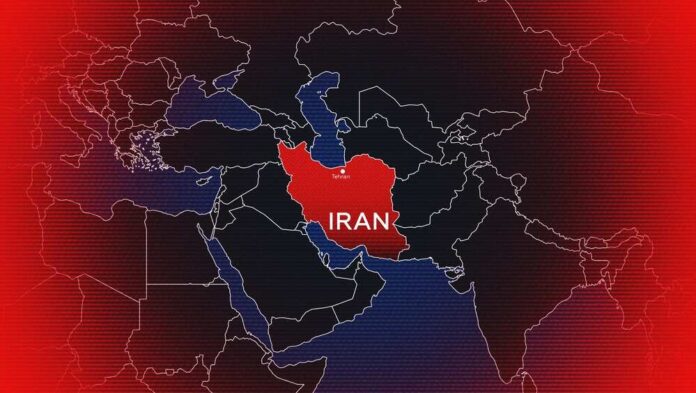
President Trump claimed the U.S. has “largely left Iran’s military alone” — but the public record tells a more complicated story of strikes already launched, more being planned, and a ceasefire that could unravel at any moment.
Quick Take
- Trump stated the U.S. has avoided striking Iran’s military, but his administration has already conducted multiple rounds of strikes and was actively preparing additional ones.
- A temporary ceasefire took hold in early April 2026, during which both sides “largely refrained” from striking each other — though that restraint was never absolute.
- Trump himself acknowledged that U.S. strikes on Iran prevented what he described as a “nuclear war” that could have escalated into World War III, directly contradicting the “left alone” framing.
- Analysts and outside observers point to limited U.S. weapons stockpiles, regional resistance, and the catastrophic risks of full-scale war as factors shaping the scope of American military action.
What Trump Said — and What the Record Shows
President Trump, speaking publicly about the ongoing U.S.-Iran confrontation, asserted that America has “actually left their military alone” and suggested people would be surprised to learn that. The statement was framed as evidence of American restraint and strategic discipline. But Trump himself, in separate remarks, credited U.S. strikes on Iran with preventing a “nuclear war that would have evolved into World War III” — a direct acknowledgment that American forces did strike Iranian targets and that those strikes carried significant military weight.
CBS News reported that the Trump administration was actively preparing a fresh round of military strikes against Iran even as negotiations over a potential deal continued. As of a Friday afternoon meeting, no final decision had been reached, with Trump leaving the Situation Room without signing off on a new operation. The two sides had “largely refrained from striking each other since a temporary ceasefire began in early April,” according to CBS — language that describes partial restraint, not a categorical decision to leave Iran’s military untouched.
A Ceasefire in Name, With Options Still on the Table
The April ceasefire created a pause in direct kinetic exchanges, but American military planning never stopped. Sources with direct knowledge of the planning told CBS that additional strikes were being prepared, indicating an ongoing campaign environment rather than a clean break. Trump was described as being “an hour away” from ordering one strike before calling it off — a detail that underscores how close the conflict remained to escalation even during periods of apparent calm.
Iran, for its part, was not passive during the ceasefire window. American forces shot down multiple Iranian one-way attack drones during the conflict period, and Washington characterized those intercepts as measured and defensive. That Iran still launched drone attacks suggests its military retained operational capability — which either supports Trump’s restraint claim or raises questions about how effective earlier U.S. strikes actually were at degrading Iranian capacity.
Why Full-Scale Strikes Carry Enormous Risk
Outside analysts have identified several reasons why the U.S. has pulled back from broader military action against Iran, and not all of them are strategic by choice. One significant factor is the state of American weapons stockpiles. Analysts have noted that the U.S. is struggling to replenish essential munitions after supplying allies in other conflicts, limiting its capacity to sustain a prolonged air campaign against a country the size of Iran without serious logistical strain.
Regional dynamics add another layer of complexity. Arab Gulf states, despite their deep concerns about Iran, have expressed alarm about a full-scale U.S.-Iran war that could destabilize oil markets and invite Iranian retaliation against their own territory. Georgetown University analysts have noted that Iran has already imposed costs on the U.S. by threatening transit through the Strait of Hormuz, a chokepoint through which a significant share of global oil flows. A broader war could turn that threat into a sustained economic crisis affecting energy prices worldwide.
The Gap Between Rhetoric and Reality
Trump’s claim of restraint fits a familiar pattern in U.S.-Iran crisis management: public statements emphasizing caution while military options remain fully active. The Emirates Policy Center has described this approach as “deterrence without occupation” — using the threat of force and limited strikes to shape Iranian behavior without committing to the kind of ground campaign that dismantled Iraq’s state and created years of regional chaos. Trump explicitly invoked that Iraq lesson, stating the U.S. would avoid striking Iranian military leaders to prevent repeating that outcome.
What the public record cannot yet resolve is how much damage U.S. strikes actually inflicted on Iran’s missile inventory, drone forces, air defenses, and command structure. No declassified battle-damage assessments, target lists, or order-of-battle comparisons have been released. Until that information is available, the gap between “we left their military alone” and “we struck them to prevent World War III” will remain exactly what it looks like — two competing narratives shaped more by political messaging than by verified military fact.
Sources:
[1] Web – “We’ve actually left their military alone — people would be surprised …
[2] Web – U.S. prepares for new military strikes against Iran – CBS News
[3] YouTube – Trump says he was ‘an Hour Away’ from Planned Iran Strike Before …
[4] YouTube – Trump Leaves Situation Room Without ‘Final Iran Decision’, Hegseth …
[5] Web – Trump says US strikes on Iran prevented ‘nuclear war that would …
[6] YouTube – Trump Launches Second Strike on Iran | US IRAN WAR
[7] Web – The Troubling Reason Trump Is Avoiding Another Strike On Iran
[8] Web – The War Against Iran and Global Risks: “Tell Me How This Ends”
[9] Web – Views on military action against Iran – Wikipedia
[10] Web – Why Arab states are terrified of US war with Iran
[11] YouTube – THREE Reasons Why U.S Is Afraid Of Attacking Iran
[12] Web – Four Reasons why the United States Should Not Attack Iran: Part II
[13] Web – Why the US Stepped Back from Military Action Against Iran and Why …
[14] Web – What If the United States Doesn’t Strike Iran?