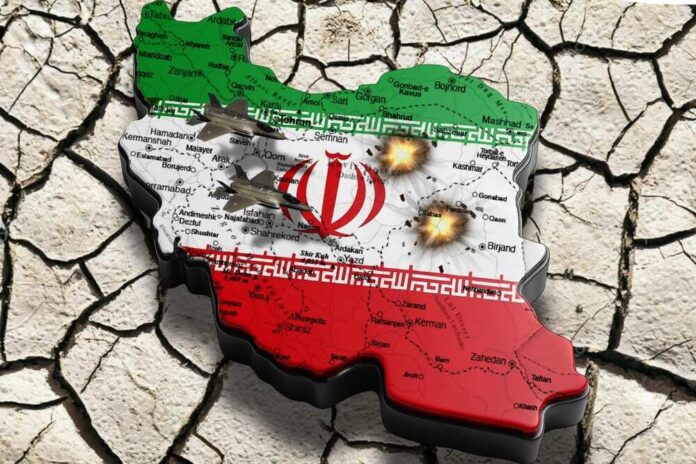
As Iranian missiles slam into U.S. bases and oil prices climb, Trump is telling Americans Iran is finally “finding out” what happens when the United States pushes back hard.
Story Snapshot
- The U.S. Central Command struck about 90 Iranian military targets along Iran’s coast, hitting air defenses, missile and drone sites, and naval assets.
- Trump and his top security officials say Iran’s nuclear plans suffered “severe” damage, but independent and leaked assessments say the program is hurt, not destroyed.
- Iran is still firing back, launching missiles at U.S. bases in Gulf countries and keeping its nuclear program “buried yet intact,” raising doubts about claims of total victory.
- The war is driving up gas prices and deepening fears on both the right and left that Washington favors tough talk and short-term politics over clear goals and honest answers.
U.S. Strikes Hit Dozens of Iranian Targets
U.S. Central Command said this week that American forces struck about 90 Iranian military targets along Iran’s coastline. The targets included air defense systems, coastal surveillance sites, missile and drone storage areas, and naval capabilities meant to threaten shipping in the Strait of Hormuz. These strikes followed Iran’s attacks on commercial ships, which the United States says crossed a clear line. Officials framed the strikes as a warning that attacks on global trade would carry a heavy cost.
Iranian state media reported explosions in several coastal cities and near Bushehr, where Iran’s main nuclear power plant complex is located. Local officials in Bushehr claimed at least one U.S. projectile hit the perimeter of the facility, though earlier strikes had not damaged the plant itself. Iran said at least 14 people were killed and 78 wounded in the latest rounds of bombing, most of them members of its armed forces. The Revolutionary Guard also reported damage to bridges important for trade with Russia and China.
Trump Claims Heavy Damage to Iran’s Nuclear Program
President Trump has used the strikes to argue that Iran’s nuclear ambitions have been crushed. He and his team say repeated attacks on sites like Fordow, Natanz, Isfahan, and areas around Bushehr caused “monumental” or “severe” damage to Iran’s nuclear program and pushed back any path to a bomb. Central Intelligence Agency Director John Ratcliffe said the program was “severely damaged,” while Pentagon officials publicly claimed its capabilities were “severely degraded” and delayed by about two years.
Independent and leaked assessments paint a more limited picture. A Defense Intelligence Agency review reported by the BBC said the strikes did not dismantle Iran’s nuclear program and likely delayed it only a few months. Analysts found that deep underground parts of the facilities, including many centrifuges used to enrich uranium, remained largely intact. The United Nations nuclear watchdog has spoken of “enormous” or “severe” damage but has not backed claims of total destruction. Outside experts say the program is “buried yet intact,” meaning Iran’s know-how and core materials still exist.
Iran Fires Back and Signals It Is Not Defeated
Iran has answered the strikes by attacking U.S. military positions across the Gulf. Iranian forces announced missile and drone attacks on U.S. air defense systems in Kuwait, an early-warning radar site in Qatar, and a fuel depot in Bahrain. Earlier in the war, Iran also hit the Al Udeid Air Base in Qatar after U.S. strikes on nuclear sites. These attacks show Iran still has enough missiles and launch systems to reach U.S. forces and American allies, even after heavy losses.
U.S. Central Command says American strikes have destroyed or damaged more than 155 Iranian vessels since the conflict began, including many small boats used by the Revolutionary Guard. Trump has claimed that recent strikes sank nine Iranian vessels by themselves. Yet Iran continues to launch missiles and to threaten shipping, and its leaders are promising revenge rather than showing signs of collapse. This gap between claimed success and Iran’s ongoing ability to fight feeds doubts for many Americans who worry they are being given a simple story for a complex war.
Rising Costs and Old Fears About Washington’s Motives
The fighting is already hitting Americans in the wallet. Reporting around the strikes notes gas prices above $4 per gallon and Brent crude oil around $78 per barrel, as markets react to attacks on tankers and fears of a wider regional war. That matters to families who feel squeezed by years of inflation and high energy costs. Many remember promises from both parties that tough foreign policy would keep prices low and protect the economy, and they see those promises breaking again.
🟦 MORNING RECAP: While You Slept — July 16, 2026
⭕ DEVELOPING
• CENTCOM launched a fourth round of strikes on Iranian military targets, focusing on coastal defenses, missile sites, naval assets and infrastructure supporting attacks in the Strait of Hormuz.
• The U.S.… pic.twitter.com/aXaYlsXUeD
— ZIONS OF ISRAEL (@Israeli_Sniper) July 15, 2026
People on the right worry that global commitments, constant wars, and energy rules keep America dependent and weak, while people on the left see a government that finds money for bombs but not for health care, wages, or schools. Together they share a deeper concern: that leaders in Washington talk tough about Iran, terrorism, and nuclear threats, but avoid hard questions about end goals, legal limits, and long-term risks. Intelligence leaks and fact-checks showing gaps between public claims and private assessments make that fear stronger.
Old Pattern: Big Claims, Limited Proof
This clash over Iran’s “find out” moment fits a pattern seen for decades. U.S. presidents often tell voters that strikes have “eliminated” or “obliterated” Iranian nuclear work, while independent inspectors and analysts later find only “severe damage” and delays, not full destruction. Iran, for its part, uses every attack to argue that it is a victim of foreign aggression and that its system can survive anything, boosting hardliners who shout down any talk of compromise.
For Americans who distrust “the deep state” and the political class, this looks like another chapter where powerful leaders control the story while regular people carry the costs. They see an intelligence community slow to share full details, a Congress quiet about war powers and oversight, and media debates that focus on Trump’s style more than on clear plans for peace. As Iran moves from the “try us” stage to the “find out” stage, many citizens wonder if anyone in Washington is truly focused on protecting them, not just their own power.
Sources:
redstate.com, nytimes.com, bbc.com, pbs.org, politico.com, cnbc.com, aljazeera.com, youtube.com, csis.org, isis-online.org, reuters.com, npr.org