
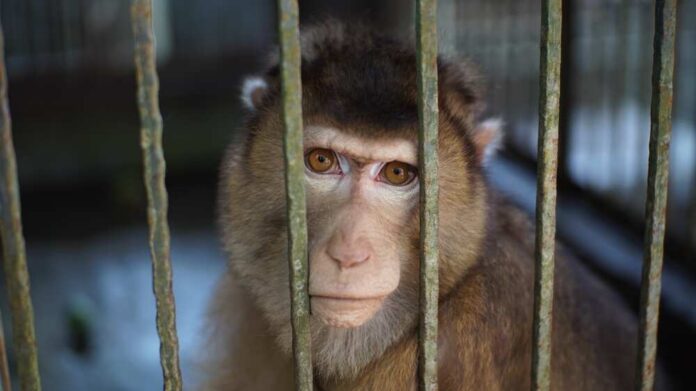
A FOIA lawsuit is forcing the Pentagon to answer a question taxpayers shouldn’t have to ask: what exactly is being done—off the books and overseas—in U.S.-funded military monkey labs?
Story Snapshot
- White Coat Waste filed a March 2026 FOIA lawsuit seeking photos, video, and records tied to U.S. military primate labs in Thailand, Peru, and the United States.
- The group says the Defense Department ignored multiple FOIA requests submitted in 2025, a core transparency issue for any limited-government voter.
- Records described in the complaint point to large-scale primate experimentation tied to infectious disease and biodefense research, including work involving viruses and mosquito exposure.
- The lawsuit spotlights costs and oversight questions around the Thailand facility, described as housing hundreds of monkeys and operating through a U.S.-Thai military partnership.
FOIA lawsuit puts Pentagon secrecy back in the spotlight
White Coat Waste (WCW) says it filed a Freedom of Information Act lawsuit on March 26, 2026, after the Department of Defense failed to produce records the group requested in 2025. WCW is seeking photographs, videos, and documents about primate testing connected to facilities in Thailand, Peru, and U.S. federal labs. The central dispute is not only animal research, but whether a federal agency can effectively stonewall lawful public-records requests.
WCW’s filing targets records tied to the Walter Reed Army Institute of Research–Armed Forces Research Institute of Medical Sciences (WRAIR-AFRIMS) in Thailand, along with a Peru Navy lab and U.S. sites including Fort Detrick and the Uniformed Services University of the Health Sciences. Based on WCW’s reporting, the requested materials include documentation of experiments involving infections and invasive procedures. Because the underlying materials have not yet been released, the public is still being asked to trust what it cannot see.
What’s known about the Thailand colony and reported costs
WCW describes WRAIR-AFRIMS as the Defense Department’s largest primate lab, tracing the program to a U.S.-Thai military collaboration dating back to 1980. The facility is described as housing roughly 550 monkeys and breeding additional animals annually for research tied to infectious disease. WCW also cites a yearly cost estimate in the tens of millions of dollars. For voters still angry about federal overspending, that price tag raises obvious questions about necessity and measurable results.
WCW’s account also points to procurement activity suggesting expansion rather than wind-down. The group cites a 2025 payment to Envigo to ship 18 monkeys to Thailand, along with purchases of marmosets and cages. Those details matter because they frame the dispute as more than historical misconduct; they imply an active pipeline of animals and contracts. If agencies are scaling up, Congress and the public need to know what rules apply, what oversight exists, and who signs off.
Domestic biodefense work increases the stakes for oversight
The lawsuit request includes records tied to U.S.-based facilities, including Fort Detrick and research involving high-consequence pathogens. WCW claims some tests involve exposure to deadly diseases and includes allegations that certain experiments occurred without pain relief. Those are serious claims, but the core constitutional issue remains the same: transparency and accountability in the federal bureaucracy. If the Pentagon’s position is that secrecy is necessary, FOIA is where that justification must be tested.
Why this resonates beyond animal policy: trust, spending, and “forever programs”
Conservative frustration in 2026 is not limited to culture fights or inflation; it extends to a federal machine that keeps funding sprawling programs with limited public visibility. WCW argues the Pentagon has recently curtailed some animal testing, pointing to changes credited to defense leadership, and now wants similar scrutiny applied to primate labs. For many Trump voters who expected tighter control of the administrative state, the political risk is simple: voters will tolerate national defense, but not blank checks and hidden operations.
This also highlights a practical problem: much of this activity is transnational. When U.S. taxpayer money supports work in foreign facilities, oversight can get diluted by distance, diplomatic sensitivities, and shared command structures. That does not make accountability optional; it makes it more urgent. If the Pentagon believes these programs are vital, releasing non-classified photos, videos, and records—consistent with law—should strengthen confidence rather than undermine it.
Until the FOIA litigation plays out, key facts remain unresolved, including what records exist, what exemptions the Pentagon will claim, and what the materials show. WCW is an advocacy group and its descriptions should be weighed with that in mind, but FOIA exists precisely because Americans should not have to rely on advocacy summaries to understand how their government operates. The lawsuit now forces an answer: either transparency within the law, or an admission that the public is being asked to fund what it is not allowed to evaluate.
Sources:
Lawsuit: WCW Sues Over Secretive US Military Monkey Labs in Thailand, Peru, and U.S.
PETA action page on primate laboratories
Primate research center in Oregon leads nation in violations