

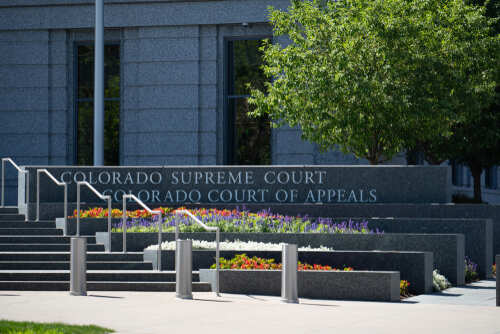
Colorado’s appellate court has sent the Elijah McClain case back for new trials, but the ruling does not end the fight over who bears responsibility for his death.
Quick Take
- The Colorado Court of Appeals reversed the homicide convictions of former Aurora paramedics Peter Cichuniec and Jeremy Cooper and ordered new trials.[1][3]
- The case centers on the sequence reported by outlets: police restrained McClain, and paramedics later administered ketamine.[1][3]
- The reversal was tied to a jury-instruction problem, not a public appellate finding that the prosecution had no evidence.[1][3]
- The decision keeps the broader dispute alive over medical causation, criminal negligence, and how far criminal law should reach into emergency-care decisions.[3][4]
What the Court Reversed
The Colorado Court of Appeals reversed the homicide convictions of two former Aurora paramedics in the 2019 death of Elijah McClain and returned the case to district court for possible retrials.[1][3] Reporting says the court found a problem with how jurors were instructed on the standard of care for criminally negligent homicide, after jurors said they did not know what standard to apply.[1] That makes the ruling a legal reset, not a final ruling on the full facts of the case.[1][3]
That distinction matters because a reversal can change public perception faster than it changes the underlying record. McClain’s death remains tied to police restraint, ketamine administration, and accusations that emergency responders crossed a legal line in a chaotic field setting.[1][3] The appellate decision means the state still has to prove its case again, but it also means the original verdict no longer stands as the last word on negligence or causation.[1][3]
Why the Case Still Resonates
The McClain case has become bigger than one courtroom fight because it sits at the intersection of emergency medicine, policing, and criminal accountability.[4] A medical-legal review of the case describes the ketamine dose as fatal and far above what would have been appropriate for McClain’s size, which supports the prosecution’s theory that the responders’ actions contributed directly to his death.[4] At the same time, the appellate reversal shows that procedure and jury instructions can matter as much as the evidence itself.[1][3][4]
That tension explains why the story keeps drawing national attention. For many observers, the case reflects a broader distrust of institutions that appear to protect professionals until a public crisis forces accountability, then rely on technical legal errors to unwind verdicts.[1][3] For others, it is a warning against turning a tragic death into a simplified moral narrative before the factual record is fully tested under the law.[1][4]
What Remains Unresolved
The current reporting does not include the full appellate opinion, the trial transcript, or the underlying forensic record, so the public cannot yet see every detail of how the judges reached their decision.[1][3] The available material also does not include the autopsy, toxicology, EMS dosing sheets, or expert pathology findings that would be needed to assess the medical causation question in depth.[1][3][4] Until those records are fully examined, the case will remain a debate over both law and facts.
"Homicide convictions reversed for Colorado paramedics who injected ketamine into Elijah McClain"
Oh JFC, no. Per the article, the reversal ruling *can* be appealed, thank goodness. https://t.co/GaV7QVVJEi
— gaijingirl2004 Bronx Leftist/Green. 🦺 🇵🇸✡️ (@gaijingirl2004) June 5, 2026
What is already clear is that the appeals court’s ruling keeps the controversy alive and forces the state to prove its theory again in front of a new jury.[1][3] That outcome will matter not only to the defendants and McClain’s family, but also to a public that increasingly sees high-profile prosecutions as tests of whether institutions can still deliver accountability without confusing legal reversal with factual exoneration.[1][3]
Sources:
[1] Web – Homicide convictions reversed for Colorado paramedics who injected …
[3] Web – Homicide convictions reversed for paramedics who injected …
[4] Web – Homicide convictions reversed for Colorado paramedics who …