President Trump’s decisive military strike on Iran has exposed a stark divide among so-called allies, with Canada and Australia standing firm while European partners hedge and adversaries like China and Russia rush to Tehran’s defense.
Story Snapshot
- U.S. and Israel launched coordinated strikes on Iran February 28, 2026, targeting nuclear facilities and IRGC assets
- Canada and Australia issued strong support statements citing Iran’s nuclear threat and regional destabilization
- Allied support remained rhetorical only—no coalition partners participated in military operations
- China, Russia, and Pakistan condemned the strikes while Gulf states indirectly backed action through criticism of Iranian aggression
Trump Administration Takes Bold Action Against Iranian Nuclear Threat
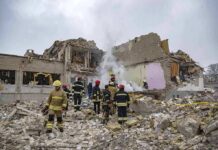
The United States and Israel executed Operation Epic Fury on Saturday, February 28, 2026, striking Iranian nuclear facilities and Islamic Revolutionary Guard Corps installations. The operation marked the first major direct assault on Iranian soil under President Trump’s second administration, departing from previous limited engagements targeting Iranian proxies in Syria. Trump administration officials justified the strikes as necessary to prevent Iran’s acquisition of nuclear weapons and neutralize threats to regional allies. The coordinated attack employed advanced tactics including one-way attack drones, demonstrating military capabilities developed since Trump’s first-term withdrawal from the flawed 2015 Joint Comprehensive Plan of Action.
Canada and Australia Provide Clear Support While Others Waffle
Canadian Prime Minister Mark Carney and Foreign Minister Anita Anand issued a joint statement firmly backing the American action, identifying Iran as the chief destabilizer in the Middle East. Australia’s Prime Minister Anthony Albanese similarly endorsed the strikes via social media, emphasizing Iran’s oppressive regime and nuclear ambitions as threats requiring decisive response. Both nations activated consular measures and urged citizens to leave Iran and surrounding areas, demonstrating preparedness for potential retaliation. This straightforward support stands in stark contrast to European responses, where leaders like UK Prime Minister Keir Starmer offered only vague consultations without explicit endorsement, exposing the weakness of multilateral commitments when hard decisions arrive.
Allied Participation Gap Reveals Troubling Pattern
Despite rhetorical backing from Five Eyes partners Canada, Australia, and the United Kingdom, no allied forces participated in the strikes alongside American and Israeli units. This absence upends historical precedents for coalition military operations and highlights a troubling reluctance among traditional partners to share operational risks. Gulf states including Saudi Arabia and the United Arab Emirates condemned Iranian missile attacks on their territories, indirectly supporting the strike rationale while carefully avoiding direct involvement. The operational isolation places American and Israeli forces in vulnerable positions for potential Iranian retaliation, with U.S. troops stationed throughout the region facing heightened threats. This dynamic underscores the bankruptcy of globalist alliance frameworks that promise solidarity but deliver empty words when courage is required.
Atlantic Council experts characterized the operation as an enormous gamble lacking clear legal justification absent documented imminent threats. Former State Department official Jennifer Gavito noted that Gulf state responses remain pivotal, suggesting Saudi and UAE condemnations of Iranian aggression could translate into airspace access for future operations. Russia and China predictably rushed to Iran’s defense, dismissing diplomatic overtures as cover while the Tehran regime threatened retaliation. Ukraine’s President Zelenskyy praised American decisiveness, while Norway criticized the strikes as illegal, revealing the continuing divide between nations serious about security threats and those prioritizing diplomatic niceties over national survival.
Strategic Implications for American National Security
The strikes represent President Trump’s commitment to preventing Iranian nuclear acquisition through strength rather than the failed appeasement strategies of previous administrations. Iran’s uranium enrichment accelerated dramatically after Trump’s 2018 JCPOA withdrawal, vindicating his assessment that the Obama-Biden deal merely delayed rather than prevented nuclear development. Short-term risks include Iranian retaliation against American forces, regional escalation, and economic disruption through oil market instability. Long-term benefits potentially include regime decapitation, nuclear program setbacks, and strengthened anti-Iran coalitions among Gulf states. The operation demonstrates that America under Trump leadership will act unilaterally when necessary to protect national interests, regardless of fair-weather allies’ hesitation.
Iran’s designation as a state sponsor of terrorism, its abysmal human rights record, and its destabilization of the Middle East through proxy forces justified this decisive action. The regime’s recent missile attacks on UAE, Bahrain, Qatar, Kuwait, and Jordan—resulting in at least one death in Abu Dhabi—demonstrated the immediate threat Iran poses to regional stability. President Trump’s direct warning to the IRGC of certain death absent surrender signals resolve missing from prior administrations that allowed Iranian aggression to metastasize. This approach prioritizes American strength and allied security over the globalist preference for endless negotiations with bad-faith actors.
Sources:
World leaders split over military action: US, Israel strike Iran in coordinated operation – Fox News
Here’s how world leaders are reacting to the US-Israel strikes on Iran – WYPR
Iran War: World Leaders Reaction Russia China Europe – Time
A duo of the willing: US and Israel have few allies in initial Iran strikes – Politico