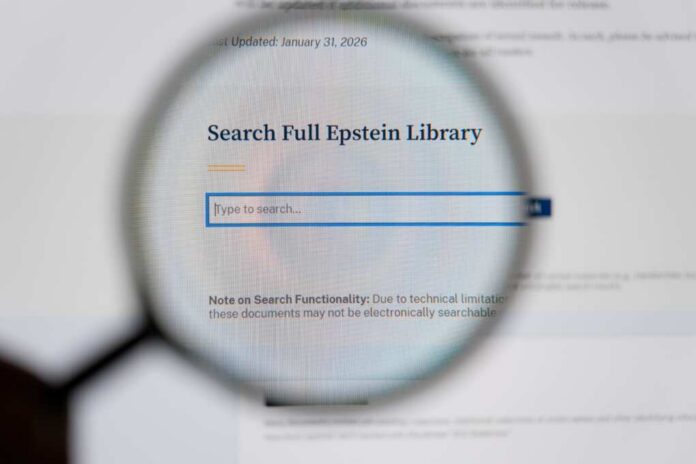
The Trump administration’s Justice Department is dragging its feet on releasing court-ordered Epstein files, with less than one percent made public months after a bipartisan transparency law was signed—raising serious questions about which powerful elites are being protected from exposure.
Story Snapshot
- DOJ released less than 1% of Epstein files despite the November 2025 Epstein Files Transparency Act requiring full disclosure
- Conservative commentator Sean Davis warns “names without context” enable political smears against innocent figures while obscuring actual wrongdoing
- Bipartisan lawmakers including Rep. Thomas Massie demand Special Master oversight after AG Pam Bondi’s office fought transparency measures
- Federal judge denied Special Master request in January 2026, leaving DOJ in complete control of what Americans can see
Bipartisan Push Overcomes Leadership Resistance
Representatives Thomas Massie and Ro Khanna forced congressional action on Epstein transparency through a rare discharge petition that bypassed House Speaker Mike Johnson’s objections. The petition reached 218 signatures on November 12, 2025, compelling a floor vote on the Epstein Files Transparency Act. This legislative maneuver united conservatives and progressives who demanded accountability regarding Jeffrey Epstein’s sex trafficking network, which operated from 2002 to 2005 before his 2019 arrest and subsequent death in federal custody. Epstein’s accomplice Ghislaine Maxwell is currently serving a 20-year prison sentence. President Trump signed the bipartisan legislation on November 19, 2025, despite opposing the releases just days earlier on Truth Social.
Partial Releases Generate Controversy and Confusion
The DOJ missed its initial compliance deadline with a December 19, 2025 partial release of several hundred thousand files, followed by a December 23 release of nearly 30,000 additional documents. Attorney General Pam Bondi’s office claimed the December 23 tranche debunked false claims about Trump’s Epstein connections, while critics accused the administration of selective redactions favoring political allies. Representative Massie released a December 18 video stating the FBI possesses “at least 20 names of men accused of sex crimes” still withheld from public view. Representative Alexandria Ocasio-Cortez accused the Trump administration of protecting “rapists and pedophiles” through strategic redactions. By early 2026, the DOJ acknowledged releasing less than one percent of relevant files.
Legal Obstacles Block Full Transparency
Massie and Khanna submitted a January 8, 2026 request for a Special Master to oversee the release process and ensure complete compliance with the transparency law. AG Bondi and Deputy Attorney General Todd Blanche opposed the Special Master appointment on January 16, arguing the DOJ could manage releases without judicial oversight. Federal Judge Paul A. Engelmayer denied the Special Master request on January 21, 2026, effectively leaving the Justice Department with unilateral control over which documents reach the public. This legal defeat eliminated the primary mechanism reformers sought to prevent politically motivated redactions. Former Palm Beach prosecutor Dave Aronberg noted the law contains exceptions allowing the DOJ to withhold information, creating significant wiggle room for officials seeking to limit disclosures.
Context Matters More Than Name-Dropping
Conservative commentator Sean Davis articulated a critical concern that releasing names without surrounding context transforms legitimate transparency into a smear campaign. Flight logs and contact lists alone cannot distinguish between casual social acquaintances and criminal conspirators in Epstein’s network. This lack of context enables political opponents to weaponize associations while the actual perpetrators of sex crimes remain shielded behind redactions and procedural delays. The DOJ issued a July 2025 memo denying the existence of a “client list” or blackmail evidence, contradicting Massie’s claims of at least 20 accused individuals whose names remain secret. Mark Epstein, Jeffrey’s brother, alleged in November 2025 that files underwent “sanitization” to remove Republican names, though these claims remain unverified. As of early 2026, no penalties exist for DOJ non-compliance with the transparency law.
This is what “transparency” looks like under AG Bondi: 1% of the Epstein files produced, over a month late, and redacted so aggressively it mocks the law and our subpoena.
The public deserves answers – not a cover-up. pic.twitter.com/kJhTsmYXjW— Rep. James Walkinshaw (@Rep_Walkinshaw) January 21, 2026
The standoff between transparency advocates and executive branch gatekeepers continues eroding public trust in federal institutions. Senators Lisa Murkowski and Thom Tillis warned of growing public backlash as Americans demand answers about elite sex trafficking networks. The precedent established here threatens future transparency legislation—if the executive branch can slow-walk congressionally mandated disclosures without consequence, the people’s right to know becomes meaningless. Epstein’s victims, who joined Massie’s November 18 press conference advocating for full disclosure, deserve answers that selective releases and strategic redactions deliberately prevent. Until a genuine mechanism for accountability emerges, questions will persist about which powerful figures benefit from keeping these files hidden from the American people who demanded transparency through their elected representatives.
Sources:
Politifact – Epstein Files Discharge House Senate
Wikipedia – Epstein Files Transparency Act