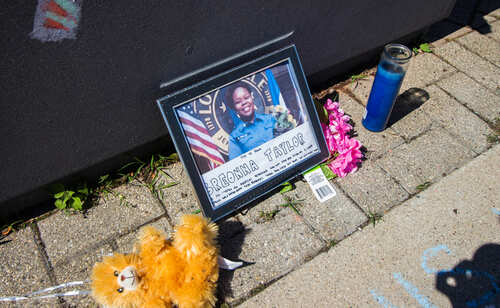
The Department of Justice has filed to drop federal civil rights charges against two former Louisville police officers in the Breonna Taylor case, marking a stunning reversal that leaves families of victims questioning whether justice will ever be served in cases of alleged police misconduct.
Story Snapshot
- DOJ seeks to dismiss federal charges against ex-officers Joshua Jaynes and Kyle Meany, who allegedly falsified the warrant that led to Breonna Taylor’s 2020 death
- Judge previously ruled Taylor’s boyfriend firing first shot was the legal cause of her death, not the allegedly false warrant
- Taylor family devastated by prosecutorial reversal after years of seeking accountability for the fatal no-knock raid
- Case raises concerns about government overreach in no-knock warrants while simultaneously showing reluctance to hold officers accountable for constitutional violations
Federal Prosecutors Abandon Key Charges
The Department of Justice filed notice to drop the most serious federal civil rights charges against former Louisville Metro Police Detective Joshua Jaynes and Sergeant Kyle Meany, who were accused of fabricating a search warrant that resulted in Breonna Taylor’s death on March 13, 2020. The DOJ’s decision follows Judge Charles Simpson’s August 2025 ruling that dismissed life-sentence felony charges, determining that Kenneth Walker’s defensive gunshot, not the allegedly false warrant, constituted the legal cause of Taylor’s death. Jaynes originally faced up to 40 years on conspiracy and cover-up charges, while Meany risked five years for lying to federal investigators.
The Fatal Raid and Alleged Warrant Fabrication
Officers executed a no-knock search warrant at Taylor’s apartment during a narcotics investigation targeting her ex-boyfriend, Jamarcus Glover, who lived 10 miles away. Prosecutors alleged Jaynes and Meany falsified the warrant affidavit with stale information lacking probable cause, claiming ongoing drug activity at Taylor’s residence. When officers burst through the door in early morning darkness, Walker fired one shot believing intruders were breaking in, striking an officer. Police responded with 32 rounds, killing the 26-year-old emergency medical technician. Investigators found no drugs or money at the scene, validating concerns about the warrant’s legitimacy and the dangerous precedent of rubber-stamped authorizations.
Constitutional Concerns and Causation Debate
The case exposes troubling tensions between Fourth Amendment protections and prosecutorial standards for holding officials accountable. DOJ prosecutors argued the falsified affidavit “set in motion events” that created lethal danger, emphasizing officers knowingly authorized an armed raid based on fabricated evidence. Judge Simpson rejected this reasoning, applying strict legal causation standards that isolated Walker’s defensive shot as the direct cause, effectively severing the warrant’s role from Taylor’s death. This interpretation raises fundamental questions about government accountability when law enforcement obtains warrants through deception, then executes them with overwhelming force. For conservatives who value both constitutional rights and law-and-order principles, the outcome demonstrates how procedural technicalities can shield misconduct while leaving citizens vulnerable to state overreach.
Precedent for Police Accountability Collapses
The DOJ’s withdrawal undermines federal authority to prosecute civil rights violations stemming from warrant abuse, potentially emboldening similar misconduct nationwide. Only Brett Hankison, a third officer who fired blindly through covered windows during the raid, received conviction and sentencing—33 months for excessive force, not for Taylor’s death. This limited accountability sends a chilling message: officers can allegedly lie to obtain warrants enabling lethal confrontations, yet escape consequences if circumstances intervene between their deception and the fatal outcome. The Taylor family expressed devastation at the dismissals, enduring prolonged grief without resolution. Meanwhile, Louisville communities continue facing distrust in policing, exacerbated by a separate DOJ pattern-or-practice investigation into systemic LMPD failures that remains unresolved years later.
DOJ seeks to drop case against ex-police officers charged in Breonna Taylor's death – CBS News https://t.co/kEB6OESpVn
— Billie (@BillieOsu1) March 20, 2026
This case reveals uncomfortable realities about government power and individual liberty. No-knock warrants represent aggressive state authority that can destroy lives based on faulty or fabricated information, yet the justice system struggles to hold officials accountable when such operations turn deadly. For Americans who cherish constitutional protections against unreasonable searches and government overreach, the outcome offers little comfort—neither for those concerned about police misconduct nor for those who recognize that legitimate law enforcement faces impossible standards when defending against armed resistance during lawful operations. The absence of drugs at Taylor’s home, combined with allegations of warrant falsification, suggests systemic failures that warrant fabrication laws should address, yet legal causation doctrines create insurmountable barriers to prosecution.
Sources:
DOJ appeals dismissal of most serious charges against 2 officers involved in Breonna Taylor raid
Federal judge dismisses felony charges against two officers in Breonna Taylor case