

Unauthorized drones, lone offenders, and cyber threats are forcing federal and local officials to treat the 2026 World Cup as a major security test for the United States.
Quick Take
- Federal officials are preparing for drone disruption around World Cup stadiums and fan areas.[1][2]
- FBI officials in Houston say lone offenders remain a major concern near transit systems and gathering spaces.[2][3]
- Public statements in Atlanta say there are no known specific threats there, which shows the gap between vigilance and proof of an imminent plot.[4][5]
- Security planning includes federal, state, and local coordination, with airspace restrictions and counter-drone tools already being deployed.[1][3]
Drone Threats Drive the Strongest Response
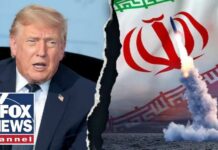
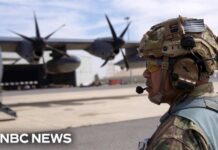
Federal authorities are putting a no-drone posture around World Cup venues because they view unauthorized aircraft as a realistic public safety risk. The Los Angeles Times reported that federal teams will detect, intercept, and even forcibly land unauthorized drones in restricted airspace around stadiums.[1] Fox News also reported that FBI Director Kash Patel identified drones, cyber threats, and lone-wolf attacks as the top security concerns ahead of the tournament.
That response reflects a wider shift toward hardening stadium airspace before a high-profile event can be exploited. The Insurance Journal reported that the Federal Bureau of Investigation plans to deploy about 60 specially trained state and local police officers across venues to detect and counter drone threats. The Los Angeles Times added that operators who enter restricted airspace may face fines of up to $100,000.[1]
Lone Offenders Remain a Worry Near Crowds
FBI officials in Houston say one of the biggest concerns is not a named terror cell, but lone offenders who might target crowded public areas connected to World Cup activity.[2] Their warning focuses on transit systems and gathering spaces, which are exactly the kind of soft targets that can be vulnerable when fans move in large numbers before and after matches.[2][3] That is a sober warning, not proof of a specific attack plan.
Publicly, the FBI has also said there are no known threats in Atlanta, which matters because it undercuts any claim that officials have identified a concrete, imminent plot there.[4] At the same time, that statement does not erase the broader risk picture, since the same agencies are still building layered security around likely attack surfaces such as fan zones, rail lines, and stadium perimeters.[3][5]
Security Planning Shows a Broader National Warning
The World Cup is being treated as more than a sports event because it will spread across multiple cities and attract enormous crowds. The Center for Strategic and International Studies says the most likely danger comes from a domestic lone actor or small group striking soft targets around matches, while foreign-directed terrorism is judged less likely but not impossible.[3] ESPN reported that multiple federal agencies also issued an advisory about an Iranian-affiliated cybersecurity threat.[1]
ICYMI: FBI Director Kash Patel revealed a slew of security concerns, including cyber threats, drones and the potential for lone-wolf attacks ahead of the World Cup, which will draw millions of visitors across North America. https://t.co/dZq6Jt6hTJ
— Brooke Taylor (@Brooketaylortv) June 1, 2026
For conservatives frustrated by years of weak borders, bureaucratic drift, and public officials who pretend risk can be wished away, the World Cup security posture is a reminder that real threats demand real enforcement. The good news is that the federal government is finally talking about deterrence, airspace control, and interagency coordination instead of vague reassurance.[1][3] The bad news is that the tournament’s size makes it an obvious magnet for criminals, agitators, and opportunists.
Sources:
[1] Web – Feds, local law enforcement on guard for drones, lone wolf attacks …
[2] Web – World Cup security planners prepare for ‘unprecedented’ challenge
[3] Web – FBI officials taking steps to prevent ‘lone offender’ threats ahead of …
[4] Web – The Terrorist Threat to the 2026 World Cup – CSIS
[5] YouTube – FBI discusses security for 2026 World Cup in United States