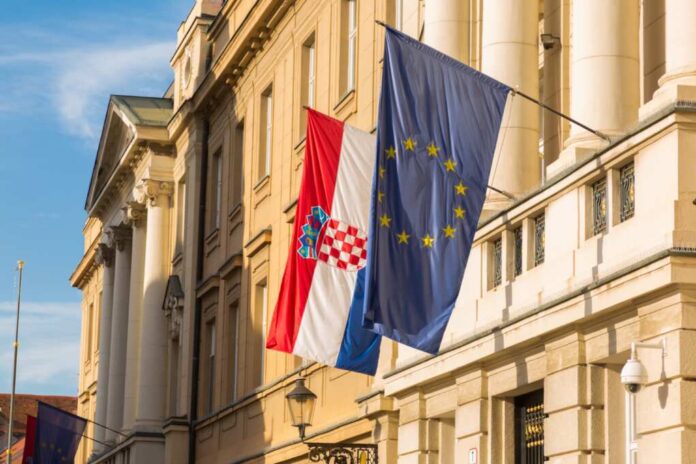
Croatia’s decision to bring back mandatory military service reveals how quickly Europe is re-evaluating past defense policies in response to renewed security threats.
Story Snapshot
- Croatia has reintroduced compulsory military service, making it the first EU country in recent years to fully reinstate the draft in direct response to Russian aggression.
- The law mandates two months of basic training for conscripts, with a salary and alternative civilian service for conscientious objectors.
- This move highlights a wider European trend: countries are scrambling to rebuild their defenses after years of neglect and “woke” demilitarization.
- The development is prompting heated debates on national security, civil liberties, and the lasting impact of failed progressive policies.
Croatia Reinstates Conscription as Security Fears Intensify
On October 24, 2025, Croatia’s parliament voted overwhelmingly to reintroduce compulsory military service—reversing a seventeen-year break from the draft. Lawmakers cited Russia’s war in Ukraine and rising instability in Europe as central reasons for the change. Conscripts born in 2007 will soon undergo medical evaluations, with the first training cycle expected to begin in 2026. Croatia’s new policy reflects a growing perception among smaller European nations that regional security cannot rely solely on international institutions.
Croatia’s move distinguishes it as the first EU nation in recent memory to fully reinstate conscription in response to external military threats. The law requires two months of basic military training for conscripts, who will receive a salary of €1,100 per month. Those opposed on moral or religious grounds may opt for civilian service. Some defense analysts say the civilian option may contribute less to national readiness compared with direct military training. This decision follows years in which European governments reduced defense budgets, assuming peace would endure under multilateral security arrangements. Russia’s renewed assertiveness, however, has challenged that assumption.
Past Policies and New Realities: The European Shift
Croatia’s reversal did not happen in isolation. After gaining independence from Yugoslavia in the 1990s, Croatia maintained conscription until 2008, when it transitioned to a volunteer force as part of efforts to align with NATO and the European Union. Like many EU members, it had relied on diplomatic frameworks and international alliances to ensure national security. However, Russia’s annexation of Crimea in 2014 and the full-scale invasion of Ukraine in 2022 reshaped regional priorities, prompting several countries to re-examine their defense strategies and readiness.
Other European countries have taken similar steps. Lithuania and Sweden reintroduced modified forms of conscription, while France expanded its voluntary service programs. The pattern suggests that many nations are now prioritizing defense readiness and resilience after decades of limited investment and institutional reliance. For many Croatians, the return of the draft has become both a symbolic and practical measure—a reflection of shifting security realities and lessons drawn from Europe’s recent conflicts.
Debate Over Civil Liberties, Equity, and National Duty
The new law has also drawn domestic debate. Opposition parties and civil society groups have voiced concerns about gender equity and wage fairness, as the initial phase of recruitment will primarily affect young men. Critics argue that short-term conscription may not adequately prepare participants for modern warfare and could burden the labor market. Supporters counter that national service fosters unity, discipline, and readiness—values they say have weakened in recent years due to social changes and shifting priorities.
Defense Minister Ivan Anusic defended the measure as a “necessary and pragmatic response” to security challenges. Croatia’s ruling HDZ party, which holds a parliamentary majority, maintains that strengthening defense capabilities outweighs ideological disputes. Anusic also confirmed that conscripts will receive preferential access to public sector employment—a policy intended to encourage civic engagement and reward service.
'The Croatian Parliament reinstated mandatory military service due to fears of Russia' – AP pic.twitter.com/E2e5vmZSDn
— Zlatti71 (@Zlatti_71) October 24, 2025
Implications for Europe and the U.S.: Lessons for Defending Core Values
Croatia’s decision is influencing defense discussions across Europe, with some analysts predicting a broader revival of national service programs. The immediate outcome is expected to be a rise in trained personnel and heightened defense preparedness.
In the longer term, the move may alter regional defense dynamics and serve as a deterrent to further aggression. For NATO allies, including the United States, Croatia’s experience offers a reminder that sustained investment in defense remains essential to national security and collective stability.
Sources:
Croatia reintroduces military service amid fears over Russian aggression
Croatia reintroduces military conscription as Europe worries about Russia, Ukraine
Croatia reintroduces military service as fears of war spilling over from Ukraine rise
Croatia to reintroduce military service amid Russia fears
Croatia reintroduces conscription to boost defense