California’s own rules let people register to vote without a driver’s license or Social Security number, raising fresh questions about how identities are verified before ballots count.
Story Snapshot
- State guidance says applicants without a driver’s license or Social Security number can still register and get a state-issued identifier.
- Most California voters do not show ID at the polls; limited checks apply mainly to certain first-time voters.
- Regulations require database matching when possible and assign a unique number if none exists.
- Debate over stricter voter ID is on the ballot and in court fights over summaries and standards.
What California Allows At Registration
California’s voter registration page states that applicants should provide a driver’s license or state identification number, or the last four digits of a Social Security number. The same page says that if a person does not have either, they can still register. The state will assign a unique identifier to validate the registration. The Secretary of State’s frequently asked questions echo this point and describe how officials add the voter’s signature to the record during processing.
California regulations implement this policy inside the statewide database. The rules call for matching driver’s license data against Department of Motor Vehicles records and matching Social Security digits against federal records when available. If a person has neither number, the state must assign a unique identifier for voter registration purposes. These rules place identity checks primarily in back-end databases rather than in front-end document presentation at sign-up.
What Voters Must Show At The Polls
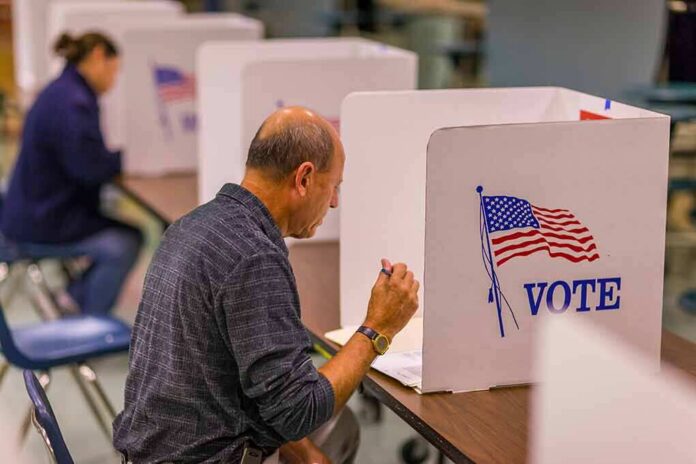
California does not require most voters to show identification at polling places. The Secretary of State explains that identification can be requested in a narrow case. That case is when a person is voting for the first time after registering by mail and did not provide a driver’s license, state identification, or last four Social Security digits. In that situation, the voter may be asked for identification.
For those first-time checks, the state lists acceptable documents. These include a recent utility bill, the sample ballot booklet, or another document sent by a government agency. A passport, driver license, state identification card, or student identification card also qualify. This mix of photo and non-photo documents aims to satisfy federal Help America Vote Act standards while keeping access broad for eligible voters.
The Scale Of Verification And The Open Questions
Officials say verification happens at several points. Guidance describes database matching with the Department of Motor Vehicles and the Social Security Administration, and the assignment of unique identifiers when no numbers exist. Critics argue this puts too much trust in clerical checks and signature files instead of physical identification. Supporters counter that in-person impersonation is rare and that broad access better serves eligible citizens, though the cited materials here focus on procedures, not incident counts.
🪪 California Let 400,000 Voters Register Without Providing Any ID
🧐 top federal prosecutor in Los Angeles revealed that California's voter ID rules are so lax that nobody was checking whether voters were American citizens pic.twitter.com/2OIRIvdoh1
— DailyJobCuts . com – Layoffs / Job / Economy News (@dailyjobcuts) September 2, 2026
Most disputes now center on where to place the burden of proof. Should voters show government identification at the polling place or when voting by mail, or should counties rely on matching systems and signatures? California voters will see these issues in a ballot fight and in legal rulings over how measures are described to the public. For readers concerned about fairness and trust, the takeaway is simple: the state allows registration without traditional numbers, and routine in-person identification is uncommon.
Sources:
thegatewaypundit.com, sos.ca.gov, elections.cdn.sos.ca.gov, voteriders.org