
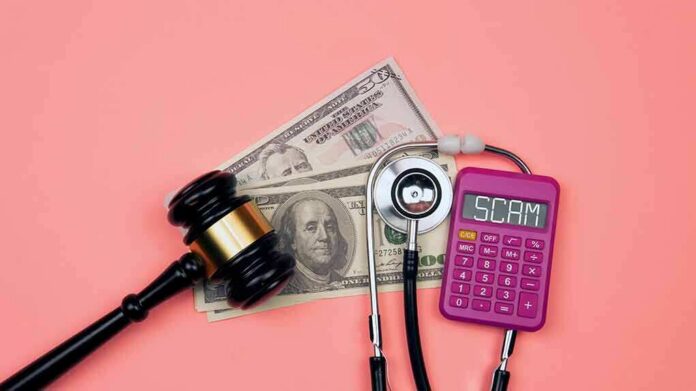
Federal prosecutors say a New York doctor helped push $6.8 million in false Medicare claims through a telemedicine pipeline built on pre-filled prescriptions and visits that never happened.
Story Highlights
- A grand jury indicted Dr. Edgard Salazar on conspiracy and health care fraud charges.
- Prosecutors allege more than $6.8 million in false Medicare claims tied to orthotic braces.
- The government says TelevisitMD fed Salazar pre-filled brace prescriptions for patients he did not examine.
- TelevisitMD’s owner pleaded guilty earlier this year and agreed to pay $17.9 million in restitution.
Federal Indictment Centers on Alleged Telemedicine Brace Scheme
The Department of Justice announced that a federal grand jury in the Southern District of Florida indicted Dr. Edgard Salazar of Armonk, New York, on one conspiracy count and five health care fraud counts. Prosecutors say Salazar signed pre-filled prescriptions for orthotic braces for Medicare patients he did not examine or treat. They allege he billed for telemedicine consultations that never occurred. The government pegs the false and fraudulent claims at more than $6.8 million.
The indictment describes a simple funnel: a telemedicine company, TelevisitMD, sent pre-filled brace orders. Salazar allegedly signed them, even when patients said they did not want or need the braces, according to the Justice Department. The government also alleges thousands of nonexistent telemedicine visits were billed. The charges say the scheme used Medicare’s remote care rules to move orders and claims fast, with little real contact between doctor and patient.
Linked Guilty Plea Adds Pressure but Does Not Decide This Case
TelevisitMD’s owner, Christopher Harwood, pleaded guilty in March 2026 to conspiracy to commit health care fraud and wire fraud and agreed to pay $17.9 million in restitution, according to the Justice Department. That plea establishes that a fraud operation existed around TelevisitMD. It does not by itself prove Salazar’s intent. The Justice Department notes that an indictment is an allegation, and Salazar is presumed innocent unless and until proven guilty beyond a reasonable doubt.
Public documents released so far do not include the full indictment or claim-level data. The release does not show the specific billing codes, exact dates, or the logs used to say visits never occurred. It also does not detail the medical basis used to argue braces were not needed. Those records often appear later in court filings. For now, the case rests on the charging document and the Justice Department summary.
Why Orthotic Braces and Telemedicine Keep Drawing Fraud Cases
Federal watchdogs have flagged off-the-shelf orthotic braces as a high-risk item for years. The Office of Inspector General reported audits from 2018 to 2020 with average improper payment rates of 71 percent for sampled suppliers, totaling an estimated $16.7 million in overpayments. The pattern often includes lead generators, telemedicine orders, and rapid billing by suppliers. Cases in this space show how remote ordering can be misused when real exams do not happen.
New York Doctor Charged in $6.8M Medicare Fraud Scheme https://t.co/8R3aJ9DCER A federal grand jury in the Southern District of Florida returned an indictment on Tuesday charging Dr. Edgard Salazar, 57, of Armonk, New York, with conspiring to bill Medicare for thousands of…
— E Kelly Taylor (@ekellytaylor) November 12, 2026
Medicare rules also shape the money flow. The Centers for Medicare and Medicaid Services pays a share of the allowed fee for items if coverage rules are met, and will not pay for devices that are not medically necessary or properly documented. In brace cases, that turns on clear clinical need and records to support it. When doctors certify need without contact or proof, claims can turn into fraud exposure for everyone in the chain.
What This Means for Patients, Taxpayers, and Honest Clinicians
When fake visits or unneeded devices hit Medicare, taxpayers pay and patients can be harmed. Unwanted braces can cause pain, limit movement, and waste time. Every dollar lost to fraud is a dollar not spent on real care. Honest doctors also face more audits and paperwork because bad actors exploit gaps. This case shows how a few signatures in a remote model can turn into millions in claims if guardrails fail.
Both parties often say they want to stop waste and abuse. Yet year after year, similar brace and telemedicine schemes surface. Many readers on the right and left see a system that talks tough but lets scams grow until they reach headlines. Stronger verification, faster data checks, and real penalties can help. The court process will test the facts here. The larger job is fixing the incentives that make these schemes pay in the first place.
Sources:
townhall.com, justice.gov, article.wn.com