
With polls open across key states today, the 2026 midterms turn on whether voters show up and follow clear but differing state rules that can shape results and public trust.
Story Snapshot
- Ohio, Michigan, and Texas hold general elections today with set polling hours and procedures.
- Michigan added a statewide early-voting window that ended November 1.
- Federal agencies align on November 3, 2026 as the national general election date.
- Different state hours require voters to follow local rules to avoid confusion.
State Rules Set Today’s Timetable
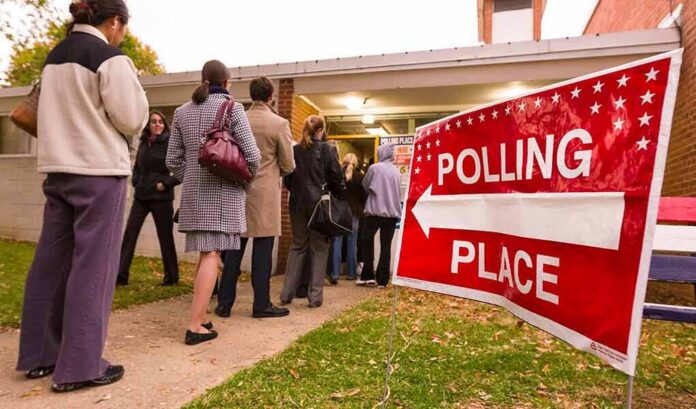
Ohio’s official calendar sets the General and Special Election for Tuesday, November 3, 2026, with polls open from 6:30 a.m. to 7:30 p.m. statewide. Texas lists the same election date and sets polling from 7:00 a.m. to 7:00 p.m. across the state. Michigan’s election calendar identifies November 3, 2026 as the general election date, matching the national schedule used by federal agencies and voter-assistance programs. These rules define when ballots may be cast in person.
Michigan’s Secretary of State highlights a constitutionally mandated early-voting period from October 24 through November 1, giving voters nine days to cast ballots ahead of today’s in-person deadline. That window is separate from absentee options and election-day voting. Voters who did not use early voting can still vote today if they are in line by closing time under state rules. The mix of methods can speed or slow counting depending on processing policies and volume.
Why Polling Hours Differ By State
Election administration in the United States is decentralized. States set their own hours and processes, which explains Ohio’s earlier opening time compared with Texas, and Michigan’s separate framework. These differences are normal under law but can confuse viewers following national coverage. Clear reminders about local hours help avoid missed votes and reduce the chance that normal timing differences are framed as irregularities by fast-moving social media posts or live tickers.
Federal calendars track these state schedules for national planning. The Federal Election Commission shows election activity through today in Ohio and Texas, reinforcing the closing of the voter-contact window as polls operate. The Federal Voting Assistance Program also lists November 3 as General Election Day, guiding military and overseas voters and confirming the national cadence that aligns with the three states featured here. These federal references support, but do not replace, state-specific rules.
How Early Voting and Turnout Shape Election Night
Early voting can change when and how ballots are counted. Research using tens of thousands of polling-place incident logs shows that more ballots and complex ballot streams can raise the rate of issues that workers must solve, while experience and centralized steps can lower them. That means today’s smooth results depend on planning and training as much as technology. It also means timelines for first results will vary by county and method, even when polls close on time.
My final predictions for the 2026 midterms:
🔵 House Popular Vote: D+9.5
D 52.2% | R 42.7%🏛️ House: 236 D – 199 R
Democratic control probability: 84%🏛️ Senate: 53 D – 47 R (Median 52 D)
Democratic control probability: 75%Final Senate projections (margin | win probability):… pic.twitter.com/mbv6UHudPj
— Ransom (@mrransomx) November 3, 2026
For voters, the key is simple: follow your state’s posted hours, bring needed identification if required, and stay in line if you arrive before closing. For readers tracking control of Congress in President Trump’s second term, remember that counts roll in unevenly. Ohio’s 7:30 p.m. close, Texas’s 7:00 p.m. close, and Michigan’s procedures will feed separate reporting cycles. Official canvass and certification come later, after today’s votes are accepted and reconciled.
Sources:
youtube.com, ohiosos.gov, sos.texas.gov, michigan.gov, fvap.gov, judicature.duke.edu