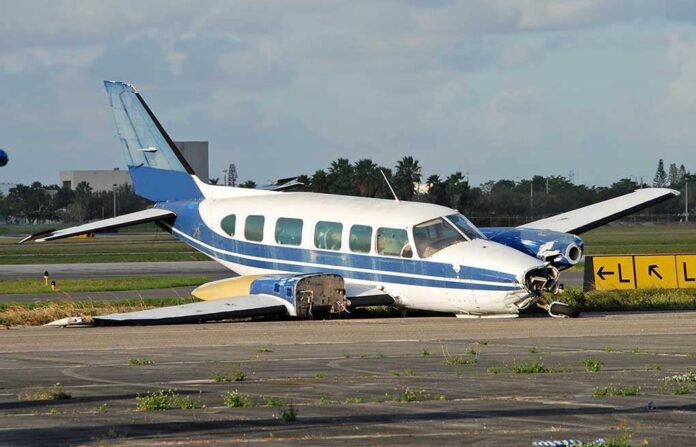
Two people died after a Cessna crashed at San Diego’s Montgomery-Gibbs Executive Airport, shutting the field and launching a federal investigation.
Story Snapshot
- San Diego Fire-Rescue reported two deaths after a Cessna crashed at Montgomery-Gibbs Executive Airport.
- The Federal Aviation Administration closed the airport while crews responded and secured the scene.
- Federal investigators will release a preliminary report with early facts before any cause is named.
- The crash renews safety questions at a busy city airport used by private and training flights.
What Officials Confirmed About the Crash
San Diego Fire-Rescue said a Cessna crashed at Montgomery-Gibbs Executive Airport on September 7, killing two people on board. Department spokesperson Jose Ysea said crews worked the scene while the Federal Aviation Administration closed the airport to flights. Officials did not release the identities of the victims at the time of the initial report. The crash happened on airport property, which helped keep damage contained and allowed first responders to gain access fast.
City and federal responders set up an incident perimeter and began standard post-crash steps. The site was secured for safety and for evidence. Airport operations paused to allow officials to document debris, flight path details, and aircraft records. Investigators often pull radio calls, radar tracks, and maintenance logs in the first hours after a crash. That work helps the National Transportation Safety Board build an accurate early picture of what happened on the ground and in the air.
How the Federal Investigation Will Unfold
The National Transportation Safety Board starts with a quick factual summary called a preliminary report. The board says this early report lists on-scene facts and is usually posted within about two weeks. It does not name a cause or assign fault. The full investigation then continues for months. The process includes lab tests, interviews, and reviews of weather and equipment. A final report with probable cause can take a year or more to complete.
The National Transportation Safety Board’s media guidance warns that early findings are limited to facts gathered on scene, not analysis or blame. That matters for the public. People want to know why a crash happened, but the “why” comes late. The timeline protects accuracy and due process. It also helps families and the community by avoiding rushes to judgment. This case will follow that same pattern unless new safety risks demand urgent action.
Why This Airport Draws Scrutiny
Montgomery-Gibbs Executive Airport handles private flights, air taxis, and heavy training traffic. That mix keeps the skies busy over nearby neighborhoods. In past San Diego crashes linked to landings toward this airport, investigators examined visibility, approach paths, and equipment status before naming any cause. In one separate jet crash, officials said runway lights and a weather alert system were reported as not working during dense fog, though the final cause was still under review at that time.
Two people killed in a plane crash at Montgomery-Gibbs Executive Airport. Details and latest updates available in our blog post. https://t.co/QBtO0QnmAR
— Airline Hub (@AirlineHub1) September 8, 2026
Residents near city airports often worry about safety and accountability. Pilots worry about aging systems, crowded airspace, and clear rules that do not shift week to week. Both groups want straightforward facts and steady upgrades when problems appear. This is the basic social contract people expect from government: tell the truth fast, fix what is broken, and do not hide the ball. The next real test is whether leaders share findings quickly and act on them.
What Comes Next for San Diego
In the coming days, officials will clear the wreckage, review airport records, and coordinate with the National Transportation Safety Board on data. Families of the victims will get updates through official channels as facts firm up. The public will likely see a preliminary report first, then a deeper file of records in the investigation docket, and finally a probable-cause report when the work is complete. Until then, any claim of cause is guesswork and will not guide policy.
Sources:
nypost.com, pbs.org, kesq.com, flyingmag.com