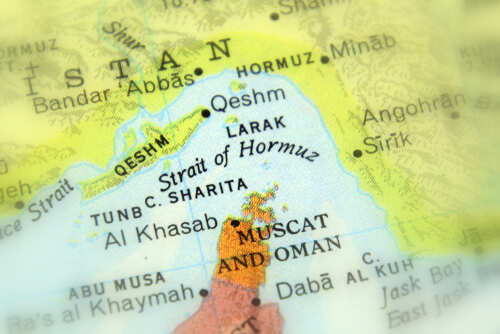
Even with the Strait of Hormuz nearly paralyzed by war, global energy leaders insist there’s “plenty of oil”—but the real squeeze may be natural gas and the household budgets it punishes.
Quick Take
- IEA chief Fatih Birol says the global oil market remains well supplied despite the US-Iran war and major shipping disruptions.
- The Strait of Hormuz slowdown matters because it typically carries roughly 20–25% of global seaborne oil and petroleum-product trade.
- IEA members hold large emergency reserves, giving governments options if disruptions persist and prices spike further.
- Qatar’s Ras Laffan shutdown raises sharper near-term risk for LNG and related fuels than for crude oil.
IEA message: oil supply is ample, but the route shock is real
IEA Executive Director Fatih Birol said global oil markets remain “well supplied” even as the US-Iran war disrupts Middle East flows and tanker movement through the Strait of Hormuz slows dramatically. The reassurance is grounded in recent market conditions: supply has exceeded demand since early 2025, with projections extending that surplus into 2026. Still, the IEA is monitoring closely because prolonged disruptions could change the balance quickly.
Shipping risk is driving part of the anxiety. After fighting broke out on February 28, tanker traffic at Hormuz reportedly halted by March 1, and major carriers such as NYK Line and Mitsui O.S.K. Lines suspended transits. With Hormuz serving as a critical chokepoint for crude, refined products, and gas shipments, even a partial shutdown can trigger price spikes that hit American consumers—especially when markets are already jittery.
Why Hormuz matters: one chokepoint, global consequences
Hormuz isn’t just another shipping lane; it is the artery for roughly 20–25% of global seaborne oil and petroleum products. The research notes volumes on the order of 20 million barrels per day moving through the strait under normal conditions. When traffic becomes “all but paralysed,” the immediate effect is less about geology—there is still oil in the world—and more about logistics, insurance, and the physical ability to move supply to paying customers safely.
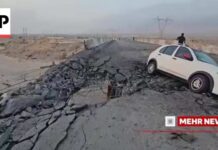
The current conflict also includes a pattern of attacks beyond the strait itself. Reports describe at least eight ship attacks and strikes on regional energy sites, widening the risk perimeter across key producers and export infrastructure. That broader threat is why the IEA convened an emergency governing board meeting in Paris on March 3 to assess conditions, rather than assuming the market surplus alone would prevent shortages.
Emergency stocks are a backstop, not a magic wand
One concrete reason the IEA is projecting calm is the scale of emergency inventories. The research indicates IEA members hold more than 1.2 billion barrels of public emergency stocks, plus about 600 million barrels of industry stocks held under obligation. Those numbers give governments tools to smooth short-term dislocations and counter panic buying—exactly the kind of market psychology that can turn a shipping disruption into a self-fulfilling price surge.
For a conservative audience that watched years of policy choices collide with inflation, the key point is that stockpiles can buy time, not create energy abundance. Releases can cushion a shock, but they cannot permanently replace secure routes or reliable production. If fighting drags on and physical supply losses mount, Birol has warned the current surplus could flip into a deficit—meaning prices could stay elevated rather than simply spike and fade.
The bigger near-term vulnerability: LNG and home heating costs
Natural gas is the part of this story with the most immediate downside risk, especially for allies overseas. The research highlights the March 2 attack on Qatar’s Ras Laffan facility, which shut down LNG, LPG, and condensate production. Ras Laffan is a major LNG hub, and the research describes Qatar as exporting around 112 billion cubic meters of LNG in 2025, alongside large volumes of LPG and condensate.
Birol has emphasized that gas could be a “bigger story than oil,” in part because LNG markets are tighter and competition is global. Europe is particularly exposed if Asian buyers outbid for limited cargoes, a dynamic that can pull supply away even when tanks and pipelines exist. This is also where policy meets reality: the research notes Birol urging Europe to invest in renewables and nuclear, but the immediate constraint is physical LNG availability.
Mediation talk is emerging, but the facts are limited
Iran’s President Masoud Pezeshkian said mediation efforts are underway, but the research indicates details are thin, including which countries are brokering talks. The same one notes Iran rejecting renewed US negotiations, arguing prior talks coincided with attacks. Oman is mentioned as a potential mediator because it has played that role before and appears less directly targeted than other regional players during this round of escalation.
#MiddleEast: International Energy Agency chief Fatih Birol sought Friday to tamp down fears of a global oil crisis after prices spiked because of the war in the Middle East, saying there was "plenty of oil in the market."https://t.co/bZZkXikSR1
— LBCI Lebanon English (@LBCI_News_EN) March 6, 2026
The bottom line for American readers is that market stability hinges on duration and scope. The IEA’s position—ample oil today, but deficit risk tomorrow—depends on whether shipping lanes remain constrained and whether further strikes take production offline. With prices already at multi-year highs in the reporting window, the prudent takeaway is to watch LNG disruptions and Hormuz traffic as leading indicators for broader inflation pressure.