As American destroyers came under Iranian fire in the Strait of Hormuz, U.S. forces answered with “self-defense strikes” that raise hard questions about deterrence, sovereignty, and how far our military should go to protect a fragile peace.
Story Snapshot
- U.S. Central Command says Iranian forces fired missiles, drones, and small boats at three U.S. destroyers in the Strait of Hormuz, prompting self-defense strikes.[2][3]
- American officials report no U.S. ships were hit and no casualties, while Iranian military facilities, boats, and port areas tied to the attacks were struck inside Iran.[2][3][6]
- The Pentagon describes the action as limited, defensive, and consistent with an ongoing ceasefire, even as Iran accuses Washington of violating its sovereignty.[2][3][6]
- Trump-era rules of engagement under the current administration are being tested as the U.S. balances tough deterrence, energy security, and pressure to avoid a wider regional war.[2][3][6]
What U.S. Central Command Says Happened in the Strait of Hormuz
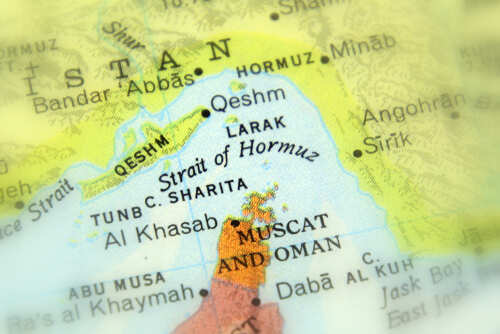
U.S. Central Command (CENTCOM) reported that three U.S. Navy guided-missile destroyers, the USS Truxtun, USS Rafael Peralta, and USS Mason, were transiting the international Strait of Hormuz toward the Gulf of Oman when Iranian forces launched multiple missiles, drones, and swarms of small boats at them.[2][3] According to CENTCOM, U.S. forces intercepted the incoming threats and then carried out “self-defense strikes” against Iranian military targets directly tied to the attacks, including missile and drone launch sites, command-and-control locations, and intelligence and surveillance nodes.[2][3]
Officials emphasized that no U.S. assets were struck, and that as the engagement unfolded, American crews on the destroyers successfully knocked down missiles and destroyed drones before they could hit.[2][3] This account portrays the episode as a textbook force-protection scenario: U.S. warships in international waters, confronted by coordinated Iranian fire and aggressive boat movements, responding first by eliminating inbound weapons, then by striking the originating military infrastructure ashore to prevent further attacks.[2][3] CENTCOM publicly stressed that it “does not seek escalation” but is fully prepared to defend American forces in the region.[2][3]
Strikes Inside Iran: Ports, Boats, and Sovereignty Claims
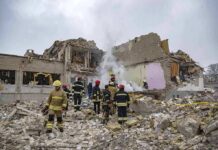
Multiple U.S. officials told CBS News that U.S. forces extended their response beyond the immediate intercept of inbound threats, striking Iranian ports and facilities at Bandar Abbas and Qeshm, two key locations abutting the Strait of Hormuz that support Iran’s naval and small-boat operations.[6] Reporting and defense commentary describe Iranian boats that were targeted as being involved in mine-laying activity or attempting to interfere with maritime traffic, a direct danger to U.S. vessels and global oil shipping routes.[1][5] Fox-linked coverage and related video reporting say U.S. forces destroyed a significant number of Iranian mine-laying vessels during the broader campaign, underscoring Washington’s determination to keep the chokepoint open.[5][2]
Iran, however, has pushed back with its own narrative. An Iranian Revolutionary Guard Navy statement, cited in U.S. reporting, claimed that American forces attacked an Iranian tanker and another vessel and accused the U.S. and its partners of conducting strikes near Qeshm Island and other coastal areas.[3] From Tehran’s perspective, strikes on ports and coastline facilities amount to violations of national sovereignty and an escalation beyond ship-to-ship defense.[1][3] That competing framing ensures the incident will remain contested, even as satellite imagery and independent damage assessments have yet to fully emerge in the public record.[1][3]
Ceasefire, Blockade, and the Trump Administration’s Deterrence Balancing Act
The self-defense strikes took place under the shadow of a broader Iran conflict and a monthlong ceasefire that U.S. officials insist remains in effect.[3][6] President Trump publicly praised the destroyer crews, saying they transited “very successfully” under fire and declaring that the Iranian attackers and many small boats were “completely destroyed,” while missiles and drones were shot down.[2] At the same time, Defense Department and diplomatic statements have framed the action as limited and necessary to protect U.S. forces and maintain the integrity of a U.S.-led naval blockade intended to choke off Iranian war-making capacity, not to start a full-scale war.[2]
For conservative Americans who have watched decades of appeasement and weak responses to Iranian aggression, this episode reflects a familiar tension: either project enough strength to deter future attacks, or invite more harassment of U.S. ships, allies, and global energy flows. CENTCOM’s language about exercising “restraint” and avoiding escalation aligns with a broader Trump-era strategy of maximum pressure combined with controlled military responses.[1][2][3] Yet the lack of immediate release of detailed combat-system logs, mine-laying evidence, or full after-action reports leaves room for critics and foreign adversaries to question whether every strike stayed strictly within a narrow self-defense lane.[1][3][6]
Fog of War, Evidence Gaps, and Why Transparency Matters to Patriots
The reporting on this clash fits a well-known pattern from past Strait of Hormuz incidents: early coverage heavily reflects official U.S. statements, while key operational details remain classified or summarized by spokespeople rather than shown in full.[1][3] Journalists have relied on anonymous U.S. officials and short CENTCOM releases to describe Iranian boats “attempting to emplace mines” and to link each Iranian facility struck to a specific threat, without yet providing forensic images, recovered equipment, or time-stamped radar and communications logs for public scrutiny.[1][3]
US MILITARY STRIKES IRANIAN BOATS, MISSILE LAUNCH SITES-NA …
— MarketNewsFeed (@MarketNews_Feed) May 26, 2026
For Americans who value constitutional limits and clear rules of engagement, these evidence gaps matter. The Trump administration has framed this as defensive action under existing authorities, not a new war, during a ceasefire that the president says still stands.[2][3] To solidify public trust and blunt hostile propaganda, Congress and the public can press for declassified after-action reports, shipboard combat-system data from the Truxtun, Mason, and Rafael Peralta, and independent damage assessments of the Iranian sites near Bandar Abbas and Qeshm.[1][3][6] Strong, transparent self-defense abroad ultimately supports strong, accountable government at home.
Sources:
[1] Web – U.S. strikes 2 Iranian ports as American warships come under fire
[2] YouTube – Iranian mine ships hit as US carries out ‘most intense day’ of strikes
[3] YouTube – LIVE | US Strikes Iranian Fast Boats As Iran Attacks UAE Oil Facility
[5] Web – US forces destroy 16 Iranian mine-laying vessels near Strait of Hormuz
[6] YouTube – US sinks 7 Iranian boats after UAE Strait of Hormuz attacks