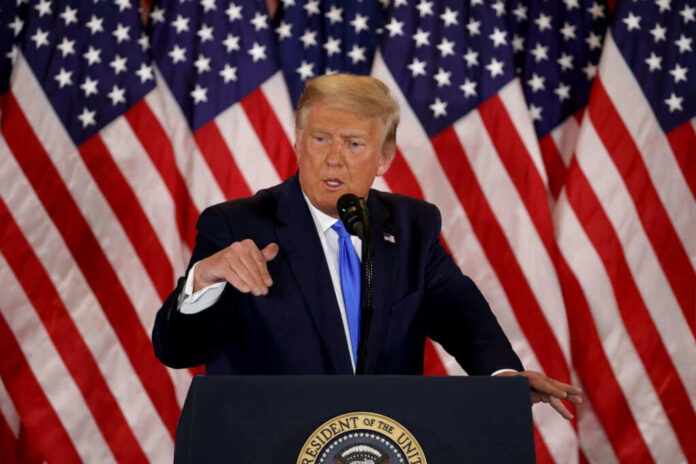
President Trump’s warning that Iran could be hit “twenty times harder” is turning a second-week war briefing into a stark test of deterrence, readiness, and American resolve.
Story Snapshot
- Defense Secretary Pete Hegseth and Joint Chiefs Chairman Gen. Dan Caine are slated to brief the public as the 2026 Iran war moves into its second week.
- U.S.-Israeli operations that began February 28 have targeted Iranian military, government, and nuclear sites, while Iran has retaliated against regional targets and shipping.
- Trump signaled open-ended commitment, while the White House has discussed a possible 4–6 week campaign window.
- Reported damage includes major strikes on Iranian command infrastructure and naval losses that complicate threats to the Strait of Hormuz.
What the Pentagon Briefing Signals in Week Two
Secretary of Defense Pete Hegseth and Joint Chiefs Chairman Gen. Dan Caine are expected to address the war’s operational status as the conflict enters its second week, following the February 28 opening phase. The briefing matters because it is where the administration can clarify objectives, pacing, and risk to U.S. forces and allies. With President Trump publicly threatening far heavier strikes, official messaging becomes part of deterrence—and part of accountability.
Operational Pace: Targets, Naval Losses, and Retaliation Risk
Large-scale strikes early in the conflict and a continuing tempo into early March, including infrastructure hits in and around Tehran and other key areas. The claims of extensive target destruction, including Iranian ships and at least one submarine, alongside Israeli strikes on missile launchers and nuclear-related sites. Iran, meanwhile, is described as retaliating across the region—hitting shipping and threatening vessels tied to the U.S. and Israel.
The Strait of Hormuz remains a central pressure point because energy markets and global shipping lanes run through it, and it notes competing signals: Iranian messaging that the strait is “open,” paired with threats to target certain ships. That posture can function as coercion without a full closure, but it still raises insurance and risk costs for commercial traffic. The strategic question for U.S. planners is how to protect navigation without drifting into mission creep.
Trump’s “No Time Limits” vs. a 4–6 Week Timeline
Two timelines appear side-by-side: President Trump’s statement indicating “no time limits” and a White House view that the campaign could take roughly four to six weeks. Those are not automatically contradictory—open-ended political resolve can coexist with an operational estimate—but they do affect how adversaries calculate endurance. If Iran believes the U.S. will sustain pressure, it may deter escalation; if it senses wavering, it may gamble on regional disruption.
For Americans tired of ambiguous, forever-war politics, clarity matters. A defined operational arc—degrading Iranian capabilities and leadership—yet it also acknowledges the fog of war and evolving objectives. From a constitutional, limited-government perspective, the key governance issue is whether the public receives straightforward parameters: what triggers escalation, what ends the campaign, and how Congress and the public will be kept informed as facts on the ground change.
Human and Economic Costs: Casualties, Energy Shock, and Regional Spillover
Significant casualties inside Iran and reports U.S. fatalities as well, including deaths connected to attacks in Kuwait. It also describes strikes affecting critical infrastructure and mentions disruptions tied to embassies, oil, aviation, and broadcasting facilities. Those details underscore that even if U.S. forces keep military momentum, broader regional spillover can widen the conflict’s impact beyond the battlefield—especially when adversaries choose asymmetric targets with high economic leverage.
WATCH LIVE: War Secretary Pete Hegseth and General Dan Caine Hold Press Briefing as Iran War Enters Second Week, Trump Threatens to Hit Iran “TWENTY TIMES HARDER Than They Have Been Hit” – 8 AM ET https://t.co/zrW5qBBiHD
— The Gateway Pundit (@gatewaypundit) March 10, 2026
Energy is the most immediate pocketbook exposure, because threats around Gulf shipping can lift prices quickly, compounding the inflation fatigue many voters still associate with prior years of overspending and weak deterrence. Skepticism in the insurance market about escorts, which can drive costs regardless of whether a chokepoint is formally closed. That is why the administration’s next briefings—facts, timelines, and thresholds—will shape confidence at home and caution abroad.
Sources:
War US-Israel vs Iran timeline 2026-2026-03-04