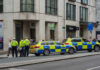
A shooting in Times Square exposes persistent failures in urban crime prevention, reigniting conservative outrage over ineffective policing and policies that threaten public safety in America’s most iconic city.
Story Snapshot
- Three people wounded in Times Square after a teenage dispute escalates to gunfire.
- Incident underscores growing concerns over urban crime and youth violence.
- NYPD’s rapid response highlights ongoing challenges in maintaining order in high-profile areas.
- Public safety fears could impact tourism, business, and further policy debates on crime and enforcement.
Times Square Shooting: Details of the Incident
On August 9, 2025, at approximately 1:25 a.m., a violent dispute between two teenagers inside Raising Cane’s restaurant spilled onto the bustling streets of Times Square, resulting in gunfire. Three individuals—a 19-year-old male, a 65-year-old male, and an 18-year-old female—were wounded, all of whom are now reported in stable condition at Bellevue Hospital. Police swiftly responded, securing the scene and recovering a firearm. The 17-year-old suspect was apprehended, and the investigation remains active, with charges pending.
The shooting’s location—Times Square, globally recognized for its heavy foot traffic and symbolic status—marks this as more than an isolated incident. The fact that a personal dispute could so quickly escalate to armed violence in a place saturated with surveillance and law enforcement raises serious questions about urban safety and the effectiveness of current crime prevention measures. Public confidence in law enforcement and the city’s leadership faces renewed scrutiny, especially given recent history of sporadic violence in tourist areas.
Background: Crime Trends and Policy Concerns
Times Square has long been considered the “Crossroads of the World,” with a reputation for both high security and occasional high-profile crimes. Historically, shootings in this area have been rare, thanks to a visible police presence. However, recent years have seen troubling incidents reminiscent of the current case, including a notable 2021 shooting that led to heightened patrols and surveillance. Despite these measures, urban violence—often stemming from personal disputes—remains a recurring threat, fueling conservative frustration with policies perceived as too lenient or distracted by leftist agendas.
Ongoing debates about policing, gun control, and youth violence have intensified in the aftermath of these incidents. Commentators such as former NYPD Deputy Inspector Corey Pegues and Manhattan Institute fellow Heather Mac Donald have argued that recent criminal justice reforms have eroded the NYPD’s capacity to prevent crime. The rise in youth-involved violence and the apparent ease with which firearms circulate in urban centers highlight shortcomings in both policy and enforcement, eroding the sense of safety critical to business and tourism.
Stakeholder Response and Broader Impacts
The NYPD leads the investigation, aiming to restore public confidence and prevent further incidents. The suspect’s status as a minor adds complexity to legal proceedings, while victims and their families focus on recovery and justice. Local businesses and tourism operators face immediate economic repercussions as public anxiety threatens foot traffic. For many, this incident symbolizes the broader failures of urban policy, where insufficient deterrence and lax enforcement have allowed violence to spill into even the most visible and policed areas.
Politically, pressure is mounting on city officials to address gun violence decisively and preserve Times Square’s reputation as a safe destination. Economic impacts could be significant if tourists and investors perceive New York City as increasingly unsafe, reinforcing conservative calls for a return to traditional law-and-order approaches. Heightened police presence and renewed debates over surveillance and criminal justice reform are likely in the short term, while long-term solutions remain contested and uncertain.
Expert Perspectives and Policy Analysis
Security analysts including Robert McCrie, a professor at John Jay College of Criminal Justice, and former NYPD Chief of Department Terence Monahan have noted that even isolated acts of violence in high-profile areas can sharply impact public confidence and economic activity. Urban safety specialists such as Maria Haberfeld of John Jay College and James O’Neill, former NYPD Commissioner, highlight the importance of rapid police response and visible deterrence in preventing escalation. Some advocate for stricter gun control and youth intervention programs, while others argue for more robust policing and enforcement. The clear consensus is that public safety must remain the central priority of any policy agenda, and failures in this regard demand urgent attention.
A shooting in New York City’s Times Square wounds 3 people, police say https://t.co/uLkBfmuZgL pic.twitter.com/ijCzOi7HiL
— The Province (@theprovince) August 10, 2025
While the current investigation continues, this Times Square shooting serves as a pointed reminder of the consequences of neglecting core conservative values: individual liberty, the rule of law, and strong community standards. Policymakers and citizens alike must remain vigilant, ensuring that public safety is never sacrificed to political expediency or misguided reforms. Only through decisive action can urban centers reclaim their status as safe havens for families, businesses, and visitors.
Sources:
Three People Wounded in Times Square Shooting; 17-Year-Old Suspect Arrested – ABC News
Times Square shooting wounds 3 people, suspect arrested – ABC7NY