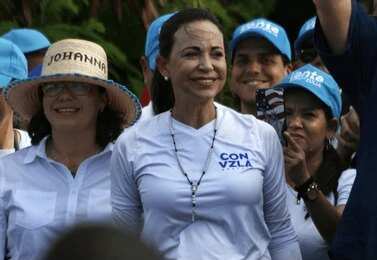
A Nobel Peace Prize laureate who has lived in hiding for months has announced she will return to her country within weeks, setting up a potentially explosive confrontation with the authoritarian regime that has systematically tried to silence her.
Story Snapshot
- María Corina Machado, Venezuela’s opposition leader and 2025 Nobel Peace Prize winner, says she will return to Venezuela in coming weeks despite living in hiding
- Machado won the 2023 opposition primary with over 90 percent of the vote but was barred from the 2024 presidential ballot by regime authorities
- She faces a travel ban exceeding 11 years and was expelled from the National Assembly in 2014 for challenging the government’s authoritarian control
- The opposition claims documentation proves it won the 2024 election, though the Maduro regime declared victory and tightened its grip on power
The Woman Who Defied a Dictatorship
María Corina Machado’s journey from founding a charity for street children in 1992 to becoming Venezuela’s most prominent democracy advocate spans three decades of escalating persecution. She co-founded Súmate in 2002, an electoral watchdog that collected 3.5 million signatures in a single day to trigger a recall referendum against President Hugo Chávez. That audacious move made her a primary target of government harassment that continues today. In 2010, she won election to the National Assembly with the highest vote count in Venezuelan parliamentary history, demonstrating the popular support that has sustained her through years of exile and hiding.
From Parliamentary Expulsion to Nobel Recognition
The regime’s fear of Machado became undeniable in 2014 when authorities expelled her from the National Assembly after she addressed the Organization of American States about Venezuela’s deepening crisis. They barred her from leaving the country and disqualified her from holding public office, classic authoritarian tactics designed to neutralize political opponents. Yet she founded Vente Venezuela, a classical liberal party advocating individual liberty and market economics, and in 2017 helped establish the Soy Venezuela alliance, uniting pro-democracy forces across ideological divides. Her persistence earned international recognition culminating in the 2025 Nobel Peace Prize for leading the struggle against expanding authoritarianism.
The Stolen Election and Its Aftermath
Machado announced her presidential candidacy in 2023 and dominated the opposition primary with 92 percent of the vote, a result that surprised experts and proved millions of Venezuelans still believed in peaceful change. Electoral authorities responded by blocking her from the ballot, citing alleged financial irregularities that no credible observer took seriously. She endorsed former diplomat Edmundo González Urrutia, and the opposition mobilized systematically to document the election results. According to opposition records, González Urrutia won approximately 73 percent of the vote, but the regime declared its own victory and intensified repression.
Her announced return poses a dilemma for the Maduro government that reveals the weakness underlying authoritarian bluster. Arresting or harming a Nobel laureate would generate international outrage and potentially trigger diplomatic consequences the regime can ill afford. Ignoring her return would embolden the opposition and expose the government’s inability to control Venezuela’s most effective democracy advocate. Machado has systematically built credibility through nonviolent resistance, meticulous electoral documentation, and coalition building across political divisions. Her Nobel Prize transformed her from domestic opposition leader into an internationally recognized symbol of democratic resistance.
What Her Return Means for Venezuela’s Future
The timing and strategic calculation behind Machado’s return announcement remain partially obscured by limited public information about her specific plans. What’s clear is that she has galvanized millions of Venezuelans demanding fundamental change, according to Harvard’s David Rockefeller Center for Latin American Studies. Her willingness to return despite credible threats demonstrates either remarkable courage or strategic confidence that international attention provides some protection. Venezuela faces documented humanitarian crisis, economic collapse, and political repression affecting millions who have fled the country or endure worsening conditions under socialist mismanagement.
Opposition leader Maria Corina Machado says she will return to Venezuela in coming weeks https://t.co/UwJhuNDNPL https://t.co/UwJhuNDNPL
— Reuters (@Reuters) March 1, 2026
Machado represents one of the few opposition voices that challenged authoritarianism without resorting to violence, making her particularly valuable to democratic movements throughout Latin America. Her return could catalyze broader mobilization among Venezuelans exhausted by regime incompetence and repression. Whether the opposition’s documented electoral victory can translate into actual power remains Venezuela’s central political question. Machado’s leadership has consistently emphasized institutional reform, free markets, and civic participation as alternatives to the failed socialist experiment that destroyed what was once South America’s wealthiest nation. Her return will test whether peaceful democratic resistance can prevail against entrenched authoritarian control.
Sources:
Maria Corina Machado – Yale World Fellows
María Corina Machado – Facts – NobelPrize.org
Tuesday Seminar Series: Maria Corina Machado – Harvard David Rockefeller Center
Maria Corina Machado: A Woman of Freedom – Friedrich Naumann Foundation