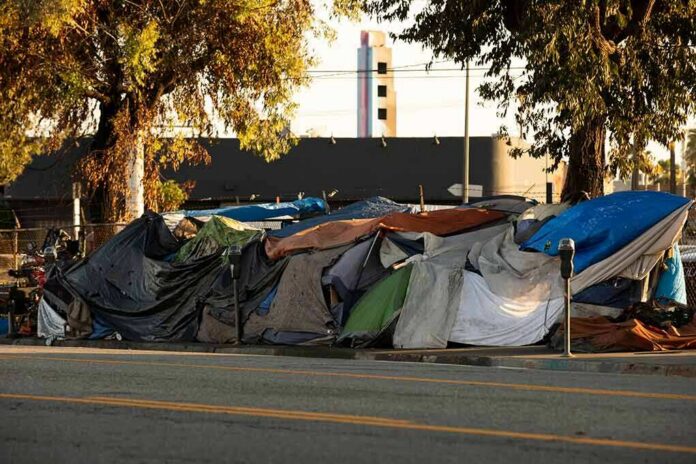
Los Angeles city leaders just voted to let people camp again in 12 spots where camping was banned for years, including a park and streets next to a freeway.
Story Snapshot
- The Los Angeles City Council voted 10-3 on August 18 to lift camping bans in 12 zones across Hollywood, Echo Park, and Silver Lake.
- The lifted zones include Barnsdall Art Park, the Hollywood Recreation Center, several Silver Lake intersections, and areas next to the 101 Freeway.
- Councilmember Hugo Soto-Martínez says city data shows the bans failed, with people returning to most cleared encampments anyway.
- Critics warn the rollback could bring new fire, crime, and cleanliness problems to some of the city’s most visible public spaces.
Council Repeals Camping Bans In 12 Neighborhood Zones
The Los Angeles City Council voted 10-3 on August 18, 2026, to cancel camping bans in 12 specific locations. The zones sit inside District 13, covering parts of Hollywood, Echo Park, and Silver Lake. The bans had blocked people from sitting, sleeping, or camping in these exact spots for years. Former Councilmember Mitch O’Farrell had pushed for the original restrictions before leaving office.
The affected sites include some of the city’s most recognizable public spaces. Barnsdall Art Park and the Hollywood Recreation Center are now open to camping again. So are several busy Silver Lake intersections and freeway-adjacent spots like Bronson Avenue near the 101 Freeway and the Sunset and Glendale intersection. These are places many residents pass through daily, which is part of why the change has drawn so much attention.
Councilmember Points To Data Showing Bans Failed
Councilmember Hugo Soto-Martínez, who represents District 13, led the push to end the bans. He said moving people from block to block never actually helped them find housing. He also said the rules made outreach harder because people lost belongings, got fined, and were often arrested during enforcement sweeps.
Soto-Martínez pointed to a city analysis backing up his case. He said people who lived at encampments before enforcement returned to 81% of the sites that were cleared under the old rules. He said almost every cleared encampment eventually filled back up. A separate city report found only two people got permanent housing after the city spent more than three million dollars enforcing similar rules citywide.
Residents And Critics Warn Of Public Safety Risks
Opponents of the rollback see it differently. They warn the change could bring new public safety and quality-of-life problems back to neighborhoods that fought hard to get the bans in place. Some residents have raised specific fears about fire risk and crime returning to areas near their homes and businesses, according to local reporting on the backlash.
A New York Post opinion piece went further, accusing city leaders of surrendering on homelessness policy altogether. It’s worth noting that no fire, police, or sanitation data measuring conditions at these 12 sites after the repeal has been made public yet. That means claims about future harm remain predictions, not confirmed outcomes.
A Legal Landscape That Has Shifted Since 2024
This fight is happening under different legal rules than in years past. In 2024, the Supreme Court ruled 6-3 in City of Grants Pass v. Johnson that cities can enforce camping bans even when shelter beds are scarce, overturning earlier court limits. That ruling gave Los Angeles and other cities more legal room to enforce camping restrictions, which makes the council’s choice to loosen rules a deliberate policy decision rather than a legal requirement.
Los Angeles has swung between strict enforcement and looser rules before, and both approaches have drawn criticism. Enforcement critics point to data showing cleared encampments often come back. Enforcement supporters point to visible, immediate impacts on shared public spaces. For residents near these 12 zones, the debate is no longer theoretical. It will play out on their sidewalks, in their parks, and along their streets in the months ahead.
Karen is so bad for LA, she proved that with the CA fires. Who believes she has done any good for LA? Between the homelessness, the drug addicts who may be both, the garbage.. the city is pathetically trash. Imagine the crap, piss, disease running through those tent cities.… https://t.co/YyYyEQ2Xvk
— gr126929 (@gr126929) August 22, 2026
Sources:
nypost.com, latimes.com, laist.com, foxla.com, abc7.com, cbsnews.com, reddit.com, facebook.com