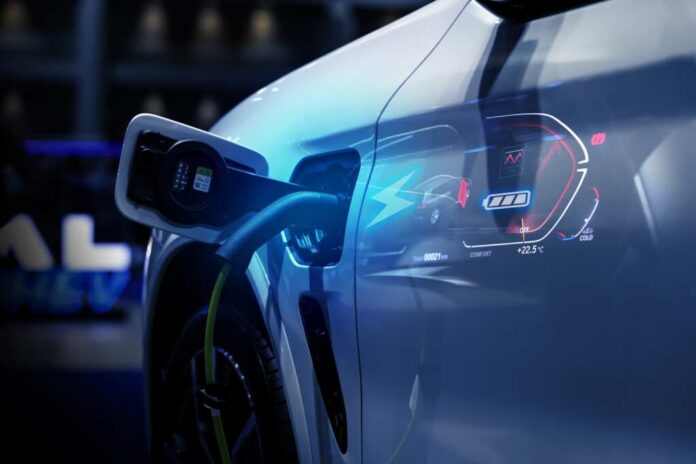
After years of Washington pushing pricey “green” dreams, the real EV revolution in 2026 is quietly happening where it actually helps families: the used-car lot.
Quick Take
- Off-lease EVs from 2023 model-year deals are expected to flood the market in 2026, expanding supply and driving steep discounts on three-year-old vehicles.
- Used EV sales rose sharply in 2025, and early 2026 data shows demand holding up even as new-EV growth cooled.
- Key trackers report improving used-EV availability while wholesale pricing has been relatively stable entering 2026.
- Buyers can find legitimate value, but they still need to vet battery health, warranty coverage, and whether a deal qualifies for incentives.
Off-Lease Inventory Is Turning EVs Into a Price Story
Industry analysts are converging on the same 2026 reality: a large wave of three-year-old EVs is returning from leases, and that supply shock is reshaping affordability. Forecasts point to more than 300,000 off-lease EVs hitting the market, with EVs making up a much larger share of lease turn-ins than in 2025. The practical effect is simple—buyers will see more late-model, lower-mileage options competing on price.
Those returns matter because leasing dominated a major portion of new EV transactions in the prior cycle, which delayed a true “used EV” market until the leases started ending. The result is a fast-moving shift from the political talking point of “buy new with subsidies” to a consumer-led reality where the best deals increasingly show up in use. For cost-conscious households, especially single-income and retirement-budget shoppers, the used side is where the numbers are finally starting to pencil out.
Data From 2025 to Early 2026 Shows Demand Didn’t Collapse
Used EV sales strengthened in 2025 even as the new-EV market showed signs of slowing, undercutting the idea that Americans broadly “rejected” EVs. Reports cited year-over-year used EV sales growth in 2025 and continued momentum into late 2025, with month-to-month gains as well. Early 2026 tracking also points to a market that is not seizing up, with used-EV pricing showing relative stability at wholesale.
That stability is important for two reasons. First, it suggests dealers can move inventory without the kind of chaotic pricing that punishes trade-ins and confuses buyers. Second, it implies the used EV market may be entering a more normal phase where supply is rising while pricing reflects real demand instead of policy distortions and pandemic-era shortages. Some trackers also describe days’ supply improving even as sales activity stays healthy, a sign of a functioning market.
The “Save 50%” Pitch Is Real, but Not Automatic for Every Buyer
Several analyses highlight the potential to save up to 50% by buying a three-year-old EV rather than a new equivalent, and the underlying mechanics are straightforward: depreciation plus a growing pool of similar off-lease vehicles competing for buyers. At the same time, “up to” matters. Prices vary sharply by model, region, and condition, and some sources point out that wholesale pricing can firm up even while retail shoppers still see better deals than they did a year earlier.
Shoppers should also separate bargain pricing from total ownership reality. Battery condition, remaining factory warranty, and the presence of a credible inspection process can make the difference between a smart purchase and a costly surprise. That’s why used-EV reports increasingly emphasize battery-health transparency and why certified pre-owned programs are becoming more relevant. Conservatives skeptical of top-down mandates can still appreciate a bottom-up bargain—so long as it’s verified and not treated like a leap of faith.
Tax Credits, Dealer Readiness, and the Post-Subsidy Test
The used EV affordability push has also been tangled up with incentives, including a used EV credit tied to price caps and eligibility rules that were a major factor in late-2025 timing. Research noted that not all dealers were set up to process point-of-sale rebates, which can determine whether a buyer actually captures the advertised savings. In plain terms, two identical cars can have different out-the-door costs depending on paperwork readiness and compliance steps.
Looking ahead, 2026 functions as a real-world stress test: can used EV demand stand on its own as subsidy conditions change and as households remain cautious after years of inflation and fiscal mismanagement? The available data points to a market that is evolving toward normal consumer choice—more supply, clearer pricing, and fewer excuses. For buyers, the winning approach is conservative in the best sense of the word: compare total costs, insist on documentation, and avoid deals that rely on government fine print.
Sources:
https://www.greencars.com/news/used-ev-surge
https://www.recurrentauto.com/research/used-electric-vehicle-buying-report
https://www.caranddriver.com/news/a70020914/why-2026-will-be-a-great-time-to-buy-a-used-ev/
https://evdances.com/blogs/news/why-2026-could-be-the-best-year-yet-to-buy-a-used-electric-vehicle
https://www.caranddriver.com/shopping-advice/a69980017/used-electric-car-ev-shoppers-buyers-guide-2026/
https://www.coxautoinc.com/insights-hub/manheim-used-vehicle-value-index-january-2026-trends/