

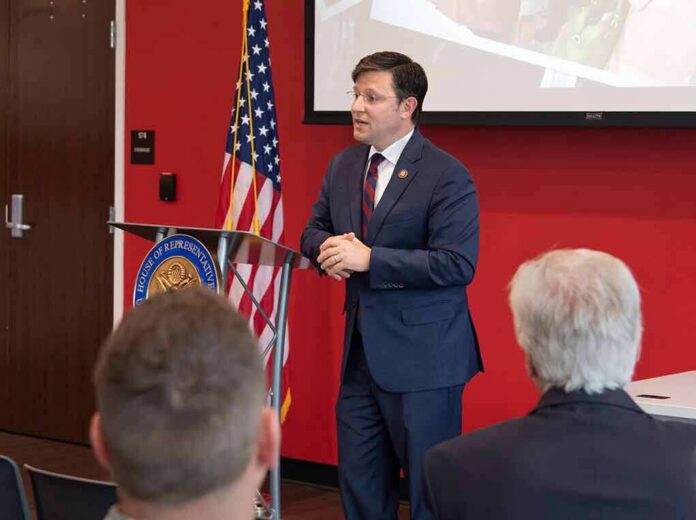
Sen. Jon Ossoff is pressing Rep. Mike Collins to explain alleged ties to a neo-Nazi propagandist while a separate House ethics probe shadows Collins’s office conduct.
Story Snapshot
- Ossoff demands answers about alleged payments to a neo-Nazi propagandist and office ties to extremists.
- Collins denies antisemitism and says the propagandist had no role in his campaign.
- A House ethics referral cites noncooperation and possible misuse of resources in a separate matter.
- Calls grow for Collins to release emails, texts, and records to settle key questions.
What sparked the clash
Sen. Jon Ossoff escalated attacks on Rep. Mike Collins after reports linked Collins’s orbit to David Alan Scheer, described as a neo-Nazi propagandist. Ossoff asked whether Collins or his businesses paid Scheer and whether Scheer had ties to Collins’s property, and demanded release of communications with alleged white supremacists. Broadcast clips show Ossoff calling Collins “surrounded by neo-Nazis and white nationalists” and urging full transparency on emails, texts, and calls with those figures.
In the background, the House Committee on Ethics acknowledged an Office of Congressional Conduct report concerning Collins. The referral states Collins did not respond to investigator requests and indicates substantial reason to believe he used congressional resources for unofficial or unauthorized purposes. That ethics matter is separate from the extremist-ties claims, but Ossoff cites it to argue for compelled disclosure of office records that could clarify any connections.
Collins’s response and denials
Rep. Mike Collins rejects the accusations. Collins says he condemns antisemitism as “abhorrent” and denies that David Alan Scheer played any role in his campaign. He also points to his support for Israel’s military as evidence of his stance against antisemitism. When asked about an associate’s alleged extremist content, Collins said, “We’ve fully addressed that,” and declined to provide more detail in public exchanges captured by news outlets.
Collins’s campaign has framed the controversy as political. Coverage quotes his team denying he is antisemitic and saying the accusations distort his views and record. Collins adds that “no one speaks for me, and I don’t speak for anyone else,” a line aimed at separating his own positions from those of associates or staff who may have posted offensive material online. These denials set up a direct conflict between Ossoff’s demands and Collins’s refusal to elaborate.
What is known and what is missing
Public records and press statements leave gaps that keep the dispute alive. Ossoff’s core question—whether Collins or his businesses paid Scheer—remains unanswered in the available materials, and no bank records, invoices, or contracts have been released that show such payments. The ethics referral concerns resource misuse and noncooperation, not extremist ties, and does not make a formal finding on the latter. The lack of documents fuels calls for transparency from both sides.
Campaign seasons often turn on charged claims about associations. Courts and media debates show that labels like “white nationalist” can hinge on context and disclosed facts, which is why emails, texts, and vendor records matter. Without those, voters must weigh denials against allegations and coverage summaries. That dynamic frustrates many Americans who feel leaders dodge straight answers while institutions move slowly to verify claims.
Why this resonates beyond one race
Many conservatives and liberals agree that powerful insiders protect themselves while real problems go unsolved. This story taps that fear. A sitting lawmaker faces a noncooperation finding in one arena while fielding questions about extremist links in another. Voters want light, not heat: names, dates, payments, and messages. Clear records could close this chapter fast. Continued silence will keep it open and deepen distrust in Washington’s ability to police itself.
What would settle it now is simple. If Collins’s office releases communications and any relevant payment records, the public can see the facts. If none exist, that will be plain. If they do, that will be plain too. The longer it takes, the more people on the right and the left will see another fight where politicians and staff hide the ball while the country’s core issues wait. Transparency is the cheapest fix—and the rarest habit—inside the capital.
Sources:
youtube.com, notus.org, conduct.house.gov, electjon.com, ajc.com, yahoo.com, fedcourt.gov.au