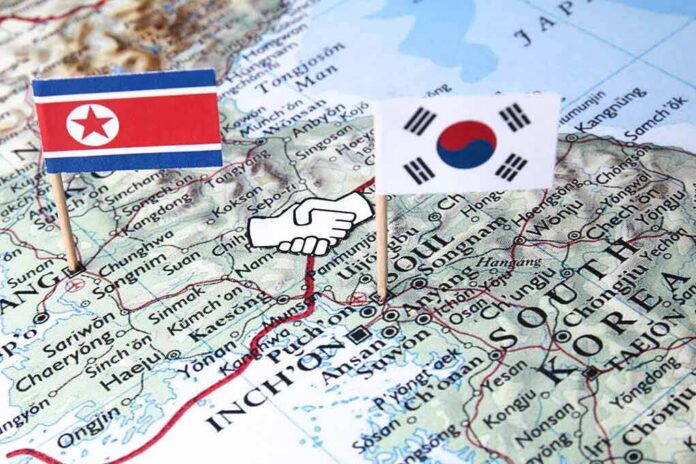
President Trump said Kim Jong Un has “always treated me with great respect,” as he moves to scale back U.S.–South Korea military drills to lower tensions and open talks.
Story Highlights
- Trump ordered a substantial reduction of joint U.S.–South Korea exercises, citing cost and diplomacy with Kim.
- Trump said North Korea has been “unthreatening and respectful” during his presidency, reinforcing leader-to-leader engagement.
- Critics argue the drills are vital for deterrence and allied readiness, warning of weaker coordination.
- Supporters see a chance to test diplomacy while keeping U.S. power ready if talks fail.
Trump Links Drill Reduction to Personal Diplomacy With Kim
President Trump directed the Pentagon to scale back joint exercises with South Korea, hours before major drills were set to begin. He said the large events are costly, send a hostile signal, and work against his direct dialogue with Kim Jong Un. Trump added that North Korea has been “unthreatening and respectful” during his tenure, and he aims to keep channels open for talks. The move follows years of on-and-off summits and pauses that tied military signals to diplomatic timing.
The White House view is simple: talk firmly, avoid needless provocation, and keep pressure tools ready. Trump argues that giant exercises are not the only way to show strength. Carrier groups, bombers, and missile defenses still exist, and smaller-scale training can sustain core skills. His team frames the cut as smart sequencing, not retreat. They say this encourages Pyongyang to engage while Washington keeps the option to restore drills if North Korea acts aggressively.
Allied Readiness Debate: Deterrence Value of Large Exercises
Defense voices warn that large drills matter for real-world combat tasks. They say complex operations need rehearsal, shared plans, and tested logistics. Public broadcasting and defense figures described the exercises as essential to keeping U.S. and South Korean forces in sync and to signaling unity, which helps deter attack. Past assessments from major outlets and experts say scaling back could weaken coordination and slow South Korea’s path to take on greater defense roles.
Some former officials and media analyses called Trump’s change a risky bet. They argued that Pyongyang still tests missiles and hones tactics, so cutting drills may give up leverage without clear gains. They also said sudden pauses can rattle allies and invite confusion about U.S. resolve. Supporters of the pause counter that diplomacy needs space and that Washington can rapidly surge forces and training if North Korea backslides, avoiding permanent loss in readiness.
Respect Versus Results: What “Unthreatening” Means in Practice
Trump’s claim that Kim has shown respect reflects the tone of leader-to-leader messages and summit settings. Reports have highlighted unusually warm letters and public remarks that lowered immediate temperature at key moments. That climate can reduce miscalculation risk. Yet skeptics point to North Korea’s ongoing weapons work and regional tests to contest that the threat truly eased in strategic terms, even if top-level rhetoric cooled for periods. The gap is tone versus hard capability.
🚨 BREAKING
🇺🇸 President Donald Trump has ordered the U.S. military to substantially reduce joint exercises with South Korea, citing his “very good relationship” with North Korean leader Kim Jong Un.
The move comes amid renewed diplomatic signals between Washington and… pic.twitter.com/a39ZJPvOnX
— Furious And Trusted News (@FuriousTrusted) August 18, 2026
The core policy divide is clear. The Trump approach tries to convert personal respect into practical steps: fewer giant drills now, more room for talks, and pressure ready if needed. Critics focus on measurable outcomes: fewer missiles, tighter verification, and stronger allied drills until then. Both sides agree deterrence must hold. The question is method. For conservatives who value peace through strength, the test is whether diplomacy plus flexible force posture keeps America safe at a lower cost.
What It Means for U.S. Conservatives and the Alliance
For many readers, the stakes are simple. American troops must be ready. Taxpayers deserve value. Families want peace without endless brinkmanship. Trump’s move aims to cut wasteful signaling, keep talks alive, and avoid stumbling into a fight no one wants. If Kim respects strength and straight talk, this path could open a narrow lane for stability. If not, the administration says drills and deployments can ramp back up fast, with allies looped in at every step.
Sources:
cnn.com, trumpwhitehouse.archives.gov, trtworld.com, independent.co.uk, sejong.org, heritage.org