
United Kingdom officials and Google will reroute some winter transatlantic flights to avoid “warming” contrails across the North Atlantic’s Shanwick airspace, in a first-of-its-kind, state-backed trial.
Story Highlights
- The 30-month Operation Blue Skies trial will steer planes away from contrail-forming zones over the eastern North Atlantic.
- United Kingdom agencies, Google, meteorologists, and air traffic controllers will coordinate the effort.
- Past trials found large contrail reductions with small altitude or route shifts, sometimes with modest extra fuel burn.
- Winter routing was chosen to improve measurement and manage traffic while testing system impact.
What Operation Blue Skies Will Do This Winter
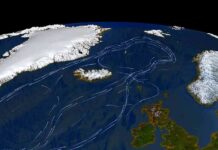
United Kingdom aviation authorities and Google will run Operation Blue Skies over Shanwick airspace, the eastern half of the North Atlantic corridor. The plan uses forecasts to spot air layers where planes would likely form long-lasting contrails, then adjusts altitudes or routes to avoid them. The trial runs during winter months, when traffic is lighter and contrails are more common, allowing clearer results without major schedule strain. Organizers describe it as the first state-backed test at oceanic scale.
The project spans 30 months and brings together the United Kingdom government, the national weather service, air traffic control, and Google researchers. Controllers and airlines will balance safety, workload, fuel use, and time with the goal of cutting warming contrails. Early phases focus on defining contrail-prone zones and trial procedures. Later phases compare flights that follow contrail-avoidance plans with similar flights that do not, to judge net effect on climate signals and operations.
Why Contrails Matter For Warming
Scientists have long found that persistent contrails can trap heat by creating thin cloud layers that warm the atmosphere overall. Global studies estimate the net warming from contrails is significant compared with carbon dioxide from aviation, even as the exact share varies by weather and region. That is why small adjustments in altitude during the most sensitive hours can, in theory, cut a large share of the warming from a single flight. The key is predicting those layers with enough accuracy and acting quickly.
Recent field and airline trials suggest the idea can work on real routes. A peer-reviewed feasibility test reported 64 percent fewer detectable contrails for flights that used avoidance plans than for control flights. A European summary found shorter contrails per flight kilometer but noted about a two percent fuel increase in the tested cases. Designers of the Atlantic trial placed it in winter to capture stronger signals and to study those trade-offs at scale.
What Changes For Passengers, Airlines, And Controllers
Most changes will happen behind the scenes in flight planning and air traffic control. Airlines may accept small altitude or route tweaks to skip contrail-prone layers. Controllers will use agreed procedures to keep aircraft safely separated while handling these adjustments. Planners will track on-time performance, workload, and fuel burn. For passengers, flight times may shift by minutes in some cases. The trial will test if climate gains outweigh small costs during busy transatlantic flows.
We're supporting Operation Blue Skies, a major UK-led aviation research programme exploring how weather intelligence can help reduce climate impacts
Met Office experts are developing a new contrail impact forecasting capability and supporting operational trials
(1/2) 🧵
— Met Office Business (@MetOfficeB2B) August 18, 2026
Supporters say the test answers a shared demand from both sides of the aisle: use practical steps that do not require new taxes or bans to cut warming risk. Critics of past climate efforts worry about higher costs or complex rules. This trial is limited, targeted, and time-bound. It aims to show measurable results in a high-traffic corridor using existing jets, current routes, and current control systems. If it works, agencies could scale it or refine it for other regions.
Sources:
newscientist.com, bbc.com, blog.google, pdfs.semanticscholar.org, aviationweek.com, arxiv.org, eurocontrol.int