

Federal prosecutors are testing a dangerous line: when a political protest hits a church, “press coverage” can quickly turn into a criminal conspiracy case.
Quick Take
- Don Lemon was arrested January 30, 2026, on federal charges tied to an anti-ICE protest at Cities Church in St. Paul, Minnesota.
- A federal magistrate released Lemon without bail after rejecting prosecutors’ request for stricter conditions, including a $100,000 bond.
- The case centers on whether Lemon was documenting a protest as a journalist or knowingly participating in coordinated actions inside a house of worship.
- Attorney General Pam Bondi has publicly pledged to prosecute those accused of “targeting” churches, framing the case as protecting religious freedom and public order.
Arrest in Beverly Hills, Then a No-Bail Release
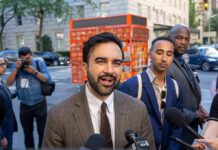
Federal agents arrested former CNN anchor Don Lemon on January 30, 2026, in Beverly Hills, Los Angeles, while he was covering the Grammy Awards. Lemon appeared in federal court in Los Angeles the same day. On January 31, a magistrate judge released him on his own recognizance, declining to impose bail and rejecting a prosecution request that included a $100,000 bond.
Release did not mean “no strings attached.” The court required Lemon to get permission for international travel, except for a preplanned June trip to France. The judge also ordered Lemon to avoid contact with known victims, witnesses, and co-defendants. Lemon was not ordered to report to probation or pretrial services, a lighter-touch approach that underscores the judge’s early restraint even as the government pursues serious allegations.
I guess Don Lemon won't be laughing about this anymore 🤣🤣🤣
He has been arrested for storming Cities Church in St. Paul, Minnesota. He is facing conspiracy against rights charges and violation of the FACE Act.pic.twitter.com/KffEtuQPMr
— Dr. Dawn Michael (@DawnsMission) January 30, 2026
What Happened at Cities Church in Minnesota
The charges trace back to January 18, 2026, when roughly 20 to 40 protesters gathered, received operational instructions at a grocery store parking lot, and then entered Cities Church in St. Paul. According to court reporting, the protest targeted the fact that one of the church’s pastors was also identified as an ICE official. Authorities say the group’s actions inside the church affected congregants and the service itself.
Prosecutors argue Lemon’s conduct went beyond observing. Court accounts describe allegations that he helped maintain secrecy about the target location, livestreamed the pre-operation meeting, and later played a hands-on role at the church by surrounding the pastor with questions and obstructing congregants attempting to leave. Lemon and his defense dispute that framing and maintain he was covering a newsworthy event, not joining a conspiracy.
The Charges, and Why the “Church Setting” Matters
Reporting on the case describes federal charges that include use of the FACE Act and conspiracy allegations tied to deprivation of religious rights. The legal stakes are heightened because the venue was a house of worship, where Americans expect constitutional protections for free exercise and peaceful assembly. When protests shift from public sidewalks into a sanctuary during services, the facts can implicate competing rights: speech and press on one side, religious liberty and public order on the other.
This case also matters because of how modern activism operates. Prosecutors point to operational security measures and coordinated planning, while the defense points to livestreaming and documentation as journalistic newsgathering. For conservatives who watched years of selective enforcement debates, the core question is straightforward: can the government prove intent and coordination beyond mere presence? Without clear proof, a prosecution risks chilling legitimate reporting; with proof, accountability matters.
Bondi’s Message: Protect Worship, Enforce the Law
Attorney General Pam Bondi has taken a public posture that this is about protecting congregants, not punishing viewpoints. In television remarks reported by major outlets, Bondi said the Justice Department would prosecute anyone who “terrorized the parishioners” at the church, regardless of status. That line draws a bright moral distinction: protest rights do not include the right to disrupt worship or intimidate families inside a church.
At the same time, the government’s burden rises when a defendant claims First Amendment protection as a journalist. A civil liberties group cited in coverage warned that charging journalists who appear to be covering a protest should raise red flags and that the government must show a clear line-crossing into threatening, obstructing, or conspiring to deprive others of rights. That tension will likely define what happens next in court.
Judge Skepticism, Grand Jury Muscle, and What Comes Next
A key complication is the early judicial skepticism described in reporting: the magistrate judge reportedly rejected multiple arrest warrants in the wider case for lack of probable cause, including Lemon’s, even though prosecutors later secured a grand jury indictment. Both facts can be true at once, and they point to how contested the evidence may become. Defense lawyers will likely stress the warrant rejections; prosecutors will stress the indictment.
Lemon’s next hearing is scheduled for February 9, 2026, in federal court in Minneapolis, and he had not entered a plea as of the latest reporting summarized here. For the public, the most important takeaway is not celebrity drama—it’s precedent. If courts allow “journalism” to shield coordinated disruption inside a church, houses of worship become softer targets. If courts allow thin evidence to label coverage as conspiracy, press freedom can erode fast.
Sources:
Don Lemon in custody: Former CNN anchor sources say
Don Lemon arrest Los Angeles