In a dramatic turn of events, a deadly Israeli strike on Doha has prompted President Trump to convene an emergency summit, raising global tensions.
Story Highlights
- President Trump calls for an emergency summit following an Israeli airstrike on Doha.
- The attack has escalated tensions in the already fragile Middle Eastern region.
- Trump’s response emphasizes US non-involvement, maintaining a neutral stance.
Trump’s Emergency Summit in Response to Israeli Strike
President Trump has swiftly responded to the recent Israeli strike on Doha by calling an emergency summit. The strike, which has resulted in numerous casualties, has heightened tensions in the Middle East, a region already fraught with conflict. Trump’s decision to call for an urgent meeting underscores the severity of the situation and the need for immediate international dialogue to prevent further escalation.
Israel’s Actions Under International Scrutiny
The Israeli airstrike has drawn widespread international condemnation, with many nations expressing concern over the potential for increased instability in the region. The attack has put Israel’s military tactics under the microscope, as global leaders call for restraint and adherence to international law. This incident has reignited debates over Middle Eastern geopolitics and the role of military interventions in conflict resolution.
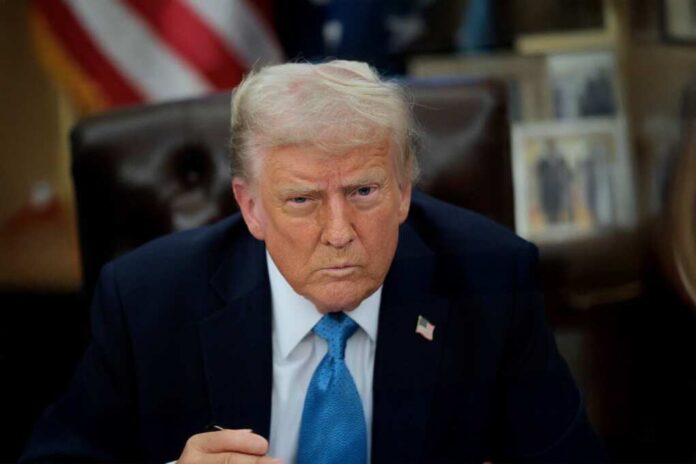
President Trump said Israel’s strike in Doha did not advance American or Israeli goals. He directed his envoy to alert Qatar ahead of the attack, called for the release of hostages in Gaza, and urged that the war come to an immediate end.
Watch here: https://t.co/Ci8c350hE1 pic.twitter.com/AQIlIdb5ro
— One America News (@OANN) September 9, 2025
Trump’s Diplomatic Maneuvering
In the wake of the strike, President Trump’s diplomatic approach has been cautious yet assertive. By emphasizing that the US was not involved in the Israeli actions, Trump aims to distance his administration from direct conflict while still playing a role in mediating peace talks. His administration’s stance reflects an attempt to balance support for Israel with broader international interests, particularly in maintaining stability in the Middle East.
Trump’s strategy involves leveraging diplomatic channels to facilitate dialogue between conflicting parties, emphasizing the importance of negotiation over military action. This approach aligns with conservative values of maintaining national security without unnecessary foreign entanglements.
Broader Implications for US Foreign Policy
The repercussions of the Israeli strike and Trump’s subsequent actions could significantly impact US foreign policy. The situation highlights the delicate balance the US must maintain in its alliances and the potential challenges of navigating complex international relations. The administration’s handling of the crisis will likely influence future diplomatic efforts and America’s role in global peacekeeping.
White House Press Secretary Karoline Leavitt says President Donald Trump was notified by the US military of Israel’s strike on Hamas in Doha and ordered Qatar to be warned before the attack. pic.twitter.com/VB2BOs4PTC
— Al Jazeera English (@AJEnglish) September 9, 2025
Sources:
https://www.reuters.com/world/middle-east/arab-islamic-summit-warn-israeli-attacks-threaten-normalisation-ties-draft-2025-09-14/?utm
https://www.aljazeera.com/news/2025/9/14/leaders-gather-for-arab-islamic-summit-in-qatar-after-israeli-attack?utm
https://www.washingtonpost.com/world/2025/09/09/qatar-doha-explosion-israel-hamas/?utm