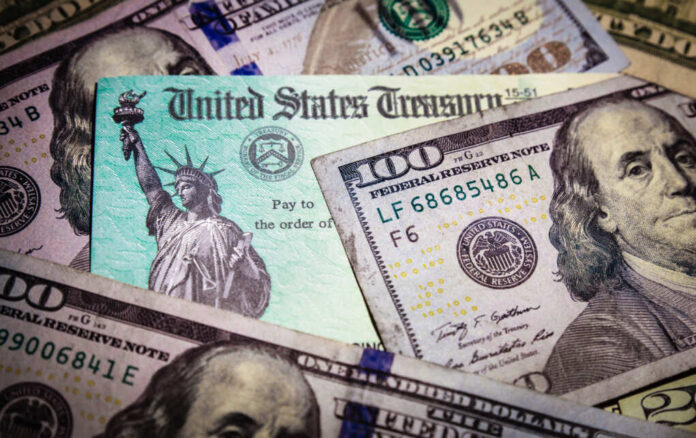
Speculation over a fourth stimulus check has intensified, but official confirmation remains absent, leaving Americans in suspense.
Story Overview
- President Trump has proposed a $5,000 DOGE dividend and a tariff rebate.
- Senator Josh Hawley has introduced the American Worker Rebate Act of 2025.
- As of August 2025, no new stimulus payments have received congressional approval.
- Misinformation about stimulus checks persists despite official denials.
Trump’s Proposals and the American Worker Rebate Act
In 2025, President Donald Trump suggested a “DOGE dividend” and a tariff rebate as potential financial relief measures for Americans. These proposals have captured public attention, especially among those who remember previous stimulus payments. Meanwhile, Senator Josh Hawley introduced the American Worker Rebate Act of 2025, which seeks to provide a $600 rebate per adult and dependent child. However, none of these proposals have secured congressional approval, leaving their future uncertain.
Despite widespread rumors fueled by social media, there is no official confirmation or congressional approval for a fourth round of stimulus checks. The IRS and Treasury Department have publicly denied any new stimulus payments, emphasizing the need for accurate public information. The proposals, though distinct from previous pandemic-era checks, continue to stir debate over their viability and funding sources.
Are we getting a $5000 DOGE dividend or $600 rebate? Fourth stimulus check eligibility https://t.co/CSzSCfBMqw
— Bucks County Courier Times (@TheIntellNews) August 17, 2025
Funding Sources and Economic Implications
Trump’s proposals focus on utilizing tariff revenue and government efficiency savings as funding sources. Under his administration, tariff collections have surged, with revenues projected to reach $113 billion annually. The Department of Government Efficiency (DOGE), once led by Elon Musk, has claimed to have saved billions from government spending cuts. Yet, these figures have been disputed due to a lack of transparency. Critics argue that rebates funded by tariffs may only offset increased consumer costs, providing little net relief.
Hawley’s American Worker Rebate Act aims to provide direct relief to working Americans, addressing tariff impacts. However, the bill remains in the committee stage, with Congress holding ultimate authority to approve any direct payments. The ongoing debates highlight the political tensions surrounding government efficiency, debt reduction, and the effectiveness of direct payments as economic stimulus.
Public Confusion and Misinformation
The public remains confused and misinformed about the status of new stimulus checks, with rumors of $1,390 and $2,000 payments circulating online. Despite official denials, misinformation continues to thrive, partly due to social media amplification. The IRS and Treasury Department have repeatedly clarified that no new stimulus checks have been authorized or are imminent. As rumors spread, the need for verified information becomes crucial to prevent public misconceptions.
Without congressional approval, the proposals for a DOGE dividend, tariff rebate, and American Worker Rebate remain speculative. This uncertainty leaves many Americans wondering about the future of direct financial relief. As the political landscape evolves, the potential for new forms of direct payments persists, contingent upon legislative action and economic circumstances.
Sources:
Is a $1390 Stimulus Check Coming in August? Here’s What We Know
IRS Stimulus Check Rumor Fact-Check