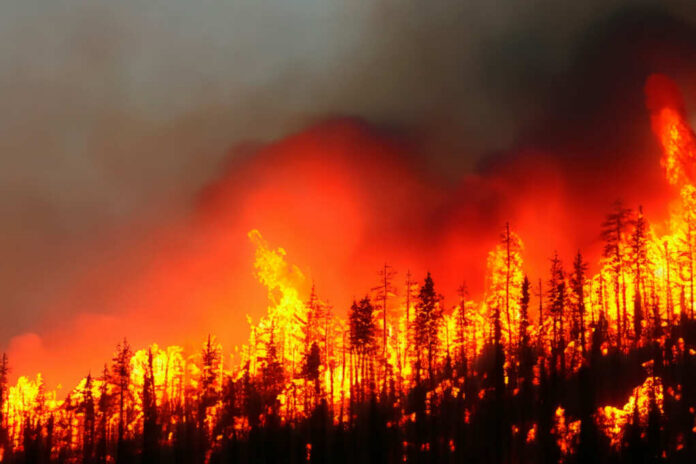
Oregon wildfire victims face the potential loss of over $1 billion in damages after an appeals court ruling exposes flaws in a massive class-action lawsuit against PacifiCorp.
Story Highlights
- Oregon Court of Appeals reverses 2023 class-action verdict due to erroneous jury instruction applying evidence uniformly across diverse 2020 wildfires.
- Ruling jeopardizes $1 billion+ in punitive and other damages for thousands of victims owning over 2,000 parcels across more than 100 miles.
- Oregon Dept. of Forestry’s 2025 report exonerates PacifiCorp for the Santiam Canyon fire, contradicting earlier U.S. Forest Service blame.
- PacifiCorp has already settled $2B+ in claims, including $575M with the U.S. government, while individual trials continue.
- Case remanded for retrial, highlighting tensions between victim compensation and procedural fairness in utility liability suits.
Court Reverses Key Verdict on Procedural Grounds
The Oregon Court of Appeals recently reversed and remanded the 2023 class-action liability verdict in the James case against PacifiCorp. The three-judge panel cited a prejudicial jury instruction that wrongly assumed evidence from four 2020 wildfires—Santiam Canyon, Echo Mountain Complex, South Obenchain, and 242 fires—applied equally to all class members. These fires devastated over 2,000 parcels spread across more than 100 miles in northwest, coastal, and southwest Oregon. The ruling does not address the merits of PacifiCorp’s negligence but focuses solely on this instructional error. Subsequent damages trials relied on the initial liability finding, placing over $1 billion in awards at risk. Victims now await retrial or further proceedings, underscoring how procedural missteps can delay justice for everyday Americans harmed by corporate failures.
Timeline of Fires, Verdicts, and Appeals
The wildfires ignited during the Labor Day weekend in September 2020 amid extreme winds. Plaintiffs alleged PacifiCorp failed to de-energize power lines despite warnings from fire officials. Echo Mountain Complex and South Obenchain fires started on September 7-8 near Otis and east of Eagle Point. A Portland jury in Multnomah County found PacifiCorp liable on June 12, 2023, awarding named plaintiffs $3-4.5 million each in economic and non-economic damages, plus punitive damages at 0.25 times those totals for the class. A second mini-damages trial on March 5, 2024, granted 10 plaintiffs $1.75-3.5 million in non-economic damages. PacifiCorp settled with over 400 Oregon plaintiffs for nearly $180 million on June 3, 2024. Ongoing individual trials from 2024-2025 awarded about $315 million to more than 50 plaintiffs.
PacifiCorp filed its opening appeal brief on April 1, 2025, challenging class certification and liability. The early 2026 appellate decision supports their argument that the fires’ heterogeneity made uniform evidence application improper. This procedural focus protects due process while individual suits proceed uninterrupted.
Shifting Evidence and Stakeholder Perspectives
Initial U.S. Forest Service reports blamed PacifiCorp equipment for igniting fires. However, the Oregon Department of Forestry’s 2025 report exonerated the utility for the Santiam Canyon fire, attributing it to embers from the prior lightning-caused Beachie Creek Fire. PacifiCorp stated the ruling “supports our belief the process was prejudicial” and remains open to reasonable claims, noting no winners in wildfires. Plaintiff counsel called it a “procedural setback,” arguing the jury did not get liability wrong and a fixed instruction would allow retrial. PacifiCorp, operating as Pacific Power, has settled over $2 billion total, including $575 million with the U.S. for suppression costs and restoration on federal lands from six fires.
Impacts on Victims, Utilities, and Policy
Short-term, the remand delays class damages potentially exceeding $1 billion, though individual trials continue. Long-term, it may lead to class decertification, capping PacifiCorp’s exposure and setting precedent against heterogeneous wildfire class actions. Victims in affected communities like Santiam Canyon and Echo Mountain face payout uncertainty, eroding trust in utilities amid rising climate risks. Economically, relief for PacifiCorp could stabilize customer rates, but victims lose swift recovery. Politically, it pressures Oregon’s wildfire damages statute, which limits non-economic awards—a point PacifiCorp contests. Utilities may accelerate public safety power shutoffs, balancing prevention with service reliability. This case reveals deep frustrations across political lines: conservatives decry corporate accountability dodged through legal maneuvers, while liberals lament barriers to victim compensation, both pointing to a system favoring powerful interests over ordinary citizens pursuing the American Dream.
Sources:
Oregon appellate ruling in PacifiCorp case could jeopardize $1 billion in wildfire victim damages
Oregon appellate ruling in PacifiCorp case could jeopardize $1 billion in wildfire victim damages
PacifiCorp wildfire Oregon litigation
PacifiCorp appeals class-action ruling over 2020 Oregon wildfires
PacifiCorp Wildfire Litigation Information
PacifiCorp Opening Brief James Class Action Appeal